{"title":"Application of a training program system centered on job competency in the standardized training of new nurses.","authors":"Fenglian Luo, Jun Cai, Haixia Ma, Xia Wu, Yue Xia","doi":"10.1186/s12912-025-02970-9","DOIUrl":null,"url":null,"abstract":"<p><strong>Objective: </strong>This study investigates the effectiveness of a job competency-centered training system for newly hired nurses during their induction training.</p><p><strong>Methods: </strong>The control group included 41 nurses who underwent traditional teaching models from 2020 to 2021. The observation group consisted of 39 nurses trained from 2022 to 2024, focusing on job competency. This training covered basic theoretical knowledge, operational skills, professional conduct, communication, emergency response, and comprehensive nursing care skills. Post-training evaluations included competency, theoretical and practical examination scores, Nursing-Mini-CEX excellence rates, patient satisfaction, and humanistic care abilities.</p><p><strong>Results: </strong>The observation group achieved higher scores across all assessment areas compared to the control group. Theoretical examination scores were (95.987 ± 2.129) vs. (94.756 ± 2.773), practical scores were (96.987 ± 1.254) vs. (95.902 ± 1.855), and comprehensive scores were (96.487 ± 1.234) vs. (95.329 ± 1.841). Mini-Clinical Evaluation Exercise (Mini-CEX) scores were (8.795 ± 0.409) for the observation group and (8.439 ± 0.594) for the control group. In job competency dimensions, the observation group scored: professional quality (10), general work capability (34.718 ± 0.916), communication and coordination (13.949 ± 0.605), proactive management (13.974 ± 0.778), patient safety (14.128 ± 0.767), health education (8.564 ± 0.552), and overall competency (95.333 ± 1.420). Conversely, the control group scored: professional quality (10), general work capability (34.268 ± 0.708), communication and coordination (13.634 ± 0.733), proactive management (13.634 ± 0.733), patient safety (13.780 ± 0.725), health education (8.293 ± 0.599), and overall competency (93.610 ± 1.481). For humanistic care ability, the observation group had cognitive (66.41 ± 3.362), courage (65.923 ± 3.115), and patience dimensions (60.308 ± 3.686), totaling (192.641 ± 5.451). The control group's scores were cognitive (64.488 ± 3.543), courage (64.317 ± 3.446), and patience (57.902 ± 5.004), totaling (186.707 ± 8.143). Patient satisfaction rates were 100% in the observation group and 95.12% in the control group. Nurses trained under the competency-based model showed significant enhancements in job competency, patient satisfaction, and humanistic care compared to those trained under traditional methods.</p><p><strong>Conclusion: </strong>The job competency-centered induction training model significantly enhances new nurses' job competence, theoretical and practical assessment scores, humanistic care abilities, and patient satisfaction compared to traditional models.</p>","PeriodicalId":48580,"journal":{"name":"BMC Nursing","volume":"24 1","pages":"358"},"PeriodicalIF":3.9000,"publicationDate":"2025-04-01","publicationTypes":"Journal Article","fieldsOfStudy":null,"isOpenAccess":false,"openAccessPdf":"https://www.ncbi.nlm.nih.gov/pmc/articles/PMC11963415/pdf/","citationCount":"0","resultStr":null,"platform":"Semanticscholar","paperid":null,"PeriodicalName":"BMC Nursing","FirstCategoryId":"3","ListUrlMain":"https://doi.org/10.1186/s12912-025-02970-9","RegionNum":2,"RegionCategory":"医学","ArticlePicture":[],"TitleCN":null,"AbstractTextCN":null,"PMCID":null,"EPubDate":"","PubModel":"","JCR":"Q1","JCRName":"NURSING","Score":null,"Total":0}
引用次数: 0
Abstract
Objective: This study investigates the effectiveness of a job competency-centered training system for newly hired nurses during their induction training.
Methods: The control group included 41 nurses who underwent traditional teaching models from 2020 to 2021. The observation group consisted of 39 nurses trained from 2022 to 2024, focusing on job competency. This training covered basic theoretical knowledge, operational skills, professional conduct, communication, emergency response, and comprehensive nursing care skills. Post-training evaluations included competency, theoretical and practical examination scores, Nursing-Mini-CEX excellence rates, patient satisfaction, and humanistic care abilities.
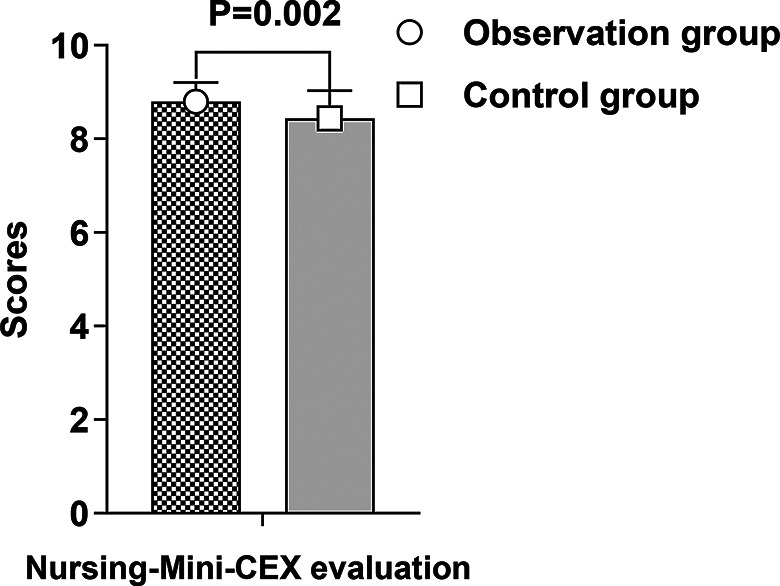
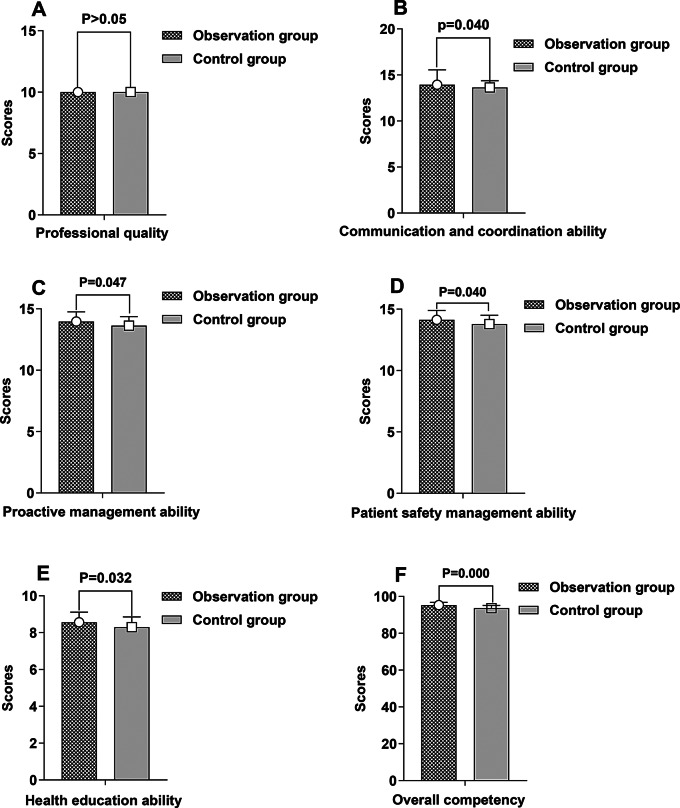
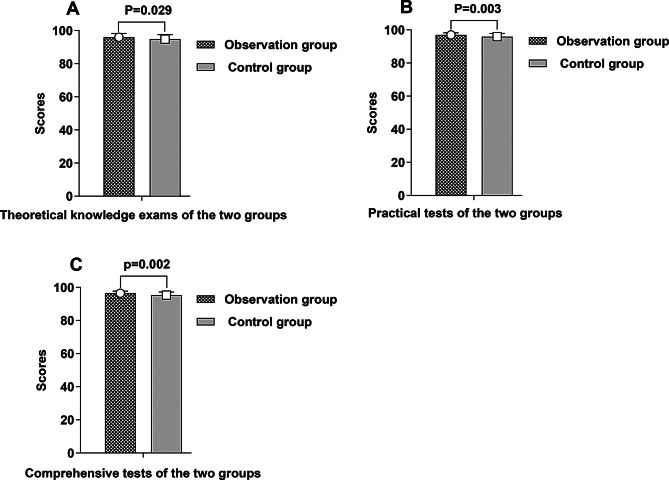
Results: The observation group achieved higher scores across all assessment areas compared to the control group. Theoretical examination scores were (95.987 ± 2.129) vs. (94.756 ± 2.773), practical scores were (96.987 ± 1.254) vs. (95.902 ± 1.855), and comprehensive scores were (96.487 ± 1.234) vs. (95.329 ± 1.841). Mini-Clinical Evaluation Exercise (Mini-CEX) scores were (8.795 ± 0.409) for the observation group and (8.439 ± 0.594) for the control group. In job competency dimensions, the observation group scored: professional quality (10), general work capability (34.718 ± 0.916), communication and coordination (13.949 ± 0.605), proactive management (13.974 ± 0.778), patient safety (14.128 ± 0.767), health education (8.564 ± 0.552), and overall competency (95.333 ± 1.420). Conversely, the control group scored: professional quality (10), general work capability (34.268 ± 0.708), communication and coordination (13.634 ± 0.733), proactive management (13.634 ± 0.733), patient safety (13.780 ± 0.725), health education (8.293 ± 0.599), and overall competency (93.610 ± 1.481). For humanistic care ability, the observation group had cognitive (66.41 ± 3.362), courage (65.923 ± 3.115), and patience dimensions (60.308 ± 3.686), totaling (192.641 ± 5.451). The control group's scores were cognitive (64.488 ± 3.543), courage (64.317 ± 3.446), and patience (57.902 ± 5.004), totaling (186.707 ± 8.143). Patient satisfaction rates were 100% in the observation group and 95.12% in the control group. Nurses trained under the competency-based model showed significant enhancements in job competency, patient satisfaction, and humanistic care compared to those trained under traditional methods.
Conclusion: The job competency-centered induction training model significantly enhances new nurses' job competence, theoretical and practical assessment scores, humanistic care abilities, and patient satisfaction compared to traditional models.
期刊介绍:
BMC Nursing is an open access, peer-reviewed journal that considers articles on all aspects of nursing research, training, education and practice.



 京公网安备 11010802042870号
京ICP备2023020795号-1
京公网安备 11010802042870号
京ICP备2023020795号-1

 分享
分享
 求助内容:
求助内容: 应助结果提醒方式:
 扫码关注我们
