Siyu Song, Hao Han, Jianhong Wang, Yubin Pu, Jingxin Shao, Jing Xie, Hailong Che, Jan C. M. van Hest and Shoupeng Cao
{"title":"Polymersome-based nanomotors: preparation, motion control, and biomedical applications","authors":"Siyu Song, Hao Han, Jianhong Wang, Yubin Pu, Jingxin Shao, Jing Xie, Hailong Che, Jan C. M. van Hest and Shoupeng Cao","doi":"10.1039/D4SC08283D","DOIUrl":null,"url":null,"abstract":"<p >Polymersome-based nanomotors represent a cutting-edge development in nanomedicine, merging the unique vesicular properties of polymersomes with the active propulsion capabilities of synthetic nanomotors. As a vesicular structure enclosed by a bilayer membrane, polymersomes can encapsulate both hydrophilic and hydrophobic cargoes. In addition, their physical–chemical properties such as size, morphology, and surface chemistry are highly tunable, which makes them ideal for various biomedical applications. The integration of motility into polymersomes enables them to actively navigate biological environments and overcome physiological barriers, offering significant advantages over passive delivery platforms. Recent breakthroughs in fabrication techniques and motion control strategies, including chemically, enzymatically, and externally driven propulsion, have expanded their potential for drug delivery, biosensing, and therapeutic interventions. Despite these advancements, key challenges remain in optimizing propulsion efficiency, biocompatibility, and <em>in vivo</em> stability to translate these systems into clinical applications. In this perspective, we discuss recent advancements in the preparation and motion control strategies of polymersome-based nanomotors, as well as their biomedical-related applications. The molecular design, fabrication approaches, and nanomedicine-related utilities of polymersome-based nanomotors are highlighted, to envisage the future research directions and further development of these systems into effective, precise, and smart nanomedicines capable of addressing critical biomedical challenges.</p>","PeriodicalId":9909,"journal":{"name":"Chemical Science","volume":" 17","pages":" 7106-7129"},"PeriodicalIF":7.4000,"publicationDate":"2025-04-03","publicationTypes":"Journal Article","fieldsOfStudy":null,"isOpenAccess":false,"openAccessPdf":"https://pubs.rsc.org/en/content/articlepdf/2025/sc/d4sc08283d?page=search","citationCount":"0","resultStr":null,"platform":"Semanticscholar","paperid":null,"PeriodicalName":"Chemical Science","FirstCategoryId":"92","ListUrlMain":"https://pubs.rsc.org/en/content/articlelanding/2025/sc/d4sc08283d","RegionNum":1,"RegionCategory":"化学","ArticlePicture":[],"TitleCN":null,"AbstractTextCN":null,"PMCID":null,"EPubDate":"","PubModel":"","JCR":"Q1","JCRName":"CHEMISTRY, MULTIDISCIPLINARY","Score":null,"Total":0}
引用次数: 0
Abstract
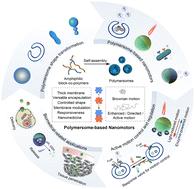
Polymersome-based nanomotors represent a cutting-edge development in nanomedicine, merging the unique vesicular properties of polymersomes with the active propulsion capabilities of synthetic nanomotors. As a vesicular structure enclosed by a bilayer membrane, polymersomes can encapsulate both hydrophilic and hydrophobic cargoes. In addition, their physical–chemical properties such as size, morphology, and surface chemistry are highly tunable, which makes them ideal for various biomedical applications. The integration of motility into polymersomes enables them to actively navigate biological environments and overcome physiological barriers, offering significant advantages over passive delivery platforms. Recent breakthroughs in fabrication techniques and motion control strategies, including chemically, enzymatically, and externally driven propulsion, have expanded their potential for drug delivery, biosensing, and therapeutic interventions. Despite these advancements, key challenges remain in optimizing propulsion efficiency, biocompatibility, and in vivo stability to translate these systems into clinical applications. In this perspective, we discuss recent advancements in the preparation and motion control strategies of polymersome-based nanomotors, as well as their biomedical-related applications. The molecular design, fabrication approaches, and nanomedicine-related utilities of polymersome-based nanomotors are highlighted, to envisage the future research directions and further development of these systems into effective, precise, and smart nanomedicines capable of addressing critical biomedical challenges.
期刊介绍:
Chemical Science is a journal that encompasses various disciplines within the chemical sciences. Its scope includes publishing ground-breaking research with significant implications for its respective field, as well as appealing to a wider audience in related areas. To be considered for publication, articles must showcase innovative and original advances in their field of study and be presented in a manner that is understandable to scientists from diverse backgrounds. However, the journal generally does not publish highly specialized research.




 京公网安备 11010802042870号
京ICP备2023020795号-1
京公网安备 11010802042870号
京ICP备2023020795号-1

 分享
分享
 求助内容:
求助内容: 应助结果提醒方式:
 扫码关注我们
