Renin-angiotensin-aldosterone system inhibitor use improves clinical outcomes in patients with metabolic dysfunction-associated steatotic liver diseases: Target trial emulation using real-world data.
Wee Han Ng, Yee Hui Yeo, Hyunseok Kim, Ekihiro Seki, Jonathan Rees, Kevin Sheng-Kai Ma, Cynthia A Moylan, Luz María Rodriquez, Manal Abdelmalek, Augusto Villanueva, Mazen Noureddin, Ju Dong Yang
{"title":"Renin-angiotensin-aldosterone system inhibitor use improves clinical outcomes in patients with metabolic dysfunction-associated steatotic liver diseases: Target trial emulation using real-world data.","authors":"Wee Han Ng, Yee Hui Yeo, Hyunseok Kim, Ekihiro Seki, Jonathan Rees, Kevin Sheng-Kai Ma, Cynthia A Moylan, Luz María Rodriquez, Manal Abdelmalek, Augusto Villanueva, Mazen Noureddin, Ju Dong Yang","doi":"10.1097/HEP.0000000000001333","DOIUrl":null,"url":null,"abstract":"<p><strong>Background and aims: </strong>Angiotensin-converting enzyme inhibitors (ACEi) and angiotensin receptor blockers (ARB) prevent fibrosis progression in a preclinical model of steatotic liver disease. Our objective was to assess the impact of ACEi/ARB use on clinical outcomes in patients with metabolic dysfunction-associated steatotic liver diseases.</p><p><strong>Approach and results: </strong>Using TriNetX, a nationwide database, we identified all patients with metabolic dysfunction-associated steatotic liver diseases from January 1, 2011, to December 31, 2019. Using a target trial emulation framework, ACEi/ARB users were matched with calcium channel blocker (CCB) users using propensity score matching (PSM). Patients were followed up to 10 years after the index date. Cox proportional hazards regression was used to determine the risk of mortality, major adverse liver outcomes, major adverse cardiac events, and incident cancers. Of the 35,988 eligible patients, 28,423 were ACEi/ARB users, and 7565 were CCB users. After PSM, 7238 pairs were well-balanced. ACEi/ARB use was associated with a significantly decreased mortality risk (HR: 0.59, 95% CI: 0.51-0.68). ACEi/ARB was associated with a significantly reduced risk of developing major adverse liver outcomes (HR: 0.70, 95% CI: 0.61-0.80), including ascites (HR: 0.78, 95% CI: 0.63-0.98) and HE (HR: 0.67, 95% CI: 0.57-0.78). ACEi/ARB use was also associated with a lower risk of major adverse cardiac events (HR: 0.82, 95% CI: 0.76-0.90) but not incident cancer (HR: 0.97, 95% CI: 0.86-1.10) compared with CCB.</p><p><strong>Conclusions: </strong>ACEi/ARB use in patients with metabolic dysfunction-associated steatotic liver diseases was associated with a reduced risk of mortality, major adverse liver outcomes, and major adverse cardiac events compared with CCB use. A large prospective study is needed for external validation.</p>","PeriodicalId":177,"journal":{"name":"Hepatology","volume":" ","pages":"333-343"},"PeriodicalIF":15.8000,"publicationDate":"2026-02-01","publicationTypes":"Journal Article","fieldsOfStudy":null,"isOpenAccess":false,"openAccessPdf":"","citationCount":"0","resultStr":null,"platform":"Semanticscholar","paperid":null,"PeriodicalName":"Hepatology","FirstCategoryId":"3","ListUrlMain":"https://doi.org/10.1097/HEP.0000000000001333","RegionNum":1,"RegionCategory":"医学","ArticlePicture":[],"TitleCN":null,"AbstractTextCN":null,"PMCID":null,"EPubDate":"2025/4/2 0:00:00","PubModel":"Epub","JCR":"Q1","JCRName":"GASTROENTEROLOGY & HEPATOLOGY","Score":null,"Total":0}
引用次数: 0
Abstract
Background and aims: Angiotensin-converting enzyme inhibitors (ACEi) and angiotensin receptor blockers (ARB) prevent fibrosis progression in a preclinical model of steatotic liver disease. Our objective was to assess the impact of ACEi/ARB use on clinical outcomes in patients with metabolic dysfunction-associated steatotic liver diseases.
Approach and results: Using TriNetX, a nationwide database, we identified all patients with metabolic dysfunction-associated steatotic liver diseases from January 1, 2011, to December 31, 2019. Using a target trial emulation framework, ACEi/ARB users were matched with calcium channel blocker (CCB) users using propensity score matching (PSM). Patients were followed up to 10 years after the index date. Cox proportional hazards regression was used to determine the risk of mortality, major adverse liver outcomes, major adverse cardiac events, and incident cancers. Of the 35,988 eligible patients, 28,423 were ACEi/ARB users, and 7565 were CCB users. After PSM, 7238 pairs were well-balanced. ACEi/ARB use was associated with a significantly decreased mortality risk (HR: 0.59, 95% CI: 0.51-0.68). ACEi/ARB was associated with a significantly reduced risk of developing major adverse liver outcomes (HR: 0.70, 95% CI: 0.61-0.80), including ascites (HR: 0.78, 95% CI: 0.63-0.98) and HE (HR: 0.67, 95% CI: 0.57-0.78). ACEi/ARB use was also associated with a lower risk of major adverse cardiac events (HR: 0.82, 95% CI: 0.76-0.90) but not incident cancer (HR: 0.97, 95% CI: 0.86-1.10) compared with CCB.
Conclusions: ACEi/ARB use in patients with metabolic dysfunction-associated steatotic liver diseases was associated with a reduced risk of mortality, major adverse liver outcomes, and major adverse cardiac events compared with CCB use. A large prospective study is needed for external validation.
期刊介绍:
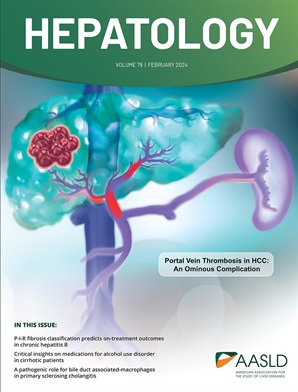
HEPATOLOGY is recognized as the leading publication in the field of liver disease. It features original, peer-reviewed articles covering various aspects of liver structure, function, and disease. The journal's distinguished Editorial Board carefully selects the best articles each month, focusing on topics including immunology, chronic hepatitis, viral hepatitis, cirrhosis, genetic and metabolic liver diseases, liver cancer, and drug metabolism.



 京公网安备 11010802042870号
京ICP备2023020795号-1
京公网安备 11010802042870号
京ICP备2023020795号-1

 分享
分享
 求助内容:
求助内容: 应助结果提醒方式:
 扫码关注我们
