Shervonne Poleon, Michael Twa, Yu-Mei Schoenberger-Godwin, Matthew Fifolt, Lyne Racette
{"title":"A Taxonomy of Behavior Change Techniques for Improving Medication Adherence in Primary Open-Angle Glaucoma.","authors":"Shervonne Poleon, Michael Twa, Yu-Mei Schoenberger-Godwin, Matthew Fifolt, Lyne Racette","doi":"10.1155/joph/9917724","DOIUrl":null,"url":null,"abstract":"<p><p>Many interventions aiming to improve medication adherence in primary open-angle glaucoma (POAG) have yielded equivocal findings. This equivocacy has been attributed to several factors, including limited incorporation of health behavior theory and patient preference into intervention design. In this study, we performed a literature review of interventions aiming to improve medication adherence in POAG to develop a taxonomy of behavior change techniques (BCTs). Eligible studies measured medication adherence using electronic monitors for a minimum of 3 months. For each study, we evaluated the effectiveness of the BCTs, their basis in health behavior theory, and their usefulness in day-to-day management of POAG by surveying a sample of patients and providers. Twelve studies were included. BCTs included knowledge shaping (education), prompts (reminders), behavioral rehearsal (eye drop instillation training), and pharmacological support (combination monotherapy vs. polytherapy). Knowledge shaping, prompts, health coaching, and motivational interviewing led to an improvement in medication adherence and were perceived as being most useful in day-to-day management of POAG. Taxonomies of BCTs can help researchers to improve the design and effectiveness of interventions for improving medication adherence in POAG.</p>","PeriodicalId":16674,"journal":{"name":"Journal of Ophthalmology","volume":"2025 ","pages":"9917724"},"PeriodicalIF":1.9000,"publicationDate":"2025-03-26","publicationTypes":"Journal Article","fieldsOfStudy":null,"isOpenAccess":false,"openAccessPdf":"https://www.ncbi.nlm.nih.gov/pmc/articles/PMC11964726/pdf/","citationCount":"0","resultStr":null,"platform":"Semanticscholar","paperid":null,"PeriodicalName":"Journal of Ophthalmology","FirstCategoryId":"3","ListUrlMain":"https://doi.org/10.1155/joph/9917724","RegionNum":4,"RegionCategory":"医学","ArticlePicture":[],"TitleCN":null,"AbstractTextCN":null,"PMCID":null,"EPubDate":"2025/1/1 0:00:00","PubModel":"eCollection","JCR":"Q3","JCRName":"OPHTHALMOLOGY","Score":null,"Total":0}
引用次数: 0
Abstract
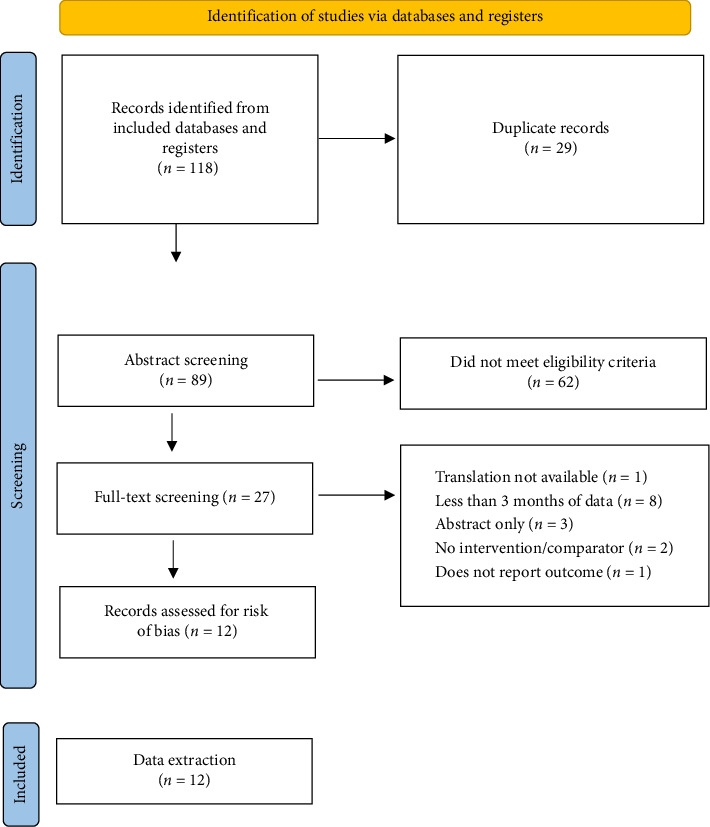
Many interventions aiming to improve medication adherence in primary open-angle glaucoma (POAG) have yielded equivocal findings. This equivocacy has been attributed to several factors, including limited incorporation of health behavior theory and patient preference into intervention design. In this study, we performed a literature review of interventions aiming to improve medication adherence in POAG to develop a taxonomy of behavior change techniques (BCTs). Eligible studies measured medication adherence using electronic monitors for a minimum of 3 months. For each study, we evaluated the effectiveness of the BCTs, their basis in health behavior theory, and their usefulness in day-to-day management of POAG by surveying a sample of patients and providers. Twelve studies were included. BCTs included knowledge shaping (education), prompts (reminders), behavioral rehearsal (eye drop instillation training), and pharmacological support (combination monotherapy vs. polytherapy). Knowledge shaping, prompts, health coaching, and motivational interviewing led to an improvement in medication adherence and were perceived as being most useful in day-to-day management of POAG. Taxonomies of BCTs can help researchers to improve the design and effectiveness of interventions for improving medication adherence in POAG.
期刊介绍:
Journal of Ophthalmology is a peer-reviewed, Open Access journal that publishes original research articles, review articles, and clinical studies related to the anatomy, physiology and diseases of the eye. Submissions should focus on new diagnostic and surgical techniques, instrument and therapy updates, as well as clinical trials and research findings.



 京公网安备 11010802042870号
京ICP备2023020795号-1
京公网安备 11010802042870号
京ICP备2023020795号-1

 分享
分享
 求助内容:
求助内容: 应助结果提醒方式:
 扫码关注我们
