Bacterial and Viral Coinfections in Adult Patients Hospitalized With COVID-19 Throughout the Pandemic: A Multinational Cohort Study in the EuCARE Project.
Pontus Hedberg, Karol Serwin, Maria Francesca Greco, Joana P V Pereira, Dovile Juozapaite, Sara De Benedittis, Francesca Bai, Nadine Lübke, Tobias Wienemann, Iuri Fanti, Florian König, Nico Pfeifer, Rolf Kaiser, Maurizio Zazzi, Alessandro Cozzi-Lepri, Daniel Naumovas, Giulia Marchetti, Milosz Parczewski, Björn-Erik Ole Jensen, Francesca Incardona, Anders Sönnerborg, Pontus Nauclér
{"title":"Bacterial and Viral Coinfections in Adult Patients Hospitalized With COVID-19 Throughout the Pandemic: A Multinational Cohort Study in the EuCARE Project.","authors":"Pontus Hedberg, Karol Serwin, Maria Francesca Greco, Joana P V Pereira, Dovile Juozapaite, Sara De Benedittis, Francesca Bai, Nadine Lübke, Tobias Wienemann, Iuri Fanti, Florian König, Nico Pfeifer, Rolf Kaiser, Maurizio Zazzi, Alessandro Cozzi-Lepri, Daniel Naumovas, Giulia Marchetti, Milosz Parczewski, Björn-Erik Ole Jensen, Francesca Incardona, Anders Sönnerborg, Pontus Nauclér","doi":"10.1093/infdis/jiaf167","DOIUrl":null,"url":null,"abstract":"<p><strong>Background: </strong>Limited evidence exists on how bacterial and viral coinfections have developed since the SARS-CoV-2 Omicron variant emerged. We investigated whether community-onset coinfections in adult patients hospitalized with COVID-19 differed during the wild type, Alpha, Delta, and Omicron periods and whether such coinfections were associated with an increased risk of mortality.</p><p><strong>Methods: </strong>We conducted a multinational cohort study including COVID-19 hospitalizations until 30 April 2023 in 5 European countries. The outcome was bacterial and viral coinfections based on 5 test modalities. Variant periods were compared with regard to occurrences of coinfections and risk ratios for coinfections (Omicron vs pre-Omicron), as well as association with in-hospital mortality (Omicron vs pre-Omicron).</p><p><strong>Results: </strong>A total of 29 564 cases were included: 12 601 wild type, 5256 Alpha, 2433 Delta, and 9274 Omicron. The coinfection rate was 2.6% (327/12 601) for wild type, 2.0% (105/5256) for Alpha, 3.2% (77/2433) for Delta, and 7.9% (737/9274) for Omicron. Omicron had a significantly increased risk ratio of coinfection when compared with preceding variants (1.88 [95% CI, 1.53-2.32], P < .001). These results were consistent across several subgroup analyses. An increased occurrence (19% [232/1246] vs 11% [3042/28 318]) and adjusted risk (1.69 [95% CI, 1.49-1.91], P < .001) of in-hospital mortality were observed in patients with a verified coinfection as compared with patients without a coinfection.</p><p><strong>Conclusions: </strong>Bacterial and viral coinfections were more prevalent during the Omicron period as compared with preceding variants. Such coinfections were associated with an increased risk of in-hospital mortality, calling for sustained monitoring and clinical vigilance.</p>","PeriodicalId":50179,"journal":{"name":"Journal of Infectious Diseases","volume":" ","pages":"e1091-e1101"},"PeriodicalIF":4.5000,"publicationDate":"2025-07-11","publicationTypes":"Journal Article","fieldsOfStudy":null,"isOpenAccess":false,"openAccessPdf":"https://www.ncbi.nlm.nih.gov/pmc/articles/PMC12247819/pdf/","citationCount":"0","resultStr":null,"platform":"Semanticscholar","paperid":null,"PeriodicalName":"Journal of Infectious Diseases","FirstCategoryId":"3","ListUrlMain":"https://doi.org/10.1093/infdis/jiaf167","RegionNum":2,"RegionCategory":"医学","ArticlePicture":[],"TitleCN":null,"AbstractTextCN":null,"PMCID":null,"EPubDate":"","PubModel":"","JCR":"Q2","JCRName":"IMMUNOLOGY","Score":null,"Total":0}
引用次数: 0
Abstract
Background: Limited evidence exists on how bacterial and viral coinfections have developed since the SARS-CoV-2 Omicron variant emerged. We investigated whether community-onset coinfections in adult patients hospitalized with COVID-19 differed during the wild type, Alpha, Delta, and Omicron periods and whether such coinfections were associated with an increased risk of mortality.
Methods: We conducted a multinational cohort study including COVID-19 hospitalizations until 30 April 2023 in 5 European countries. The outcome was bacterial and viral coinfections based on 5 test modalities. Variant periods were compared with regard to occurrences of coinfections and risk ratios for coinfections (Omicron vs pre-Omicron), as well as association with in-hospital mortality (Omicron vs pre-Omicron).
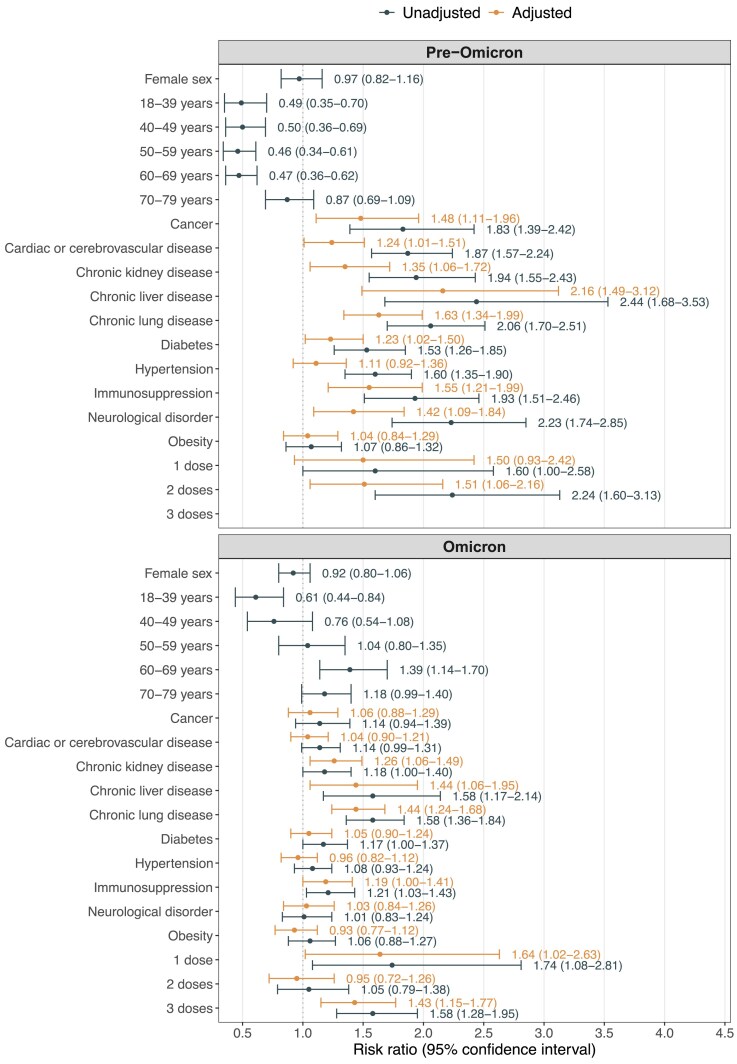
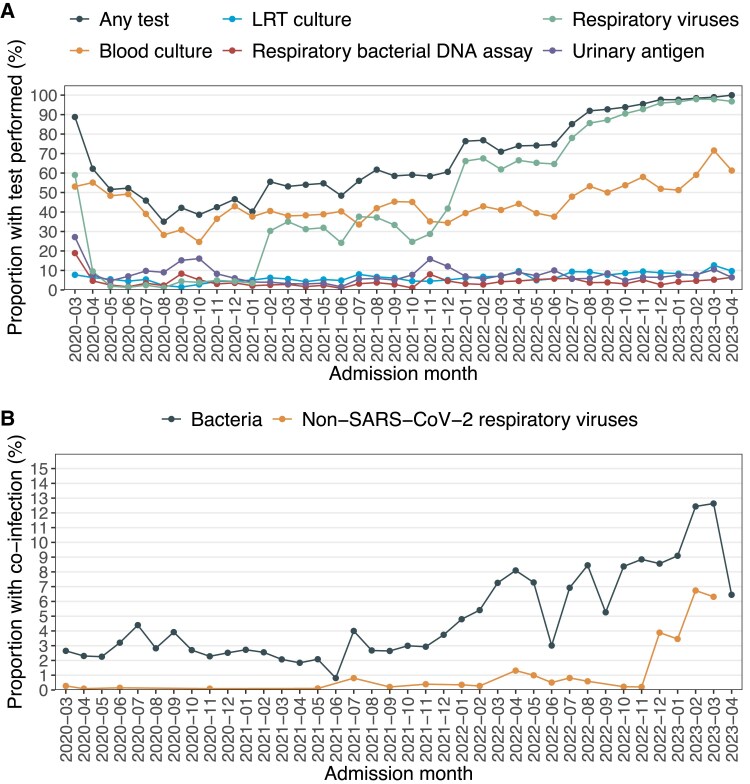
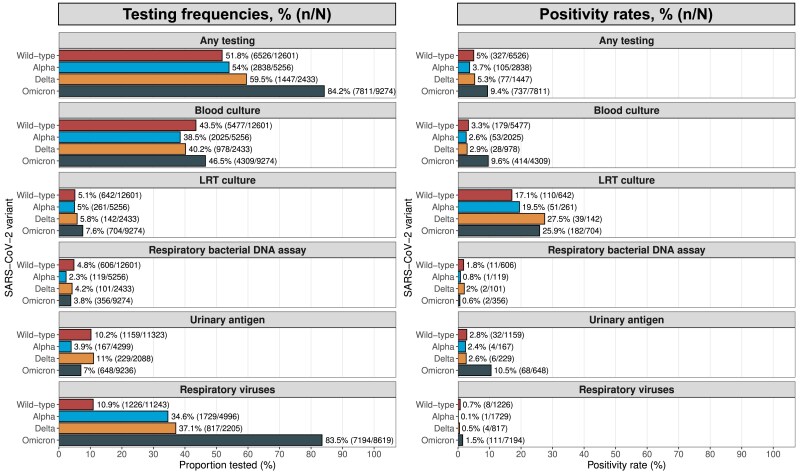
Results: A total of 29 564 cases were included: 12 601 wild type, 5256 Alpha, 2433 Delta, and 9274 Omicron. The coinfection rate was 2.6% (327/12 601) for wild type, 2.0% (105/5256) for Alpha, 3.2% (77/2433) for Delta, and 7.9% (737/9274) for Omicron. Omicron had a significantly increased risk ratio of coinfection when compared with preceding variants (1.88 [95% CI, 1.53-2.32], P < .001). These results were consistent across several subgroup analyses. An increased occurrence (19% [232/1246] vs 11% [3042/28 318]) and adjusted risk (1.69 [95% CI, 1.49-1.91], P < .001) of in-hospital mortality were observed in patients with a verified coinfection as compared with patients without a coinfection.
Conclusions: Bacterial and viral coinfections were more prevalent during the Omicron period as compared with preceding variants. Such coinfections were associated with an increased risk of in-hospital mortality, calling for sustained monitoring and clinical vigilance.
期刊介绍:
Published continuously since 1904, The Journal of Infectious Diseases (JID) is the premier global journal for original research on infectious diseases. The editors welcome Major Articles and Brief Reports describing research results on microbiology, immunology, epidemiology, and related disciplines, on the pathogenesis, diagnosis, and treatment of infectious diseases; on the microbes that cause them; and on disorders of host immune responses. JID is an official publication of the Infectious Diseases Society of America.



 京公网安备 11010802042870号
京ICP备2023020795号-1
京公网安备 11010802042870号
京ICP备2023020795号-1

 分享
分享
 求助内容:
求助内容: 应助结果提醒方式:
 扫码关注我们
