Etimbuk Umana, Hannah Norman-Bruce, Thomas Waterfield
{"title":"Scoping review of clinical decision aids in the assessment and management of febrile infants under 90 days of age.","authors":"Etimbuk Umana, Hannah Norman-Bruce, Thomas Waterfield","doi":"10.1186/s12887-025-05619-3","DOIUrl":null,"url":null,"abstract":"<p><strong>Background: </strong>Clinical decision aids (CDA) play an important role in the management of young febrile infants (under 90 days of age) who are at risk of serious or invasive bacterial infections (SBI/IBI). Since 2010, a number of tailored CDAs have been developed that allow for lower-risk infants to be managed safely while undergoing fewer investigations and not receiving parenteral antibiotics. We aimed to map the CDAs developed since 2010, their derivation methodology, and their variable components.</p><p><strong>Methods: </strong>A scoping review based on the Joana Briggs Institute framework was conducted for studies published between 2010 and 2025. A database search was conducted using Medline, Embase, Scopus, Web of Science, Google Scholar, and the Cochrane library. Studies evaluating the derivation, validation, and application of CDAs for the assessment of febrile infants were eligible for inclusion. Two reviewers independently screened, analysed, and extracted data from the literature.</p><p><strong>Results: </strong>A total of 32 studies met the inclusion criteria. The majority of studies were conducted in North America and Canada (56%), followed by Europe (28%), and Asia (16%). Of the 32 studies, 14 were retrospective, 9 prospective and 9 secondary analysis of an available dataset. There were 32 CDAs that were either derived or validated across 32 studies. The derivation methodology was classified into four themes: (i) expert consensus and evidence synthesis; (ii) regression analysis; (iii) recursive partitioning; and (iv) machine learning. CDAs typically either identified a low-risk cohort through sequential assessment (n = 12) or predicted the risk of IBI/SBI using prediction models (n = 20). CDA sensitivity and specificity ranged from 46 - 100% and 9 - 95% respectively for SBI/IBI. The majority (n = 18) of the more complex CDA prediction models have been published in the last five years. The most common variables included within the CDAs were age, urinalysis, height of fever, C-reactive protein, and absolute neutrophil count.</p><p><strong>Conclusion: </strong>This scoping review highlights a wide range of CDAs with a trend towards prediction modelling rather than sequential assessment in the last five years. There is still variability in CDA properties, applicability, and diagnostic performance, necessitating further validation of common CDA and prediction models.</p>","PeriodicalId":9144,"journal":{"name":"BMC Pediatrics","volume":"25 1","pages":"274"},"PeriodicalIF":2.0000,"publicationDate":"2025-04-04","publicationTypes":"Journal Article","fieldsOfStudy":null,"isOpenAccess":false,"openAccessPdf":"https://www.ncbi.nlm.nih.gov/pmc/articles/PMC11969967/pdf/","citationCount":"0","resultStr":null,"platform":"Semanticscholar","paperid":null,"PeriodicalName":"BMC Pediatrics","FirstCategoryId":"3","ListUrlMain":"https://doi.org/10.1186/s12887-025-05619-3","RegionNum":3,"RegionCategory":"医学","ArticlePicture":[],"TitleCN":null,"AbstractTextCN":null,"PMCID":null,"EPubDate":"","PubModel":"","JCR":"Q2","JCRName":"PEDIATRICS","Score":null,"Total":0}
引用次数: 0
Abstract
Background: Clinical decision aids (CDA) play an important role in the management of young febrile infants (under 90 days of age) who are at risk of serious or invasive bacterial infections (SBI/IBI). Since 2010, a number of tailored CDAs have been developed that allow for lower-risk infants to be managed safely while undergoing fewer investigations and not receiving parenteral antibiotics. We aimed to map the CDAs developed since 2010, their derivation methodology, and their variable components.
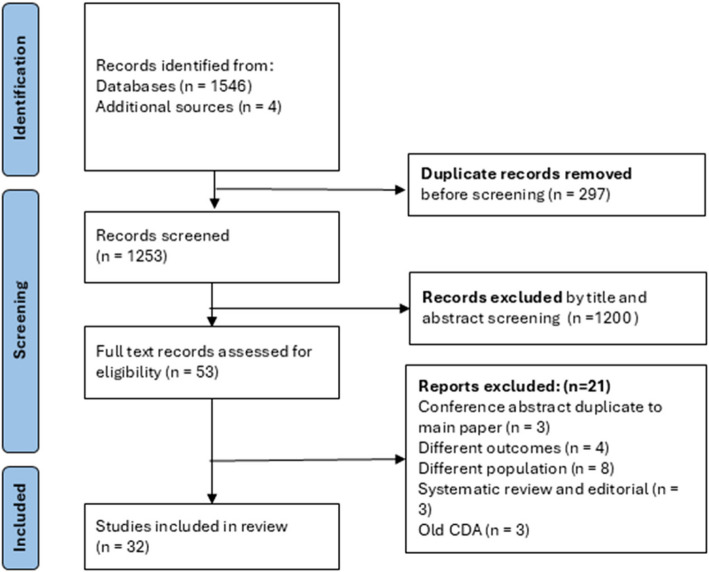
Methods: A scoping review based on the Joana Briggs Institute framework was conducted for studies published between 2010 and 2025. A database search was conducted using Medline, Embase, Scopus, Web of Science, Google Scholar, and the Cochrane library. Studies evaluating the derivation, validation, and application of CDAs for the assessment of febrile infants were eligible for inclusion. Two reviewers independently screened, analysed, and extracted data from the literature.
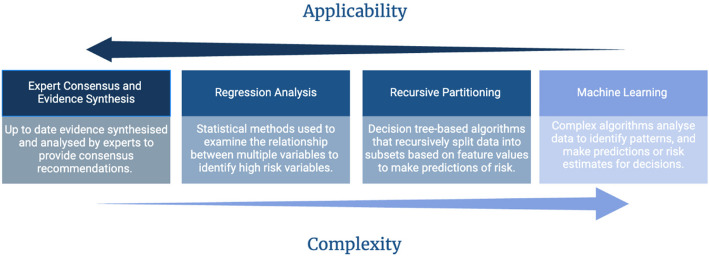
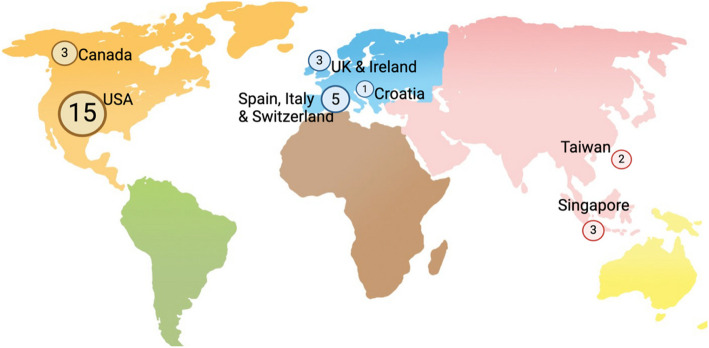
Results: A total of 32 studies met the inclusion criteria. The majority of studies were conducted in North America and Canada (56%), followed by Europe (28%), and Asia (16%). Of the 32 studies, 14 were retrospective, 9 prospective and 9 secondary analysis of an available dataset. There were 32 CDAs that were either derived or validated across 32 studies. The derivation methodology was classified into four themes: (i) expert consensus and evidence synthesis; (ii) regression analysis; (iii) recursive partitioning; and (iv) machine learning. CDAs typically either identified a low-risk cohort through sequential assessment (n = 12) or predicted the risk of IBI/SBI using prediction models (n = 20). CDA sensitivity and specificity ranged from 46 - 100% and 9 - 95% respectively for SBI/IBI. The majority (n = 18) of the more complex CDA prediction models have been published in the last five years. The most common variables included within the CDAs were age, urinalysis, height of fever, C-reactive protein, and absolute neutrophil count.
Conclusion: This scoping review highlights a wide range of CDAs with a trend towards prediction modelling rather than sequential assessment in the last five years. There is still variability in CDA properties, applicability, and diagnostic performance, necessitating further validation of common CDA and prediction models.
期刊介绍:
BMC Pediatrics is an open access journal publishing peer-reviewed research articles in all aspects of health care in neonates, children and adolescents, as well as related molecular genetics, pathophysiology, and epidemiology.



 京公网安备 11010802042870号
京ICP备2023020795号-1
京公网安备 11010802042870号
京ICP备2023020795号-1

 分享
分享
 求助内容:
求助内容: 应助结果提醒方式:
 扫码关注我们
