Qusai Y Al-Share, Aseel Y Tahrawi, Dyala M Khasawneh, Aya W Alshare, Shrouq A Alkhasawneh
{"title":"Retrospective evaluation of medication appropriateness in older adults with hepatic cirrhosis.","authors":"Qusai Y Al-Share, Aseel Y Tahrawi, Dyala M Khasawneh, Aya W Alshare, Shrouq A Alkhasawneh","doi":"10.1177/00368504251330037","DOIUrl":null,"url":null,"abstract":"<p><p>ObjectiveTo assess medication appropriateness using the medication appropriateness index (MAI) criteria, the prevalence of potentially inappropriate medication (PIM) prescribing, and factors associated with increased PIM use in elderly ambulatory patients with cirrhosis.MethodsA cross-sectional study of 70 elderly ambulatory patients with cirrhosis (≥65 years old), from January to December 2021. Two clinical pharmacists evaluated medication appropriateness using the MAI tool. Data were analyzed using SPSS version 27.0. Descriptive statistics were used to present patient demographics, clinical characteristics, and MAI responses. Regression analysis was used to identify predictive factors for PIM prescribing. The kappa statistic was used to assess interrater agreement.ResultsAll participants had at least one medication with ≥ 1 inappropriate MAI criterion, with the most common issue being incorrect treatment duration (18%). Of 610 evaluated medications, 44.1% were classified as PIMs. The mean MAI scores per patient and per medication were 15.97 (±10.48) and 1.83 (±3.18), respectively, consistent with other studies. However, the prevalence of PIMs was higher, likely due to the specific disease population studied, as this is the first study to evaluate medication appropriateness in cirrhotic patients. Good interrater agreement was observed (kappa = 0.74), indicating good interrater reliability. Increased inappropriate prescribing was associated with the number of medications, age and severe renal impairment.ConclusionsPIMs are common in elderly patients with cirrhosis, highlighting the need for better prescribing practices to ensure medication safety. Involving clinical pharmacists with geriatrics expertise and using medication appropriateness tools can reduce PIMs and drug-related problems. Further, healthcare team training is essential to improve prescribing practices. Assessing PIMs in this population could enhance clinical outcomes, reduce adverse drug reactions, and lower healthcare costs. Incorporating comprehensive medication management into routine care for elderly cirrhotic patients is a key strategy to improve patient safety and quality of life.</p>","PeriodicalId":56061,"journal":{"name":"Science Progress","volume":"108 2","pages":"368504251330037"},"PeriodicalIF":2.9000,"publicationDate":"2025-04-01","publicationTypes":"Journal Article","fieldsOfStudy":null,"isOpenAccess":false,"openAccessPdf":"https://www.ncbi.nlm.nih.gov/pmc/articles/PMC11970046/pdf/","citationCount":"0","resultStr":null,"platform":"Semanticscholar","paperid":null,"PeriodicalName":"Science Progress","FirstCategoryId":"103","ListUrlMain":"https://doi.org/10.1177/00368504251330037","RegionNum":4,"RegionCategory":"综合性期刊","ArticlePicture":[],"TitleCN":null,"AbstractTextCN":null,"PMCID":null,"EPubDate":"2025/4/3 0:00:00","PubModel":"Epub","JCR":"Q2","JCRName":"MULTIDISCIPLINARY SCIENCES","Score":null,"Total":0}
引用次数: 0
Abstract
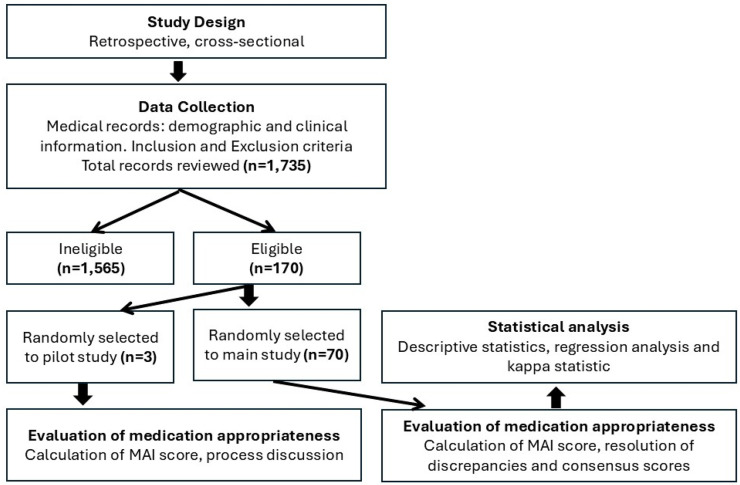
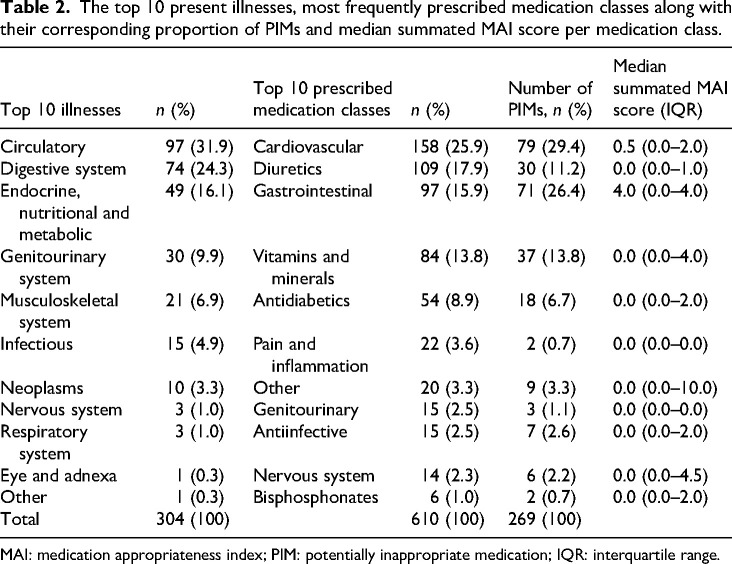
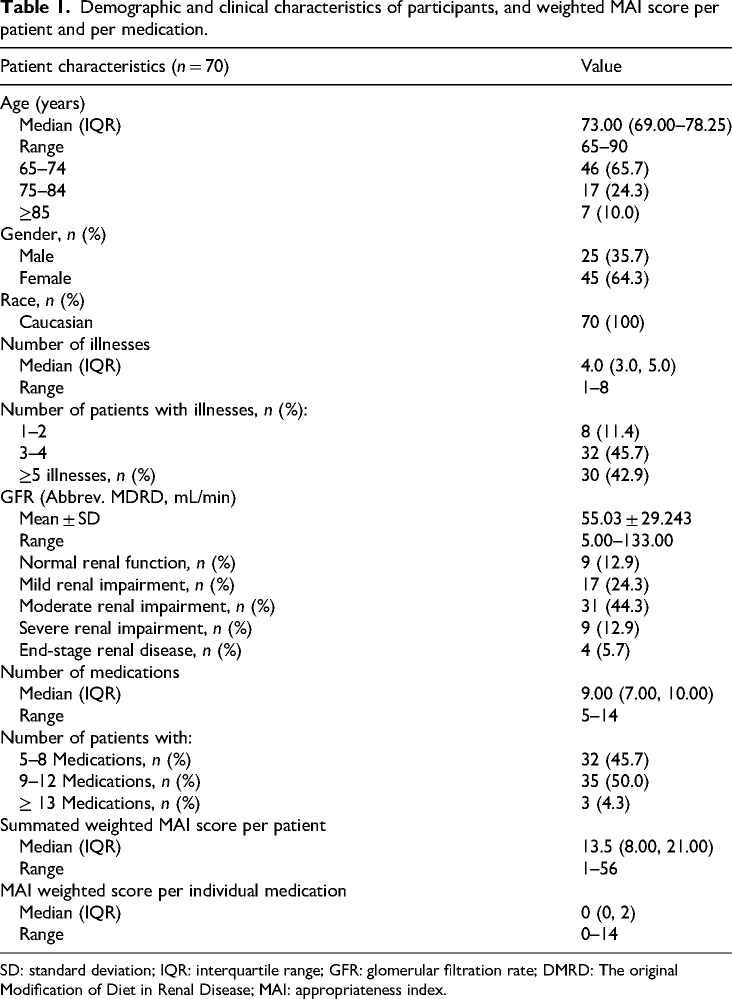
ObjectiveTo assess medication appropriateness using the medication appropriateness index (MAI) criteria, the prevalence of potentially inappropriate medication (PIM) prescribing, and factors associated with increased PIM use in elderly ambulatory patients with cirrhosis.MethodsA cross-sectional study of 70 elderly ambulatory patients with cirrhosis (≥65 years old), from January to December 2021. Two clinical pharmacists evaluated medication appropriateness using the MAI tool. Data were analyzed using SPSS version 27.0. Descriptive statistics were used to present patient demographics, clinical characteristics, and MAI responses. Regression analysis was used to identify predictive factors for PIM prescribing. The kappa statistic was used to assess interrater agreement.ResultsAll participants had at least one medication with ≥ 1 inappropriate MAI criterion, with the most common issue being incorrect treatment duration (18%). Of 610 evaluated medications, 44.1% were classified as PIMs. The mean MAI scores per patient and per medication were 15.97 (±10.48) and 1.83 (±3.18), respectively, consistent with other studies. However, the prevalence of PIMs was higher, likely due to the specific disease population studied, as this is the first study to evaluate medication appropriateness in cirrhotic patients. Good interrater agreement was observed (kappa = 0.74), indicating good interrater reliability. Increased inappropriate prescribing was associated with the number of medications, age and severe renal impairment.ConclusionsPIMs are common in elderly patients with cirrhosis, highlighting the need for better prescribing practices to ensure medication safety. Involving clinical pharmacists with geriatrics expertise and using medication appropriateness tools can reduce PIMs and drug-related problems. Further, healthcare team training is essential to improve prescribing practices. Assessing PIMs in this population could enhance clinical outcomes, reduce adverse drug reactions, and lower healthcare costs. Incorporating comprehensive medication management into routine care for elderly cirrhotic patients is a key strategy to improve patient safety and quality of life.
期刊介绍:
Science Progress has for over 100 years been a highly regarded review publication in science, technology and medicine. Its objective is to excite the readers'' interest in areas with which they may not be fully familiar but which could facilitate their interest, or even activity, in a cognate field.



 京公网安备 11010802042870号
京ICP备2023020795号-1
京公网安备 11010802042870号
京ICP备2023020795号-1

 分享
分享
 求助内容:
求助内容: 应助结果提醒方式:
 扫码关注我们
