Musculoskeletal disorders and other occupational health outcomes among sanitation workers in Nepal: A community based cross-sectional survey exploring the risk factors, knowledge, and practices.
Samip Khatri, Gita Kumari Shah, Pratibha Bhandari, Sweta Koirala, Kalidas Neupane, Niraj Bhattarai, Sagar Gyawali, Bipan Bahadur Tiwari, Sonam Magar, Antra Kapar, Monika Chaudhary, Subash Wagle, Sanjay Kumar Shah, Sara Hagedorn Kragh, Kurt Rasmussen, Erik Jørs, Dinesh Neupane
{"title":"Musculoskeletal disorders and other occupational health outcomes among sanitation workers in Nepal: A community based cross-sectional survey exploring the risk factors, knowledge, and practices.","authors":"Samip Khatri, Gita Kumari Shah, Pratibha Bhandari, Sweta Koirala, Kalidas Neupane, Niraj Bhattarai, Sagar Gyawali, Bipan Bahadur Tiwari, Sonam Magar, Antra Kapar, Monika Chaudhary, Subash Wagle, Sanjay Kumar Shah, Sara Hagedorn Kragh, Kurt Rasmussen, Erik Jørs, Dinesh Neupane","doi":"10.1186/s12889-025-22282-6","DOIUrl":null,"url":null,"abstract":"<p><strong>Background: </strong>Sanitation workers play a crucial role in waste management and are at risk of significant occupational health hazards. This study aims to assess work-related musculoskeletal disorders along with other occupational health outcomes, knowledge and practices pertaining to occupational health risks among sanitation workers in five municipalities of Nepal and identify factors associated with musculoskeletal disorders.</p><p><strong>Methods: </strong>A community-based quantitative cross-sectional survey was conducted among 790 sanitation workers using a non-probability sampling method. The study was conducted from December 2023 to December 2024, which involved structured face-to-face interviews with the participants and their health assessments by trained medical doctors. The study assessed socio-demographic characteristics, occupational health outcomes such as musculoskeletal disorders, and knowledge and practices pertaining to occupational health risks. A stepwise backward selection method was employed for conducting multiple logistic regression to identify the significant predictors of musculoskeletal disorders. Odds ratio and 95% CI were used to estimate the magnitude of association. p-value less than 0.05 was considered significant.</p><p><strong>Results: </strong>Of the total estimated sample size, 93% of the participants attended the health camp and completed the survey. Musculoskeletal disorders were observed in 36% (95% CI:35.5-39.7) of sanitation workers, with the highest prevalence among sweepers (38.8%), while needlestick injuries were common among the waste collectors (7.2%). Knowledge scores on occupational health risk prevention were moderate (70.7%), with 70.1% of workers reporting the use of personal protective equipment (PPE). Predictors of musculoskeletal disorders included age (OR:1.02, 95% CI:1.00-1.03), belonging to an underprivileged ethnic group (OR:2.14, 95% CI:1.01-5.53), education level (grade1-5) (OR:1.49, 95% CI:1.03-2.16) and employment in Pokhara municipality (OR:1.43, 95% CI:0.94-2.18).</p><p><strong>Conclusion: </strong>Sanitation workers in Nepal face significant work-related occupational health risks, particularly musculoskeletal disorders, influenced by socio-demographic and job-specific factors. It is essential to implement targeted training programs for occupational safety, enforce workplace safety regulations, and conduct routine health screenings of sanitation workers by the municipality.</p>","PeriodicalId":9039,"journal":{"name":"BMC Public Health","volume":"25 1","pages":"1273"},"PeriodicalIF":3.6000,"publicationDate":"2025-04-04","publicationTypes":"Journal Article","fieldsOfStudy":null,"isOpenAccess":false,"openAccessPdf":"https://www.ncbi.nlm.nih.gov/pmc/articles/PMC11969739/pdf/","citationCount":"0","resultStr":null,"platform":"Semanticscholar","paperid":null,"PeriodicalName":"BMC Public Health","FirstCategoryId":"3","ListUrlMain":"https://doi.org/10.1186/s12889-025-22282-6","RegionNum":2,"RegionCategory":"医学","ArticlePicture":[],"TitleCN":null,"AbstractTextCN":null,"PMCID":null,"EPubDate":"","PubModel":"","JCR":"Q1","JCRName":"PUBLIC, ENVIRONMENTAL & OCCUPATIONAL HEALTH","Score":null,"Total":0}
引用次数: 0
Abstract
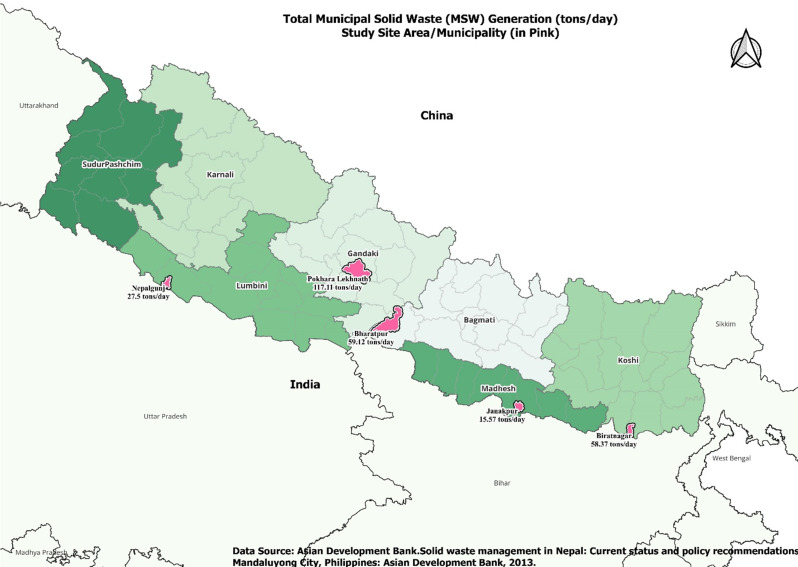
Background: Sanitation workers play a crucial role in waste management and are at risk of significant occupational health hazards. This study aims to assess work-related musculoskeletal disorders along with other occupational health outcomes, knowledge and practices pertaining to occupational health risks among sanitation workers in five municipalities of Nepal and identify factors associated with musculoskeletal disorders.
Methods: A community-based quantitative cross-sectional survey was conducted among 790 sanitation workers using a non-probability sampling method. The study was conducted from December 2023 to December 2024, which involved structured face-to-face interviews with the participants and their health assessments by trained medical doctors. The study assessed socio-demographic characteristics, occupational health outcomes such as musculoskeletal disorders, and knowledge and practices pertaining to occupational health risks. A stepwise backward selection method was employed for conducting multiple logistic regression to identify the significant predictors of musculoskeletal disorders. Odds ratio and 95% CI were used to estimate the magnitude of association. p-value less than 0.05 was considered significant.
Results: Of the total estimated sample size, 93% of the participants attended the health camp and completed the survey. Musculoskeletal disorders were observed in 36% (95% CI:35.5-39.7) of sanitation workers, with the highest prevalence among sweepers (38.8%), while needlestick injuries were common among the waste collectors (7.2%). Knowledge scores on occupational health risk prevention were moderate (70.7%), with 70.1% of workers reporting the use of personal protective equipment (PPE). Predictors of musculoskeletal disorders included age (OR:1.02, 95% CI:1.00-1.03), belonging to an underprivileged ethnic group (OR:2.14, 95% CI:1.01-5.53), education level (grade1-5) (OR:1.49, 95% CI:1.03-2.16) and employment in Pokhara municipality (OR:1.43, 95% CI:0.94-2.18).
Conclusion: Sanitation workers in Nepal face significant work-related occupational health risks, particularly musculoskeletal disorders, influenced by socio-demographic and job-specific factors. It is essential to implement targeted training programs for occupational safety, enforce workplace safety regulations, and conduct routine health screenings of sanitation workers by the municipality.
期刊介绍:
BMC Public Health is an open access, peer-reviewed journal that considers articles on the epidemiology of disease and the understanding of all aspects of public health. The journal has a special focus on the social determinants of health, the environmental, behavioral, and occupational correlates of health and disease, and the impact of health policies, practices and interventions on the community.



 京公网安备 11010802042870号
京ICP备2023020795号-1
京公网安备 11010802042870号
京ICP备2023020795号-1

 分享
分享
 求助内容:
求助内容: 应助结果提醒方式:
 扫码关注我们
