{"title":"Treatment and prognosis of pelvic-related urethral injuries in children: a 20-year single-center study and systematic review.","authors":"Kongkong Cui, Peng Hong, Honggang Fang, Jie Lin, Zaihong Hu, Xiaomao Tian, Deying Zhang, Shengde Wu, Xing Liu, Qinlin Shi, Guanghui Wei","doi":"10.1186/s12887-025-05611-x","DOIUrl":null,"url":null,"abstract":"<p><strong>Background: </strong>Management of pelvic fracture-related urethral injury (PFUI) in children remains debated due to various complications. Patients typically receive either primary realignment (PR) or suprapubic cystostomy with delayed urethroplasty (SCDU), but optimal outcomes are unclear. This study evaluates these two surgical techniques by reviewing 20 years of case data and existing literature.</p><p><strong>Methods: </strong>We retrospectively analyzed patients treated for PFUI from 2004 to 2023, with a median follow-up of 2 years (1-15 years). Additionally, we performed a meta-analysis of relevant literature, searching PubMed, Web of Science, and Cochrane databases. Eight studies, including ours, were included in the analysis.</p><p><strong>Results: </strong>Sixty-eight boys with PFUI (median age: 7.3 years; range: 4.8-10.8) underwent PR (39) or SCDU (29). Postoperative complications-urethral strictures, urinary incontinence, calculus, infections, and erectile dysfunction-occurred in PR vs. SCDU groups as follows: 38.5% vs. 51.7% (p = 0.276); 12.8% vs. 3.45% (p = 0.360); 7.7% vs. 13.8% (p = 0.678); 56.4% vs. 93.1% (p < 0.001); and15.4% vs. 3.5% (p = 0.231), respectively. PR was associated with lower costs and higher quality of life. The meta-analysis of eight studies involving 432 patients showed no significant differences between PR and SCDU in urethral stricture rates (OR = 0.60, 95% CI 0.33-1.10, p = 0.10), urinary incontinence (OR = 0.94, 95% CI 0.52-1.70, p = 0.84), and erectile dysfunction (OR = 0.85, 95% CI 0.41-1.76, p = 0.65).</p><p><strong>Conclusion: </strong>There was no difference in complications between the two surgical modalities at long-term follow-up, however, PR presents more advantages in reduce operative times, frequency of postoperative infections, cost, and long-term quality of life.</p><p><strong>Clinical trial number: </strong>Not applicable.</p>","PeriodicalId":9144,"journal":{"name":"BMC Pediatrics","volume":"25 1","pages":"277"},"PeriodicalIF":2.0000,"publicationDate":"2025-04-04","publicationTypes":"Journal Article","fieldsOfStudy":null,"isOpenAccess":false,"openAccessPdf":"https://www.ncbi.nlm.nih.gov/pmc/articles/PMC11969931/pdf/","citationCount":"0","resultStr":null,"platform":"Semanticscholar","paperid":null,"PeriodicalName":"BMC Pediatrics","FirstCategoryId":"3","ListUrlMain":"https://doi.org/10.1186/s12887-025-05611-x","RegionNum":3,"RegionCategory":"医学","ArticlePicture":[],"TitleCN":null,"AbstractTextCN":null,"PMCID":null,"EPubDate":"","PubModel":"","JCR":"Q2","JCRName":"PEDIATRICS","Score":null,"Total":0}
引用次数: 0
Abstract
Background: Management of pelvic fracture-related urethral injury (PFUI) in children remains debated due to various complications. Patients typically receive either primary realignment (PR) or suprapubic cystostomy with delayed urethroplasty (SCDU), but optimal outcomes are unclear. This study evaluates these two surgical techniques by reviewing 20 years of case data and existing literature.
Methods: We retrospectively analyzed patients treated for PFUI from 2004 to 2023, with a median follow-up of 2 years (1-15 years). Additionally, we performed a meta-analysis of relevant literature, searching PubMed, Web of Science, and Cochrane databases. Eight studies, including ours, were included in the analysis.
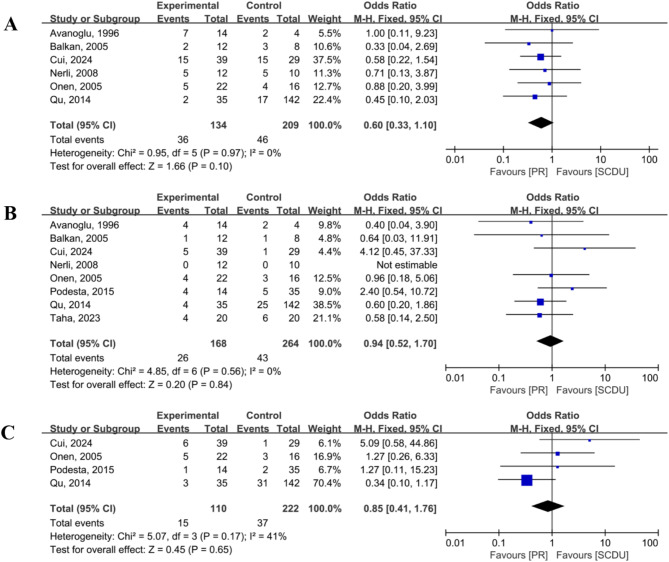
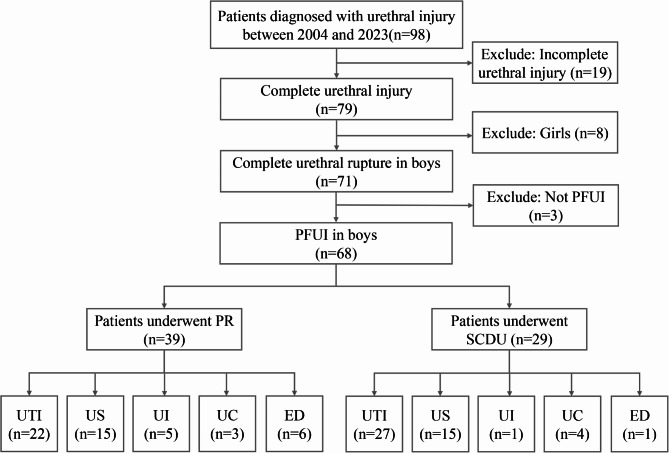
Results: Sixty-eight boys with PFUI (median age: 7.3 years; range: 4.8-10.8) underwent PR (39) or SCDU (29). Postoperative complications-urethral strictures, urinary incontinence, calculus, infections, and erectile dysfunction-occurred in PR vs. SCDU groups as follows: 38.5% vs. 51.7% (p = 0.276); 12.8% vs. 3.45% (p = 0.360); 7.7% vs. 13.8% (p = 0.678); 56.4% vs. 93.1% (p < 0.001); and15.4% vs. 3.5% (p = 0.231), respectively. PR was associated with lower costs and higher quality of life. The meta-analysis of eight studies involving 432 patients showed no significant differences between PR and SCDU in urethral stricture rates (OR = 0.60, 95% CI 0.33-1.10, p = 0.10), urinary incontinence (OR = 0.94, 95% CI 0.52-1.70, p = 0.84), and erectile dysfunction (OR = 0.85, 95% CI 0.41-1.76, p = 0.65).
Conclusion: There was no difference in complications between the two surgical modalities at long-term follow-up, however, PR presents more advantages in reduce operative times, frequency of postoperative infections, cost, and long-term quality of life.
期刊介绍:
BMC Pediatrics is an open access journal publishing peer-reviewed research articles in all aspects of health care in neonates, children and adolescents, as well as related molecular genetics, pathophysiology, and epidemiology.
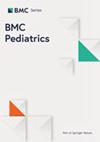



 京公网安备 11010802042870号
京ICP备2023020795号-1
京公网安备 11010802042870号
京ICP备2023020795号-1

 分享
分享
 求助内容:
求助内容: 应助结果提醒方式:
 扫码关注我们
