An additional rehabilitation program to improve postoperative outcomes in patients with rotator cuff tear and scapular dyskinesis: a propensity score-matched study.
{"title":"An additional rehabilitation program to improve postoperative outcomes in patients with rotator cuff tear and scapular dyskinesis: a propensity score-matched study.","authors":"Jian-Ning Sun, Qun-Ya Zheng, Rui-Song Wang, Yun-Ru Ma, Peng Chen","doi":"10.1186/s12891-025-08596-x","DOIUrl":null,"url":null,"abstract":"<p><strong>Background: </strong>General scapular exercises have been included in traditional postoperative rehabilitation for rotator cuff tears, but patients with concomitant scapular dyskinesia do not have identical scapular muscle imbalances, and general scapular exercises make it difficult to improve scapular movement. We hypothesized that identifying weak scapular muscle groups and strengthening training would improve scapular movement.</p><p><strong>Methods: </strong>A total of 60 rotator cuff tear patients with scapular dyskinesia were included in the study, 20 in the experimental group and 40 in the control group. Patients in the control group received traditional rehabilitation following rotator cuff repair, while patients in the experimental group performed additional selective scapular muscle rehabilitation exercises. Constant-Murley Score (CMS), shoulder mobility, VAS scores, SF-12 scores, and scapular motion were assessed in both groups at 16 weeks postoperatively.</p><p><strong>Results: </strong>At 16-week follow-up, the experimental group showed better CMS (87.2 ± 4.4 vs. 83.9 ± 4.8) and shoulder anteflexion (137 ± 13.0 vs. 127.9 ± 12.2°) and abduction mobility (133.1 ± 15.4 vs. 121.4 ± 13.8°) compared to the control group. The experimental group had better improvements in scapular upward rotation (42.8 ± 11.7 vs. 35.3 ± 9.6°) and anterior tilt (12.9 ± 4.2 vs. 6.4 ± 2.0°) during shoulder anteflexion versus the control group. During shoulder abduction, the experimental group had better improvements in scapular anterior tilt (12.8 ± 3.3 vs. 9.1 ± 3.0°) versus the control group.</p><p><strong>Conclusions: </strong>This study provides an additional exercise program targeting the scapular muscle groups for postoperative rehabilitation in rotator cuff tear patients with scapular dyskinesis. By identifying imbalanced muscles through electromyographic testing, and performing selective muscle strengthening exercises, better shoulder mobility and scapular motion performance can be achieved.</p><p><strong>Trial registration: </strong>(Chinese Clinical Trial Registry ( https://www.chictr.org.cn ), ChiCTR2400087465, July 29, 2024, prospectively registered.).</p>","PeriodicalId":9189,"journal":{"name":"BMC Musculoskeletal Disorders","volume":"26 1","pages":"338"},"PeriodicalIF":2.4000,"publicationDate":"2025-04-05","publicationTypes":"Journal Article","fieldsOfStudy":null,"isOpenAccess":false,"openAccessPdf":"https://www.ncbi.nlm.nih.gov/pmc/articles/PMC11971852/pdf/","citationCount":"0","resultStr":null,"platform":"Semanticscholar","paperid":null,"PeriodicalName":"BMC Musculoskeletal Disorders","FirstCategoryId":"3","ListUrlMain":"https://doi.org/10.1186/s12891-025-08596-x","RegionNum":3,"RegionCategory":"医学","ArticlePicture":[],"TitleCN":null,"AbstractTextCN":null,"PMCID":null,"EPubDate":"","PubModel":"","JCR":"Q2","JCRName":"ORTHOPEDICS","Score":null,"Total":0}
引用次数: 0
Abstract
Background: General scapular exercises have been included in traditional postoperative rehabilitation for rotator cuff tears, but patients with concomitant scapular dyskinesia do not have identical scapular muscle imbalances, and general scapular exercises make it difficult to improve scapular movement. We hypothesized that identifying weak scapular muscle groups and strengthening training would improve scapular movement.
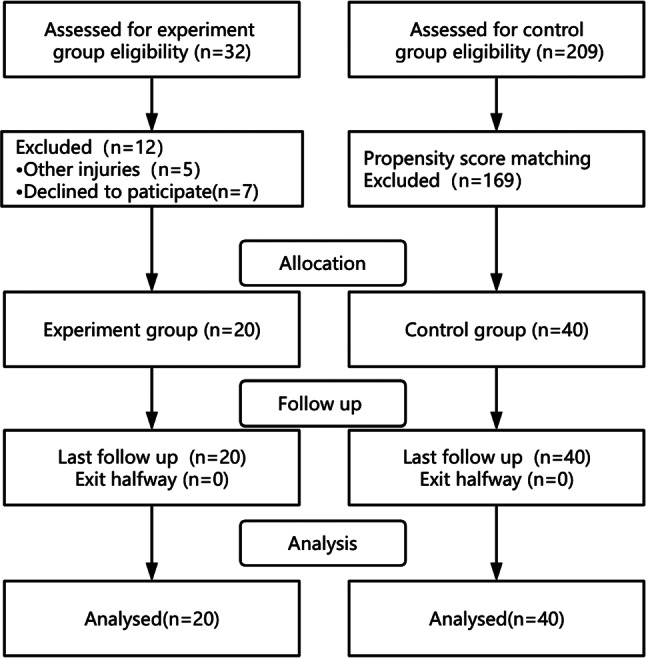
Methods: A total of 60 rotator cuff tear patients with scapular dyskinesia were included in the study, 20 in the experimental group and 40 in the control group. Patients in the control group received traditional rehabilitation following rotator cuff repair, while patients in the experimental group performed additional selective scapular muscle rehabilitation exercises. Constant-Murley Score (CMS), shoulder mobility, VAS scores, SF-12 scores, and scapular motion were assessed in both groups at 16 weeks postoperatively.
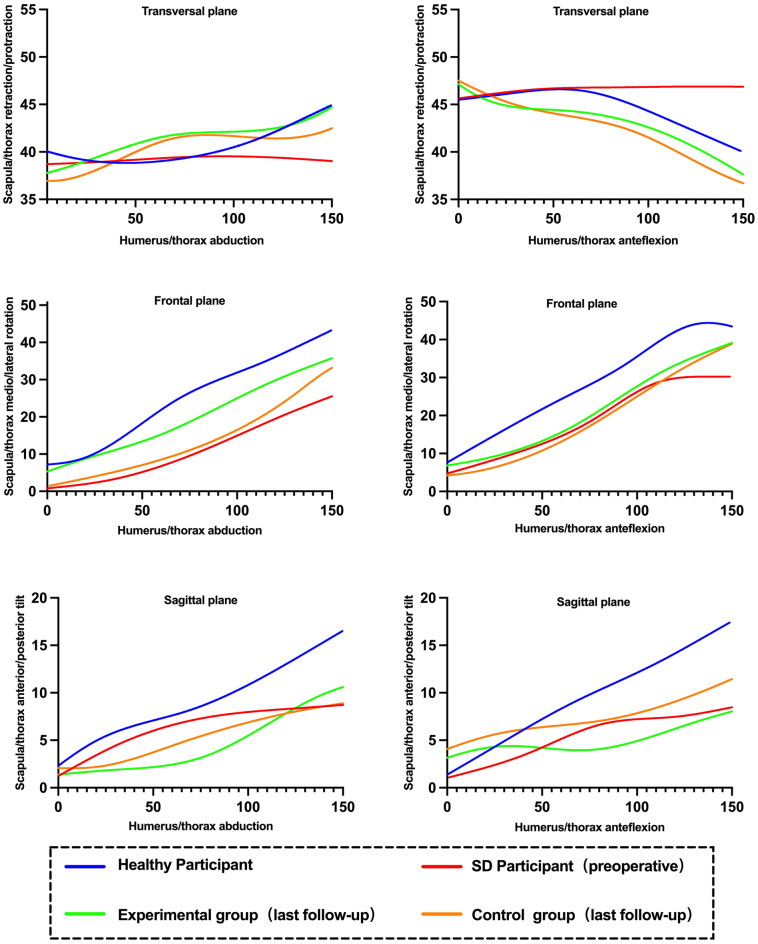
Results: At 16-week follow-up, the experimental group showed better CMS (87.2 ± 4.4 vs. 83.9 ± 4.8) and shoulder anteflexion (137 ± 13.0 vs. 127.9 ± 12.2°) and abduction mobility (133.1 ± 15.4 vs. 121.4 ± 13.8°) compared to the control group. The experimental group had better improvements in scapular upward rotation (42.8 ± 11.7 vs. 35.3 ± 9.6°) and anterior tilt (12.9 ± 4.2 vs. 6.4 ± 2.0°) during shoulder anteflexion versus the control group. During shoulder abduction, the experimental group had better improvements in scapular anterior tilt (12.8 ± 3.3 vs. 9.1 ± 3.0°) versus the control group.
Conclusions: This study provides an additional exercise program targeting the scapular muscle groups for postoperative rehabilitation in rotator cuff tear patients with scapular dyskinesis. By identifying imbalanced muscles through electromyographic testing, and performing selective muscle strengthening exercises, better shoulder mobility and scapular motion performance can be achieved.
期刊介绍:
BMC Musculoskeletal Disorders is an open access, peer-reviewed journal that considers articles on all aspects of the prevention, diagnosis and management of musculoskeletal disorders, as well as related molecular genetics, pathophysiology, and epidemiology.
The scope of the Journal covers research into rheumatic diseases where the primary focus relates specifically to a component(s) of the musculoskeletal system.



 京公网安备 11010802042870号
京ICP备2023020795号-1
京公网安备 11010802042870号
京ICP备2023020795号-1

 分享
分享
 求助内容:
求助内容: 应助结果提醒方式:
 扫码关注我们
