Wenhui Wu, Siwei Wang, Mo Zhou, Qian Ao, Jianhao Liao, Bangyong Qin, Jie Yuan
{"title":"Trigeminal ganglion electrical stimulation relieves refractory trigeminal herpes zoster and prevents postherpetic neuralgia: a case report.","authors":"Wenhui Wu, Siwei Wang, Mo Zhou, Qian Ao, Jianhao Liao, Bangyong Qin, Jie Yuan","doi":"10.1186/s13256-025-05201-6","DOIUrl":null,"url":null,"abstract":"<p><strong>Introduction: </strong>Herpes zoster is an acute condition caused by the reactivation of varicella zoster virus, often affecting the skin and mucosa. When varicella zoster virus invades the trigeminal ganglion, it can lead to trigeminal herpes zoster, with postherpetic neuralgia as the most common complication. Postherpetic neuralgia, characterized by persistent pain for over 3 months after skin lesions heal, significantly impacts quality of life, including sleep, mood, and social interactions. Current treatments, including antiviral drugs, analgesics, and neurotrophic agents, are often insufficient, and many patients still suffer from refractory postherpetic neuralgia. This highlights the need for alternative treatments. Trigeminal ganglion electrical stimulation has shown potential in managing refractory trigeminal herpes zoster and preventing postherpetic neuralgia. However, reports on its effectiveness remain scarce. This article presents two rare cases where trigeminal ganglion electrical stimulation was successfully used to treat refractory trigeminal herpes zoster and prevent postherpetic neuralgia.</p><p><strong>Case presentation: </strong>This study reports two cases of trigeminal herpes zoster that were refractory to pharmacological treatment and successfully alleviated using trigeminal ganglion electrical stimulation, which also effectively prevented postherpetic neuralgia. Both patients, a 62-year-old Chinese female and a 65-year-old Chinese male, presented with severe pain, itching, sensory disturbances, and extensive vesicular lesions on the left side of the face, involving the ophthalmic (V1) and maxillary (V2) branches. Despite receiving antiviral drugs, analgesics, and neurotrophic agents, their symptoms remained inadequately controlled, with pain scores ranging from 8 to 10. After undergoing trigeminal ganglion electrical stimulation, the pain score of both patients dropped to 2-3 on the first day post-treatment, with significant improvement in the herpes zoster blisters and pain. During follow-up, the pain continued to improve, with marked reduction in the pain and itching in the affected areas, and sleep quality also improved. At 1, 3, and 6 months of follow-up, neither patient had developed postherpetic neuralgia. These cases suggest that trigeminal ganglion electrical stimulation may be an effective method for treating refractory trigeminal herpes zoster and preventing postherpetic neuralgia, significantly improving herpes symptoms and alleviating pain.</p><p><strong>Conclusions: </strong>These cases demonstrate that trigeminal ganglion electrical stimulation can provide rapid and sustained pain relief while preventing postherpetic neuralgia in refractory trigeminal herpes zoster patients. This highlights the potential of trigeminal ganglion electrical stimulation as a novel therapeutic approach, particularly for patients who do not respond to conventional treatments. Its success in these cases suggests a promising direction for further research and clinical application.</p>","PeriodicalId":16236,"journal":{"name":"Journal of Medical Case Reports","volume":"19 1","pages":"162"},"PeriodicalIF":0.8000,"publicationDate":"2025-04-05","publicationTypes":"Journal Article","fieldsOfStudy":null,"isOpenAccess":false,"openAccessPdf":"https://www.ncbi.nlm.nih.gov/pmc/articles/PMC11972503/pdf/","citationCount":"0","resultStr":null,"platform":"Semanticscholar","paperid":null,"PeriodicalName":"Journal of Medical Case Reports","FirstCategoryId":"1085","ListUrlMain":"https://doi.org/10.1186/s13256-025-05201-6","RegionNum":0,"RegionCategory":null,"ArticlePicture":[],"TitleCN":null,"AbstractTextCN":null,"PMCID":null,"EPubDate":"","PubModel":"","JCR":"Q3","JCRName":"MEDICINE, GENERAL & INTERNAL","Score":null,"Total":0}
引用次数: 0
Abstract
Introduction: Herpes zoster is an acute condition caused by the reactivation of varicella zoster virus, often affecting the skin and mucosa. When varicella zoster virus invades the trigeminal ganglion, it can lead to trigeminal herpes zoster, with postherpetic neuralgia as the most common complication. Postherpetic neuralgia, characterized by persistent pain for over 3 months after skin lesions heal, significantly impacts quality of life, including sleep, mood, and social interactions. Current treatments, including antiviral drugs, analgesics, and neurotrophic agents, are often insufficient, and many patients still suffer from refractory postherpetic neuralgia. This highlights the need for alternative treatments. Trigeminal ganglion electrical stimulation has shown potential in managing refractory trigeminal herpes zoster and preventing postherpetic neuralgia. However, reports on its effectiveness remain scarce. This article presents two rare cases where trigeminal ganglion electrical stimulation was successfully used to treat refractory trigeminal herpes zoster and prevent postherpetic neuralgia.
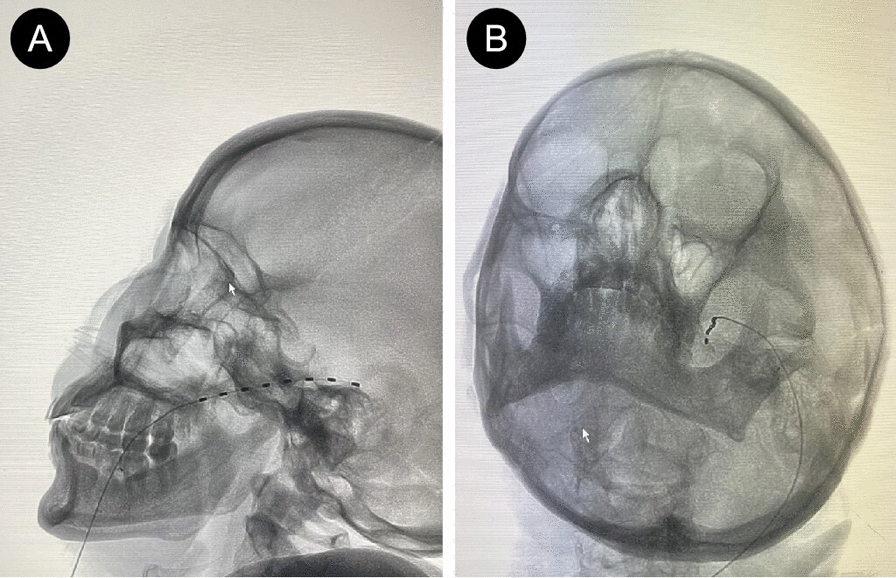
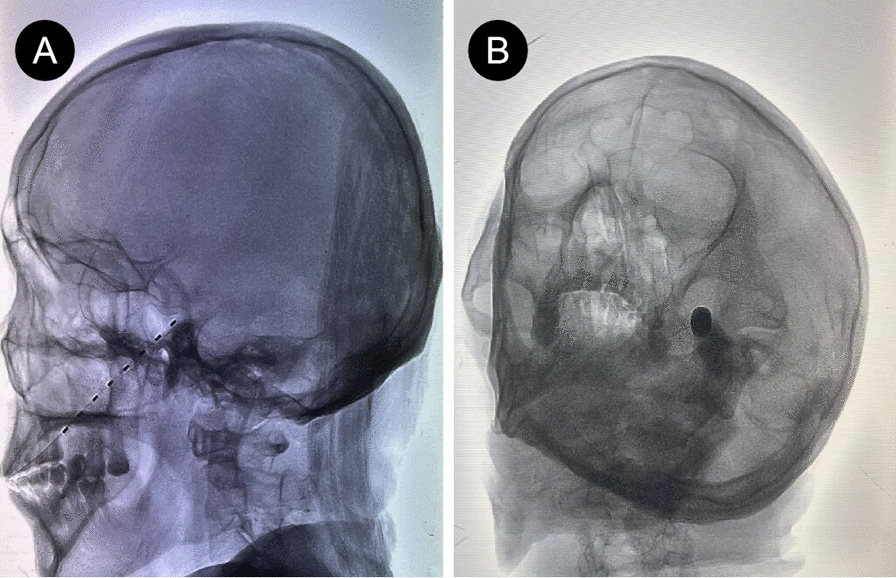
Case presentation: This study reports two cases of trigeminal herpes zoster that were refractory to pharmacological treatment and successfully alleviated using trigeminal ganglion electrical stimulation, which also effectively prevented postherpetic neuralgia. Both patients, a 62-year-old Chinese female and a 65-year-old Chinese male, presented with severe pain, itching, sensory disturbances, and extensive vesicular lesions on the left side of the face, involving the ophthalmic (V1) and maxillary (V2) branches. Despite receiving antiviral drugs, analgesics, and neurotrophic agents, their symptoms remained inadequately controlled, with pain scores ranging from 8 to 10. After undergoing trigeminal ganglion electrical stimulation, the pain score of both patients dropped to 2-3 on the first day post-treatment, with significant improvement in the herpes zoster blisters and pain. During follow-up, the pain continued to improve, with marked reduction in the pain and itching in the affected areas, and sleep quality also improved. At 1, 3, and 6 months of follow-up, neither patient had developed postherpetic neuralgia. These cases suggest that trigeminal ganglion electrical stimulation may be an effective method for treating refractory trigeminal herpes zoster and preventing postherpetic neuralgia, significantly improving herpes symptoms and alleviating pain.
Conclusions: These cases demonstrate that trigeminal ganglion electrical stimulation can provide rapid and sustained pain relief while preventing postherpetic neuralgia in refractory trigeminal herpes zoster patients. This highlights the potential of trigeminal ganglion electrical stimulation as a novel therapeutic approach, particularly for patients who do not respond to conventional treatments. Its success in these cases suggests a promising direction for further research and clinical application.
期刊介绍:
JMCR is an open access, peer-reviewed online journal that will consider any original case report that expands the field of general medical knowledge. Reports should show one of the following: 1. Unreported or unusual side effects or adverse interactions involving medications 2. Unexpected or unusual presentations of a disease 3. New associations or variations in disease processes 4. Presentations, diagnoses and/or management of new and emerging diseases 5. An unexpected association between diseases or symptoms 6. An unexpected event in the course of observing or treating a patient 7. Findings that shed new light on the possible pathogenesis of a disease or an adverse effect




 京公网安备 11010802042870号
京ICP备2023020795号-1
京公网安备 11010802042870号
京ICP备2023020795号-1

 分享
分享
 求助内容:
求助内容: 应助结果提醒方式:
 扫码关注我们
