{"title":"Stabilization Effect of Heavy Metals in Waste Incineration Fly Ash by Inorganic and Organic Chelating Agents","authors":"Yixuan Xiao, Yaji Huang, Mengzhu Yu, Zhicheng Zhu, Wentao Xu, Zhiyuan Li, Hao Shi, Jiawei Gao, Baosheng Jin","doi":"10.1007/s11270-025-07924-0","DOIUrl":null,"url":null,"abstract":"<div><p>Since municipal solid waste incineration fly ash (MSWI FA) contains a large amount of potentially toxic heavy metals that need to be safely treated before landfill, solidification/stabilization chemical stabilization method is one of the most commonly used methods for MSWI FA treatment. To investigate the effects of different inorganic and organic chelating agents on the solidification of heavy metals (such as Pb, Cd, etc.), immobilization, here we selected three inorganic chelating agents (Na<sub>2</sub>S, NaH<sub>2</sub>PO<sub>4</sub> and Na<sub>3</sub>PO<sub>4</sub>) and four organic chelating agents (thiourea, diethyl-mercaptan, DDTC and EDTA Na) for a comprehensive comparison of the heavy metal stabilization and immobilization performance. The leaching and BCR results indicate that under the same low addition conditions, diethyl-mercaptan containing double bond groups exhibits a better chelating effect on most heavy metals (such as Pb, Cd, Cr, Cu and etc.), and the addition of Na<sub>2</sub>S can better increase the residual state ratio of Cd. Moreover, we further selected inorganic Na<sub>2</sub>S and organic diethyl mercaptan for compounding and it was found that the content of cadmium and lead in the leaching product after the composite chelating agent NS-2 solidified the heavy metals was low, and the lead content was far below the safety threshold of the landfill standard of China (GB16889-2008), which can significantly save the cost of chemicals. This work can provide a reference for the selection and design of effective chelators for stabilizing toxic heavy metals.</p><h3>Graphical Abstract</h3>\n<div><figure><div><div><picture><source><img></source></picture></div></div></figure></div></div>","PeriodicalId":808,"journal":{"name":"Water, Air, & Soil Pollution","volume":"236 5","pages":""},"PeriodicalIF":3.0000,"publicationDate":"2025-04-08","publicationTypes":"Journal Article","fieldsOfStudy":null,"isOpenAccess":false,"openAccessPdf":"","citationCount":"0","resultStr":null,"platform":"Semanticscholar","paperid":null,"PeriodicalName":"Water, Air, & Soil Pollution","FirstCategoryId":"6","ListUrlMain":"https://link.springer.com/article/10.1007/s11270-025-07924-0","RegionNum":4,"RegionCategory":"环境科学与生态学","ArticlePicture":[],"TitleCN":null,"AbstractTextCN":null,"PMCID":null,"EPubDate":"","PubModel":"","JCR":"Q2","JCRName":"ENVIRONMENTAL SCIENCES","Score":null,"Total":0}
引用次数: 0
Abstract
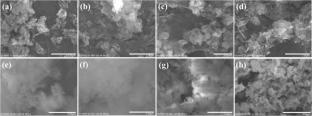
Since municipal solid waste incineration fly ash (MSWI FA) contains a large amount of potentially toxic heavy metals that need to be safely treated before landfill, solidification/stabilization chemical stabilization method is one of the most commonly used methods for MSWI FA treatment. To investigate the effects of different inorganic and organic chelating agents on the solidification of heavy metals (such as Pb, Cd, etc.), immobilization, here we selected three inorganic chelating agents (Na2S, NaH2PO4 and Na3PO4) and four organic chelating agents (thiourea, diethyl-mercaptan, DDTC and EDTA Na) for a comprehensive comparison of the heavy metal stabilization and immobilization performance. The leaching and BCR results indicate that under the same low addition conditions, diethyl-mercaptan containing double bond groups exhibits a better chelating effect on most heavy metals (such as Pb, Cd, Cr, Cu and etc.), and the addition of Na2S can better increase the residual state ratio of Cd. Moreover, we further selected inorganic Na2S and organic diethyl mercaptan for compounding and it was found that the content of cadmium and lead in the leaching product after the composite chelating agent NS-2 solidified the heavy metals was low, and the lead content was far below the safety threshold of the landfill standard of China (GB16889-2008), which can significantly save the cost of chemicals. This work can provide a reference for the selection and design of effective chelators for stabilizing toxic heavy metals.
期刊介绍:
Water, Air, & Soil Pollution is an international, interdisciplinary journal on all aspects of pollution and solutions to pollution in the biosphere. This includes chemical, physical and biological processes affecting flora, fauna, water, air and soil in relation to environmental pollution. Because of its scope, the subject areas are diverse and include all aspects of pollution sources, transport, deposition, accumulation, acid precipitation, atmospheric pollution, metals, aquatic pollution including marine pollution and ground water, waste water, pesticides, soil pollution, sewage, sediment pollution, forestry pollution, effects of pollutants on humans, vegetation, fish, aquatic species, micro-organisms, and animals, environmental and molecular toxicology applied to pollution research, biosensors, global and climate change, ecological implications of pollution and pollution models. Water, Air, & Soil Pollution also publishes manuscripts on novel methods used in the study of environmental pollutants, environmental toxicology, environmental biology, novel environmental engineering related to pollution, biodiversity as influenced by pollution, novel environmental biotechnology as applied to pollution (e.g. bioremediation), environmental modelling and biorestoration of polluted environments.
Articles should not be submitted that are of local interest only and do not advance international knowledge in environmental pollution and solutions to pollution. Articles that simply replicate known knowledge or techniques while researching a local pollution problem will normally be rejected without review. Submitted articles must have up-to-date references, employ the correct experimental replication and statistical analysis, where needed and contain a significant contribution to new knowledge. The publishing and editorial team sincerely appreciate your cooperation.
Water, Air, & Soil Pollution publishes research papers; review articles; mini-reviews; and book reviews.




 京公网安备 11010802042870号
京ICP备2023020795号-1
京公网安备 11010802042870号
京ICP备2023020795号-1

 分享
分享
 求助内容:
求助内容: 应助结果提醒方式:
 扫码关注我们
