Renqing Zhao, Xin Tian, Haocheng Xu, Yuanxin Wang, Junjie Lin, Bin Wang
{"title":"Aerobic Exercise Restores Hippocampal Neurogenesis and Cognitive Function by Decreasing Microglia Inflammasome Formation Through Irisin/NLRP3 Pathway","authors":"Renqing Zhao, Xin Tian, Haocheng Xu, Yuanxin Wang, Junjie Lin, Bin Wang","doi":"10.1111/acel.70061","DOIUrl":null,"url":null,"abstract":"<p>Persistent microglial inflammation is a detrimental contributor to the progression of Parkinson disease (PD) pathology and related issues such as impaired adult hippocampal neurogenesis (AHN) and cognition. We conducted a 10-week exercise program with MPTP-treated mice to determine whether neuroinflammation can be addressed by aerobic exercise and elucidate its underlying regulatory mechanisms. Ten weeks of exercise significantly reduced PD-related pathology and enhanced AHN and memory. These changes were linked to a reduction in neuronal apoptosis, microglial inflammation, and NLRP3 inflammasome activation. In cultured microglia, fibril α-synuclein reduced FNDC5/irisin protein levels and induced NLRP3 inflammasome formation and IL-1β production, which could be diminished by recombinant irisin treatment. Interestingly, “runner serum” isolated from exercising rodents enhanced FNDC5/irisin expression and reduced NLRP3 inflammasome components and IL-1β secretion in α-synuclein-treated microglia. These effects could be diminished by blocking irisin signaling with cyclo RGDyk or NLRP3 agonist, nigericin sodium salt. Exercise-induced neuroprotective effects were weakened by treatment of MPTP-treated mice with cyclo RGDyk. In contrast, systematic administration of irisin partially replicated the beneficial effects of exercise on PD pathology, AHN, and memory function. As a nonpharmacological strategy, aerobic exercise effectively addresses PD pathology and preserves adult neurogenesis and cognition by mitigating microglial inflammation via mediating irisin/NLRP3 inflammasome pathways.</p>","PeriodicalId":55543,"journal":{"name":"Aging Cell","volume":"24 7","pages":""},"PeriodicalIF":7.1000,"publicationDate":"2025-04-07","publicationTypes":"Journal Article","fieldsOfStudy":null,"isOpenAccess":false,"openAccessPdf":"https://onlinelibrary.wiley.com/doi/epdf/10.1111/acel.70061","citationCount":"0","resultStr":null,"platform":"Semanticscholar","paperid":null,"PeriodicalName":"Aging Cell","FirstCategoryId":"99","ListUrlMain":"https://onlinelibrary.wiley.com/doi/10.1111/acel.70061","RegionNum":1,"RegionCategory":"医学","ArticlePicture":[],"TitleCN":null,"AbstractTextCN":null,"PMCID":null,"EPubDate":"","PubModel":"","JCR":"Q1","JCRName":"Biochemistry, Genetics and Molecular Biology","Score":null,"Total":0}
引用次数: 0
Abstract
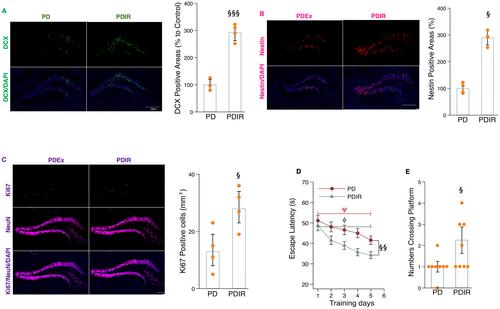
Persistent microglial inflammation is a detrimental contributor to the progression of Parkinson disease (PD) pathology and related issues such as impaired adult hippocampal neurogenesis (AHN) and cognition. We conducted a 10-week exercise program with MPTP-treated mice to determine whether neuroinflammation can be addressed by aerobic exercise and elucidate its underlying regulatory mechanisms. Ten weeks of exercise significantly reduced PD-related pathology and enhanced AHN and memory. These changes were linked to a reduction in neuronal apoptosis, microglial inflammation, and NLRP3 inflammasome activation. In cultured microglia, fibril α-synuclein reduced FNDC5/irisin protein levels and induced NLRP3 inflammasome formation and IL-1β production, which could be diminished by recombinant irisin treatment. Interestingly, “runner serum” isolated from exercising rodents enhanced FNDC5/irisin expression and reduced NLRP3 inflammasome components and IL-1β secretion in α-synuclein-treated microglia. These effects could be diminished by blocking irisin signaling with cyclo RGDyk or NLRP3 agonist, nigericin sodium salt. Exercise-induced neuroprotective effects were weakened by treatment of MPTP-treated mice with cyclo RGDyk. In contrast, systematic administration of irisin partially replicated the beneficial effects of exercise on PD pathology, AHN, and memory function. As a nonpharmacological strategy, aerobic exercise effectively addresses PD pathology and preserves adult neurogenesis and cognition by mitigating microglial inflammation via mediating irisin/NLRP3 inflammasome pathways.
期刊介绍:
Aging Cell, an Open Access journal, delves into fundamental aspects of aging biology. It comprehensively explores geroscience, emphasizing research on the mechanisms underlying the aging process and the connections between aging and age-related diseases.




 京公网安备 11010802042870号
京ICP备2023020795号-1
京公网安备 11010802042870号
京ICP备2023020795号-1

 分享
分享
 求助内容:
求助内容: 应助结果提醒方式:
 扫码关注我们
