Thomas D. Ledergerber, Matthew Staymates, Kourtney A. Dalzell, Luis E. Arroyo, Roger Jefferys and Tatiana Trejos
{"title":"Uncovering gunshot residue flow and deposition mechanisms using novel visualization methods, real-time atmospheric particle sampling, and spectrochemical techniques†","authors":"Thomas D. Ledergerber, Matthew Staymates, Kourtney A. Dalzell, Luis E. Arroyo, Roger Jefferys and Tatiana Trejos","doi":"10.1039/D4AY02283A","DOIUrl":null,"url":null,"abstract":"<p >Gunshot residue (GSR) consists of inorganic and organic components released during firearm discharge. Understanding the generation, transport, and settlement of these residues is essential to assess exposure risks and answer questions of forensic interest. Since GSR is prone to depositing in the vicinity of a firing event, its presence on a person of interest is meaningful to evaluate hypotheses about who discharged a firearm or if GSR was acquired by alternative means such as indirect transfer, being a bystander, or passing through the area shortly thereafter. However, the complexity of GSR production and variable dispersion makes its interpretation challenging. This study employs a novel multi-sensor approach to enhance the current understanding of GSR deposition, transference, and persistence. First, a particle counting/sizing system and inexpensive custom-made atmospheric samplers measure the population of airborne particles before, during, and after the firearm discharge. Second, high-speed videography and laser sheet scattering reveals visual and qualitative information about the flow of GSR under various experimental conditions. Finally, SEM-EDS and LC-MS/MS permit the confirmation of the elemental and chemical makeup of residues. This study estimates (a) how IGSR/OGSR are produced during a firing event using various firearms and ammunition, (b) how long it takes to settle on surfaces located at various distances from the firing location, and (c) direct and indirect deposition in indoor, semi-enclosed, and outdoor environments. The combination of these analytical tools provides breakthrough knowledge in forensics and other disciplines where airborne exposure is central, such as environmental sampling and indoor air quality.</p>","PeriodicalId":64,"journal":{"name":"Analytical Methods","volume":" 17","pages":" 3415-3435"},"PeriodicalIF":2.6000,"publicationDate":"2025-04-07","publicationTypes":"Journal Article","fieldsOfStudy":null,"isOpenAccess":false,"openAccessPdf":"https://pubs.rsc.org/en/content/articlepdf/2025/ay/d4ay02283a?page=search","citationCount":"0","resultStr":null,"platform":"Semanticscholar","paperid":null,"PeriodicalName":"Analytical Methods","FirstCategoryId":"92","ListUrlMain":"https://pubs.rsc.org/en/content/articlelanding/2025/ay/d4ay02283a","RegionNum":3,"RegionCategory":"化学","ArticlePicture":[],"TitleCN":null,"AbstractTextCN":null,"PMCID":null,"EPubDate":"","PubModel":"","JCR":"Q2","JCRName":"CHEMISTRY, ANALYTICAL","Score":null,"Total":0}
引用次数: 0
Abstract
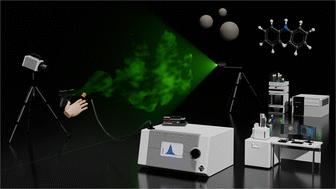
Gunshot residue (GSR) consists of inorganic and organic components released during firearm discharge. Understanding the generation, transport, and settlement of these residues is essential to assess exposure risks and answer questions of forensic interest. Since GSR is prone to depositing in the vicinity of a firing event, its presence on a person of interest is meaningful to evaluate hypotheses about who discharged a firearm or if GSR was acquired by alternative means such as indirect transfer, being a bystander, or passing through the area shortly thereafter. However, the complexity of GSR production and variable dispersion makes its interpretation challenging. This study employs a novel multi-sensor approach to enhance the current understanding of GSR deposition, transference, and persistence. First, a particle counting/sizing system and inexpensive custom-made atmospheric samplers measure the population of airborne particles before, during, and after the firearm discharge. Second, high-speed videography and laser sheet scattering reveals visual and qualitative information about the flow of GSR under various experimental conditions. Finally, SEM-EDS and LC-MS/MS permit the confirmation of the elemental and chemical makeup of residues. This study estimates (a) how IGSR/OGSR are produced during a firing event using various firearms and ammunition, (b) how long it takes to settle on surfaces located at various distances from the firing location, and (c) direct and indirect deposition in indoor, semi-enclosed, and outdoor environments. The combination of these analytical tools provides breakthrough knowledge in forensics and other disciplines where airborne exposure is central, such as environmental sampling and indoor air quality.





 京公网安备 11010802042870号
京ICP备2023020795号-1
京公网安备 11010802042870号
京ICP备2023020795号-1

 分享
分享
 求助内容:
求助内容: 应助结果提醒方式:
 扫码关注我们
