Pu Miao, Meiping Ying, Ruotong Chen, Yuyu Yang, Yao Ding, Junming Zhu, Jianhua Feng, Jin Wang, Thandar Aung, Shuang Wang, Bo Jin
{"title":"The response to anti-seizure medications and the development of pharmacoresistant epilepsy in malformations of cortical development.","authors":"Pu Miao, Meiping Ying, Ruotong Chen, Yuyu Yang, Yao Ding, Junming Zhu, Jianhua Feng, Jin Wang, Thandar Aung, Shuang Wang, Bo Jin","doi":"10.1186/s12916-025-04019-9","DOIUrl":null,"url":null,"abstract":"<p><strong>Background: </strong>Malformations of cortical development (MCD) are a group of congenital brain malformation disorders commonly associated with pharmacoresistant epilepsy (PRE). While studies often focus on surgery outcomes, the pharmacological treatment is still imperative and the odyssey to PRE remains underexplored. We aim to investigate the influence of anti-seizure medications (ASMs) on the development of PRE in this specific patient population.</p><p><strong>Methods: </strong>We retrospectively included a cohort of epilepsy patients with MRI-confirmed MCD due to abnormal cell proliferation and apoptosis (group I, mainly FCD II), and abnormal neuronal migration (group II, mainly heterotopia, lissencephaly, and polymicrogyria) from March 2013 to June 2023. The clinical features of group I and group II were compared. Factors associated with PRE were analyzed. The time to development of PRE with different ASMs was assessed using Kaplan-Meier survival analysis.</p><p><strong>Results: </strong>Of 259 enrolled patients with epilepsy and MRI-confirmed MCD (group I, n = 121; group II, n = 138), 73.4% met the criteria for PRE. The median duration of follow-up from seizure onset to the last visit or surgery was 103 months (IQR 45-174), with group I showing a significantly higher PRE rate than group II (90.1% vs. 58.7%, p = 0.000). Binomial regression analysis identified the significant predictors of PRE in MCD patients: high pretreatment seizure frequency (OR = 2.506), group II patients (OR = 0.248), and failure of the first ASM (OR = 5.885). Sodium channel blockers (SCBs) were the most prescribed initial ASMs and demonstrated a higher response rate than other ASMs. Kaplan-Meier analysis revealed that using SCBs as the first ASM significantly prolongs the time to PRE, with a median of 72 months for SCB users versus 48 months for non-SCB users.</p><p><strong>Conclusions: </strong>Our findings indicate a high prevalence of PRE that varies among different subtypes of MCD. Early appropriate selection of ASMs, particularly SCBs, can significantly delay the time to PRE onset, offering a promising strategy for managing this complex patient population. Tailoring pharmacological approaches is crucial for optimizing outcomes, and further research is warranted to optimize treatment strategies.</p>","PeriodicalId":9188,"journal":{"name":"BMC Medicine","volume":"23 1","pages":"198"},"PeriodicalIF":8.3000,"publicationDate":"2025-04-07","publicationTypes":"Journal Article","fieldsOfStudy":null,"isOpenAccess":false,"openAccessPdf":"https://www.ncbi.nlm.nih.gov/pmc/articles/PMC11974206/pdf/","citationCount":"0","resultStr":null,"platform":"Semanticscholar","paperid":null,"PeriodicalName":"BMC Medicine","FirstCategoryId":"3","ListUrlMain":"https://doi.org/10.1186/s12916-025-04019-9","RegionNum":1,"RegionCategory":"医学","ArticlePicture":[],"TitleCN":null,"AbstractTextCN":null,"PMCID":null,"EPubDate":"","PubModel":"","JCR":"Q1","JCRName":"MEDICINE, GENERAL & INTERNAL","Score":null,"Total":0}
引用次数: 0
Abstract
Background: Malformations of cortical development (MCD) are a group of congenital brain malformation disorders commonly associated with pharmacoresistant epilepsy (PRE). While studies often focus on surgery outcomes, the pharmacological treatment is still imperative and the odyssey to PRE remains underexplored. We aim to investigate the influence of anti-seizure medications (ASMs) on the development of PRE in this specific patient population.
Methods: We retrospectively included a cohort of epilepsy patients with MRI-confirmed MCD due to abnormal cell proliferation and apoptosis (group I, mainly FCD II), and abnormal neuronal migration (group II, mainly heterotopia, lissencephaly, and polymicrogyria) from March 2013 to June 2023. The clinical features of group I and group II were compared. Factors associated with PRE were analyzed. The time to development of PRE with different ASMs was assessed using Kaplan-Meier survival analysis.
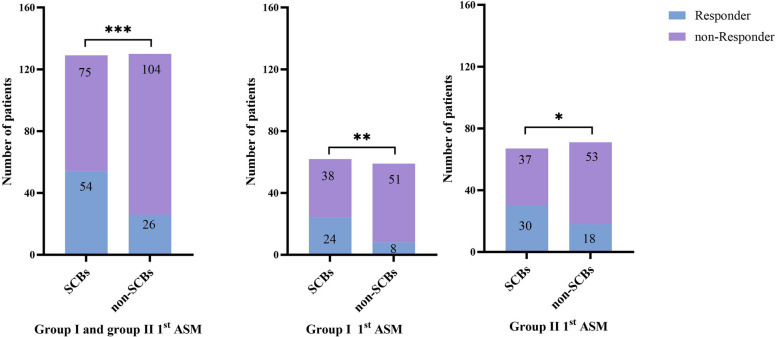
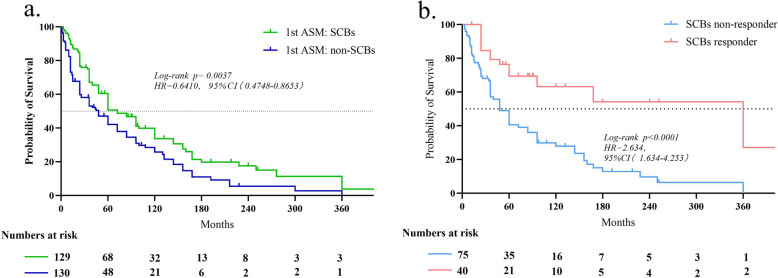
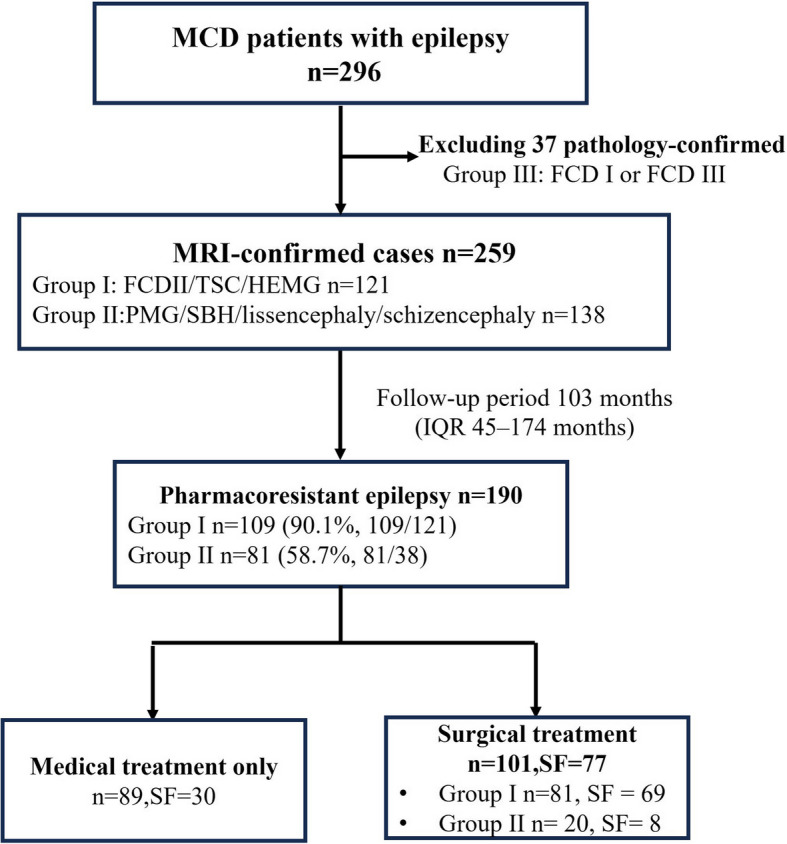
Results: Of 259 enrolled patients with epilepsy and MRI-confirmed MCD (group I, n = 121; group II, n = 138), 73.4% met the criteria for PRE. The median duration of follow-up from seizure onset to the last visit or surgery was 103 months (IQR 45-174), with group I showing a significantly higher PRE rate than group II (90.1% vs. 58.7%, p = 0.000). Binomial regression analysis identified the significant predictors of PRE in MCD patients: high pretreatment seizure frequency (OR = 2.506), group II patients (OR = 0.248), and failure of the first ASM (OR = 5.885). Sodium channel blockers (SCBs) were the most prescribed initial ASMs and demonstrated a higher response rate than other ASMs. Kaplan-Meier analysis revealed that using SCBs as the first ASM significantly prolongs the time to PRE, with a median of 72 months for SCB users versus 48 months for non-SCB users.
Conclusions: Our findings indicate a high prevalence of PRE that varies among different subtypes of MCD. Early appropriate selection of ASMs, particularly SCBs, can significantly delay the time to PRE onset, offering a promising strategy for managing this complex patient population. Tailoring pharmacological approaches is crucial for optimizing outcomes, and further research is warranted to optimize treatment strategies.
期刊介绍:
BMC Medicine is an open access, transparent peer-reviewed general medical journal. It is the flagship journal of the BMC series and publishes outstanding and influential research in various areas including clinical practice, translational medicine, medical and health advances, public health, global health, policy, and general topics of interest to the biomedical and sociomedical professional communities. In addition to research articles, the journal also publishes stimulating debates, reviews, unique forum articles, and concise tutorials. All articles published in BMC Medicine are included in various databases such as Biological Abstracts, BIOSIS, CAS, Citebase, Current contents, DOAJ, Embase, MEDLINE, PubMed, Science Citation Index Expanded, OAIster, SCImago, Scopus, SOCOLAR, and Zetoc.



 京公网安备 11010802042870号
京ICP备2023020795号-1
京公网安备 11010802042870号
京ICP备2023020795号-1

 分享
分享
 求助内容:
求助内容: 应助结果提醒方式:
 扫码关注我们
