Alex C Veith, Jennifer J Meudt, Jamie L Reichert, Jennifer M Frank, Derek M Pavelec, Bridget Ladell, James Speers, Molly Zeller, Taeyoung Shin, Joshua R Hyman, Christopher A Bradfield, Charles M Konsitzke, Dhanansayan Shanmuganayagam, C Dustin Rubinstein, Mark E Berres
{"title":"The draft genome of the Wisconsin Miniature SwineTM, a valuable biomedical research tool.","authors":"Alex C Veith, Jennifer J Meudt, Jamie L Reichert, Jennifer M Frank, Derek M Pavelec, Bridget Ladell, James Speers, Molly Zeller, Taeyoung Shin, Joshua R Hyman, Christopher A Bradfield, Charles M Konsitzke, Dhanansayan Shanmuganayagam, C Dustin Rubinstein, Mark E Berres","doi":"10.1093/g3journal/jkaf067","DOIUrl":null,"url":null,"abstract":"<p><p>Porcine biomedical models have emerged as valuable tools in biomedical research due to their physiological, anatomical, metabolic, immunological, and genetic similarities to humans. As a result, they offer greater relevance for translational studies than rodent models. Moreover, compared to nonhuman primates, porcine models are more cost-effective, easier to manipulate genetically, and raise fewer ethical concerns. However, the conventional breeds of swine most commonly used in research have rapid growth rates, which lead to logistical challenges such as increased space requirements, making them impractical as biomedical models. The Wisconsin Miniature SwineTM (WMSTM) was developed to address these shortcomings. The WMSTM porcine model grows slower, reaching and maintaining human sizes at adulthood. The model was also specifically designed to possess more human-like physiology that allows for easy modeling of comorbidities like obesity and metabolic syndrome that affect a large portion of the human population affected by chronic diseases. Thus, WMS™ is an ideal porcine gene editing platform for modeling complex multifactorial diseases. Here, we present the first draft genome assembly representative of the WMSTM line. The primary assembly was generated with ∼20× coverage of long reads from Oxford Nanopore Technologies and independently error-corrected using 23× Pacific Biosciences reads. Arima Genomics Hi-C data were used to improve contiguity. Largely congruent with the existing Sus scrofa genome, we also show the utility of WMSTM as a model through comparisons between 2 WMSTM genes and human homologs. Finally, we show the utility of genotyping by sequencing across WMSTM herds. The WMSTM genome generated here is highly complete and supports investigators utilizing WMSTM in biomedical research.</p>","PeriodicalId":12468,"journal":{"name":"G3: Genes|Genomes|Genetics","volume":" ","pages":""},"PeriodicalIF":2.2000,"publicationDate":"2025-06-04","publicationTypes":"Journal Article","fieldsOfStudy":null,"isOpenAccess":false,"openAccessPdf":"https://www.ncbi.nlm.nih.gov/pmc/articles/PMC12134997/pdf/","citationCount":"0","resultStr":null,"platform":"Semanticscholar","paperid":null,"PeriodicalName":"G3: Genes|Genomes|Genetics","FirstCategoryId":"99","ListUrlMain":"https://doi.org/10.1093/g3journal/jkaf067","RegionNum":3,"RegionCategory":"生物学","ArticlePicture":[],"TitleCN":null,"AbstractTextCN":null,"PMCID":null,"EPubDate":"","PubModel":"","JCR":"Q3","JCRName":"GENETICS & HEREDITY","Score":null,"Total":0}
引用次数: 0
Abstract
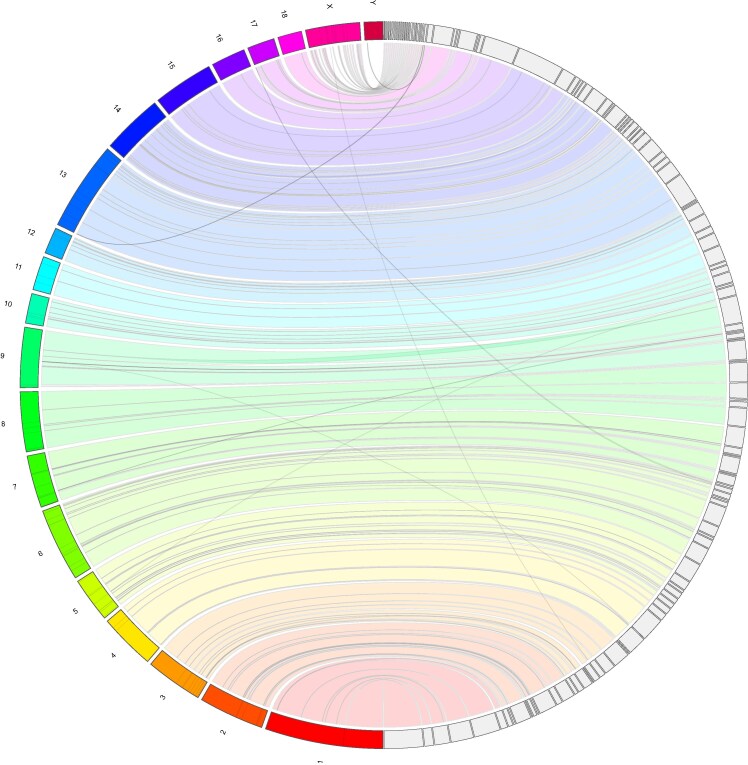
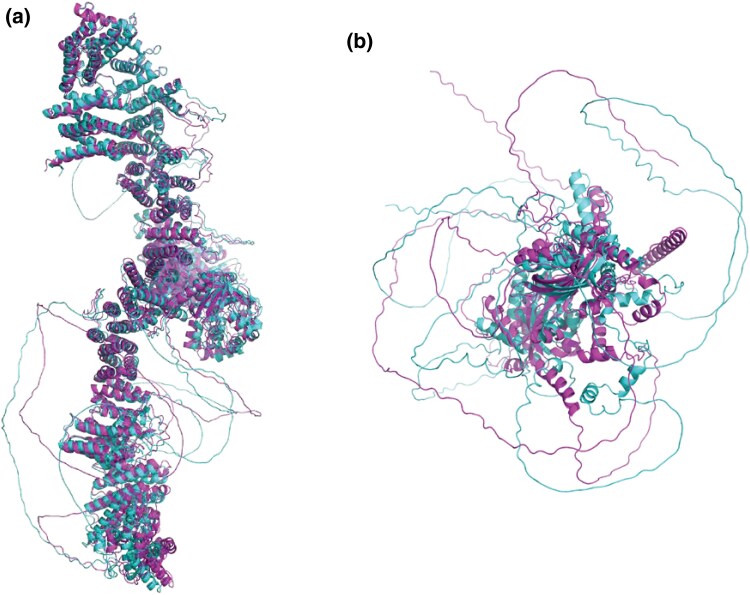
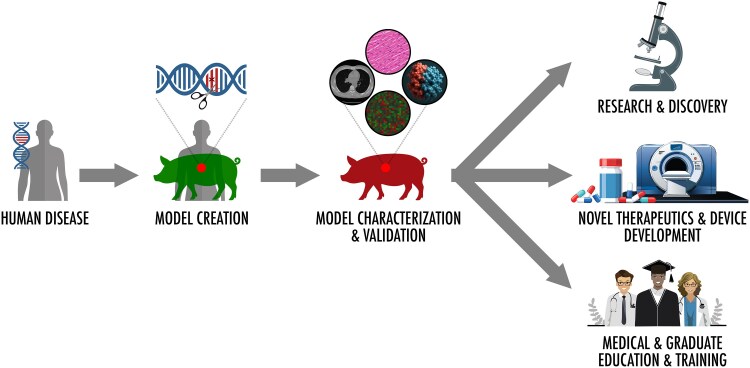
Porcine biomedical models have emerged as valuable tools in biomedical research due to their physiological, anatomical, metabolic, immunological, and genetic similarities to humans. As a result, they offer greater relevance for translational studies than rodent models. Moreover, compared to nonhuman primates, porcine models are more cost-effective, easier to manipulate genetically, and raise fewer ethical concerns. However, the conventional breeds of swine most commonly used in research have rapid growth rates, which lead to logistical challenges such as increased space requirements, making them impractical as biomedical models. The Wisconsin Miniature SwineTM (WMSTM) was developed to address these shortcomings. The WMSTM porcine model grows slower, reaching and maintaining human sizes at adulthood. The model was also specifically designed to possess more human-like physiology that allows for easy modeling of comorbidities like obesity and metabolic syndrome that affect a large portion of the human population affected by chronic diseases. Thus, WMS™ is an ideal porcine gene editing platform for modeling complex multifactorial diseases. Here, we present the first draft genome assembly representative of the WMSTM line. The primary assembly was generated with ∼20× coverage of long reads from Oxford Nanopore Technologies and independently error-corrected using 23× Pacific Biosciences reads. Arima Genomics Hi-C data were used to improve contiguity. Largely congruent with the existing Sus scrofa genome, we also show the utility of WMSTM as a model through comparisons between 2 WMSTM genes and human homologs. Finally, we show the utility of genotyping by sequencing across WMSTM herds. The WMSTM genome generated here is highly complete and supports investigators utilizing WMSTM in biomedical research.
期刊介绍:
G3: Genes, Genomes, Genetics provides a forum for the publication of high‐quality foundational research, particularly research that generates useful genetic and genomic information such as genome maps, single gene studies, genome‐wide association and QTL studies, as well as genome reports, mutant screens, and advances in methods and technology. The Editorial Board of G3 believes that rapid dissemination of these data is the necessary foundation for analysis that leads to mechanistic insights.
G3, published by the Genetics Society of America, meets the critical and growing need of the genetics community for rapid review and publication of important results in all areas of genetics. G3 offers the opportunity to publish the puzzling finding or to present unpublished results that may not have been submitted for review and publication due to a perceived lack of a potential high-impact finding. G3 has earned the DOAJ Seal, which is a mark of certification for open access journals, awarded by DOAJ to journals that achieve a high level of openness, adhere to Best Practice and high publishing standards.




 京公网安备 11010802042870号
京ICP备2023020795号-1
京公网安备 11010802042870号
京ICP备2023020795号-1

 分享
分享
 求助内容:
求助内容: 应助结果提醒方式:
 扫码关注我们
