Jennifer H LeLaurin, Magda Montague, Megan E Curtis, Ramzi G Salloum, Sophia Sheikh, Phyllis L Hendry
{"title":"Implementation of a novel pain coach educator program in a safety-net emergency department.","authors":"Jennifer H LeLaurin, Magda Montague, Megan E Curtis, Ramzi G Salloum, Sophia Sheikh, Phyllis L Hendry","doi":"10.1177/26334895251330511","DOIUrl":null,"url":null,"abstract":"<p><strong>Introduction: </strong>The ongoing opioid epidemic and rising number of patients with chronic pain highlight the need for alternative and integrative pain management approaches as a strategy to reduce opioid use and misuse. Evidence-based nonpharmacologic pain management strategies are available; however, they remain underutilized due to barriers including time limitations, cost, and lack of training. To address these barriers, we implemented a pain coach educator pilot program and nonpharmacologic patient toolkit in the emergency department of a large safety-net hospital. This paper describes the implementation process and preliminary evaluation of the first year of the program.</p><p><strong>Method: </strong>We implemented a multimodal pain coach educator program that included education on pain neuroscience and over-the-counter analgesic options, demonstration of integrative techniques, and dissemination of nonpharmacologic toolkits for home use in January 2021. Implementation strategies included changing the electronic health record infrastructure, developing stakeholder interrelationships, and ongoing education and training. We used the RE-AIM framework to guide evaluation of the first year of program implementation using data from the electronic health record, program records, and patient-reported outcomes.</p><p><strong>Results: </strong>In the first year of program implementation, 550 pain coach educator sessions were conducted. Upon session completion, 61% of patients felt the program was helpful, 39% were unsure at the time, and none reported session was not helpful. Clinician feedback was overwhelmingly positive. Program cost per patient was $344.35. Adaptations to intervention and implementation strategies included modifications of session delivery timing to accommodate clinical workflows, additions to program content to align with patient characteristics, and changes to patient identification strategies in response to the COVID-19 pandemic.</p><p><strong>Conclusions: </strong>Our pain coach educator program provides a model for implementing nonpharmacologic pain management opioid alternatives which can be scaled and adapted for other settings. This work demonstrates the importance of intervention and implementation strategy adaptations to enhance program reach and effectiveness.</p>","PeriodicalId":73354,"journal":{"name":"Implementation research and practice","volume":"6 ","pages":"26334895251330511"},"PeriodicalIF":2.6000,"publicationDate":"2025-04-04","publicationTypes":"Journal Article","fieldsOfStudy":null,"isOpenAccess":false,"openAccessPdf":"https://www.ncbi.nlm.nih.gov/pmc/articles/PMC11970099/pdf/","citationCount":"0","resultStr":null,"platform":"Semanticscholar","paperid":null,"PeriodicalName":"Implementation research and practice","FirstCategoryId":"1085","ListUrlMain":"https://doi.org/10.1177/26334895251330511","RegionNum":0,"RegionCategory":null,"ArticlePicture":[],"TitleCN":null,"AbstractTextCN":null,"PMCID":null,"EPubDate":"2025/1/1 0:00:00","PubModel":"eCollection","JCR":"","JCRName":"","Score":null,"Total":0}
引用次数: 0
Abstract
Introduction: The ongoing opioid epidemic and rising number of patients with chronic pain highlight the need for alternative and integrative pain management approaches as a strategy to reduce opioid use and misuse. Evidence-based nonpharmacologic pain management strategies are available; however, they remain underutilized due to barriers including time limitations, cost, and lack of training. To address these barriers, we implemented a pain coach educator pilot program and nonpharmacologic patient toolkit in the emergency department of a large safety-net hospital. This paper describes the implementation process and preliminary evaluation of the first year of the program.
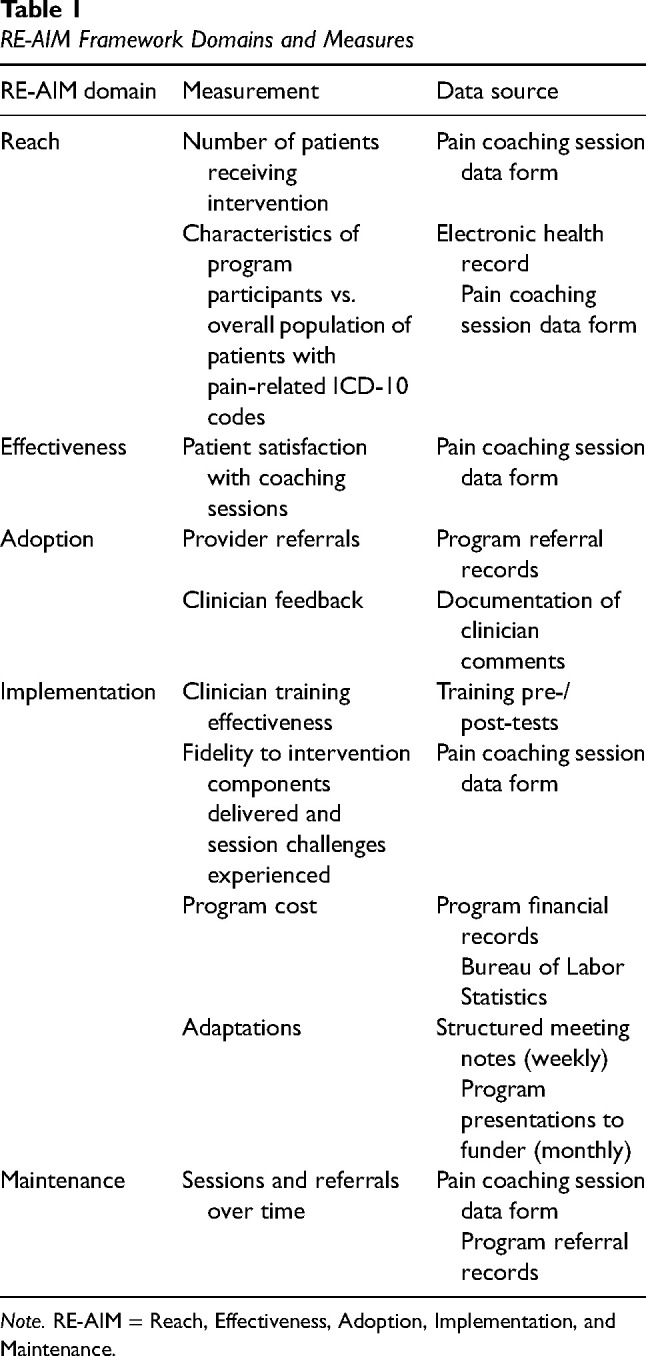
Method: We implemented a multimodal pain coach educator program that included education on pain neuroscience and over-the-counter analgesic options, demonstration of integrative techniques, and dissemination of nonpharmacologic toolkits for home use in January 2021. Implementation strategies included changing the electronic health record infrastructure, developing stakeholder interrelationships, and ongoing education and training. We used the RE-AIM framework to guide evaluation of the first year of program implementation using data from the electronic health record, program records, and patient-reported outcomes.
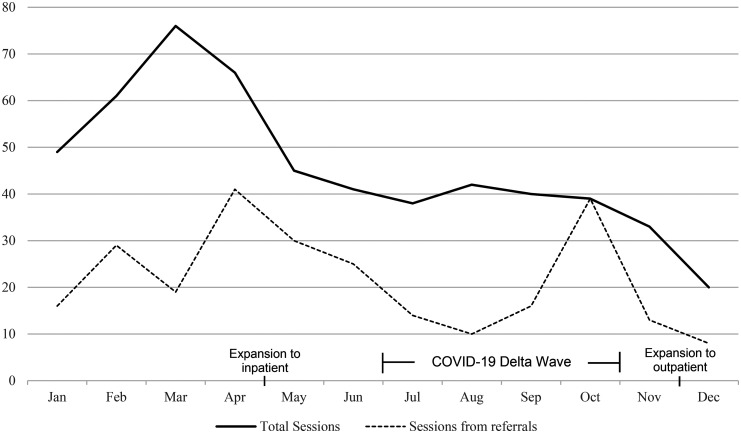
Results: In the first year of program implementation, 550 pain coach educator sessions were conducted. Upon session completion, 61% of patients felt the program was helpful, 39% were unsure at the time, and none reported session was not helpful. Clinician feedback was overwhelmingly positive. Program cost per patient was $344.35. Adaptations to intervention and implementation strategies included modifications of session delivery timing to accommodate clinical workflows, additions to program content to align with patient characteristics, and changes to patient identification strategies in response to the COVID-19 pandemic.
Conclusions: Our pain coach educator program provides a model for implementing nonpharmacologic pain management opioid alternatives which can be scaled and adapted for other settings. This work demonstrates the importance of intervention and implementation strategy adaptations to enhance program reach and effectiveness.




 京公网安备 11010802042870号
京ICP备2023020795号-1
京公网安备 11010802042870号
京ICP备2023020795号-1

 分享
分享

 求助内容:
求助内容: 应助结果提醒方式:
 扫码关注我们
