Mohammad Reza Shafiei, Nader Nezafati, Saeed Karbasi, Anousheh Zargar Kharazi
{"title":"Rifampin-loaded Mesoporous Silica Nanoparticles Improved Physical and Mechanical Properties and Biological Response of Acrylic Bone Cement.","authors":"Mohammad Reza Shafiei, Nader Nezafati, Saeed Karbasi, Anousheh Zargar Kharazi","doi":"10.4103/jmss.jmss_52_24","DOIUrl":null,"url":null,"abstract":"<p><strong>Background: </strong>Acrylic bone cement, which is used to fix implants in the knee and hip, is prone to contamination with various types of infections. Adding small amounts of different antibiotics to the cement can help prevent and treat infections. Rifampin antibiotic has been added to bone cement to create an appropriate antimicrobial response in the treatment of resistant coagulase-negative staphylococci (CoNS) biofilms, but there are some challenges such as reducing mechanical properties and prolonging the setting time of the cement. Loading the antibiotic in the nanoparticle could eliminate these challenges.</p><p><strong>Methods: </strong>In this study, rifampin-loaded mesoporous silica nanoparticles (MSNs) were added to bone cement, and the polymerization components, mechanical properties, drug release, antibacterial activity, and cellular response were investigated and compared with commercial pure cement and the cement containing free rifampin.</p><p><strong>Results: </strong>Loading rifampin into MSN improved compressive strength by 57.52%. Cement containing rifampin loaded into MSN showed remarkable success in antibacterial activity. The growth inhibition zone created by it in the culture medium of <i>Staphylococcus aureus</i> and CoNS was 15.44% and 11.8% greater, respectively, than in the cement containing free rifampin. In other words, according to the results of spectrophotometric analysis of cement samples over 5 weeks, MSNs caused a 33.2 ± 0.21-fold increase in rifampin washout from the cement. Cellular examination of the cement containing rifampin loaded into MSN compared to commercial pure cement showed an acceptable level of cell viability.</p><p><strong>Conclusion: </strong>Rifampin loading in MSN limited the reduction of cement strength. It also improved the drug release pattern and prevented antibiotic resistance.</p>","PeriodicalId":37680,"journal":{"name":"Journal of Medical Signals & Sensors","volume":"15 ","pages":"9"},"PeriodicalIF":1.1000,"publicationDate":"2025-03-13","publicationTypes":"Journal Article","fieldsOfStudy":null,"isOpenAccess":false,"openAccessPdf":"https://www.ncbi.nlm.nih.gov/pmc/articles/PMC11970834/pdf/","citationCount":"0","resultStr":null,"platform":"Semanticscholar","paperid":null,"PeriodicalName":"Journal of Medical Signals & Sensors","FirstCategoryId":"1085","ListUrlMain":"https://doi.org/10.4103/jmss.jmss_52_24","RegionNum":0,"RegionCategory":null,"ArticlePicture":[],"TitleCN":null,"AbstractTextCN":null,"PMCID":null,"EPubDate":"2025/1/1 0:00:00","PubModel":"eCollection","JCR":"Q4","JCRName":"ENGINEERING, BIOMEDICAL","Score":null,"Total":0}
引用次数: 0
Abstract
Background: Acrylic bone cement, which is used to fix implants in the knee and hip, is prone to contamination with various types of infections. Adding small amounts of different antibiotics to the cement can help prevent and treat infections. Rifampin antibiotic has been added to bone cement to create an appropriate antimicrobial response in the treatment of resistant coagulase-negative staphylococci (CoNS) biofilms, but there are some challenges such as reducing mechanical properties and prolonging the setting time of the cement. Loading the antibiotic in the nanoparticle could eliminate these challenges.
Methods: In this study, rifampin-loaded mesoporous silica nanoparticles (MSNs) were added to bone cement, and the polymerization components, mechanical properties, drug release, antibacterial activity, and cellular response were investigated and compared with commercial pure cement and the cement containing free rifampin.
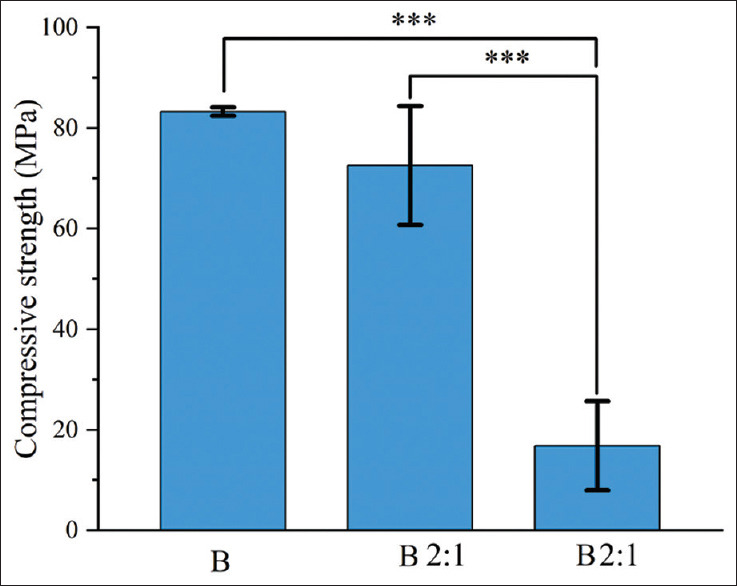
Results: Loading rifampin into MSN improved compressive strength by 57.52%. Cement containing rifampin loaded into MSN showed remarkable success in antibacterial activity. The growth inhibition zone created by it in the culture medium of Staphylococcus aureus and CoNS was 15.44% and 11.8% greater, respectively, than in the cement containing free rifampin. In other words, according to the results of spectrophotometric analysis of cement samples over 5 weeks, MSNs caused a 33.2 ± 0.21-fold increase in rifampin washout from the cement. Cellular examination of the cement containing rifampin loaded into MSN compared to commercial pure cement showed an acceptable level of cell viability.
Conclusion: Rifampin loading in MSN limited the reduction of cement strength. It also improved the drug release pattern and prevented antibiotic resistance.
期刊介绍:
JMSS is an interdisciplinary journal that incorporates all aspects of the biomedical engineering including bioelectrics, bioinformatics, medical physics, health technology assessment, etc. Subject areas covered by the journal include: - Bioelectric: Bioinstruments Biosensors Modeling Biomedical signal processing Medical image analysis and processing Medical imaging devices Control of biological systems Neuromuscular systems Cognitive sciences Telemedicine Robotic Medical ultrasonography Bioelectromagnetics Electrophysiology Cell tracking - Bioinformatics and medical informatics: Analysis of biological data Data mining Stochastic modeling Computational genomics Artificial intelligence & fuzzy Applications Medical softwares Bioalgorithms Electronic health - Biophysics and medical physics: Computed tomography Radiation therapy Laser therapy - Education in biomedical engineering - Health technology assessment - Standard in biomedical engineering.




 京公网安备 11010802042870号
京ICP备2023020795号-1
京公网安备 11010802042870号
京ICP备2023020795号-1

 分享
分享
 求助内容:
求助内容: 应助结果提醒方式:
 扫码关注我们
