Behnaz Saidy, Laura Gull, Andrew G Hacker, Emad A Rakha, Andrew R Green, Ian O Ellis, Stewart G Martin, Sarah J Storr
{"title":"Expression of the zinc-finger transcription factor Osterix (SP7) in invasive breast cancer and its prognostic significance.","authors":"Behnaz Saidy, Laura Gull, Andrew G Hacker, Emad A Rakha, Andrew R Green, Ian O Ellis, Stewart G Martin, Sarah J Storr","doi":"10.1007/s13402-025-01062-9","DOIUrl":null,"url":null,"abstract":"<p><strong>Introduction: </strong>Osterix, encoded by SP7, is a transcription factor crucial in osteoblast differentiation and bone formation. While initially characterised in bone development, emerging evidence suggests its involvement in cancer, particularly breast cancer metastasis to bone.</p><p><strong>Methods: </strong>Osterix protein expression was evaluated in 1340 early-stage invasive breast tumours by immunohistochemistry. Cytoplasmic and nuclear expression levels were assessed and associations with clinicopathological variables and patient survival determined. Additionally, SP7 mRNA expression was examined in the METABRIC cohort of patients. Gene set enrichment analysis (GSEA) was performed to explore the role of osterix in the hallmarks of cancer genesets.</p><p><strong>Results: </strong>Results revealed significant associations between reduced nuclear osterix protein expression and adverse clinicopathological features, including larger tumour size, higher grade, and poor Nottingham Prognostic Index. Low nuclear osterix protein expression was also linked to shorter breast cancer-specific survival and distant metastasis free survival, particularly in patients with HER2 positive tumours. No associations were found between SP7 mRNA expression and clinicopathological variables or survival outcomes. GSEA identified enrichment of genes involved in KRAS signaling in tumours with high SP7 expression.</p><p><strong>Conclusion: </strong>These data suggest that reduced nuclear expression of osterix is associated with poor clinical outcome of breast cancer patients and may be of clinical relevance.</p>","PeriodicalId":49223,"journal":{"name":"Cellular Oncology","volume":" ","pages":"1035-1045"},"PeriodicalIF":4.8000,"publicationDate":"2025-08-01","publicationTypes":"Journal Article","fieldsOfStudy":null,"isOpenAccess":false,"openAccessPdf":"https://www.ncbi.nlm.nih.gov/pmc/articles/PMC12238142/pdf/","citationCount":"0","resultStr":null,"platform":"Semanticscholar","paperid":null,"PeriodicalName":"Cellular Oncology","FirstCategoryId":"3","ListUrlMain":"https://doi.org/10.1007/s13402-025-01062-9","RegionNum":2,"RegionCategory":"医学","ArticlePicture":[],"TitleCN":null,"AbstractTextCN":null,"PMCID":null,"EPubDate":"2025/4/7 0:00:00","PubModel":"Epub","JCR":"Q2","JCRName":"CELL BIOLOGY","Score":null,"Total":0}
引用次数: 0
Abstract
Introduction: Osterix, encoded by SP7, is a transcription factor crucial in osteoblast differentiation and bone formation. While initially characterised in bone development, emerging evidence suggests its involvement in cancer, particularly breast cancer metastasis to bone.
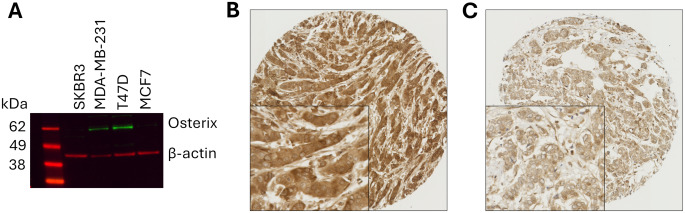
Methods: Osterix protein expression was evaluated in 1340 early-stage invasive breast tumours by immunohistochemistry. Cytoplasmic and nuclear expression levels were assessed and associations with clinicopathological variables and patient survival determined. Additionally, SP7 mRNA expression was examined in the METABRIC cohort of patients. Gene set enrichment analysis (GSEA) was performed to explore the role of osterix in the hallmarks of cancer genesets.
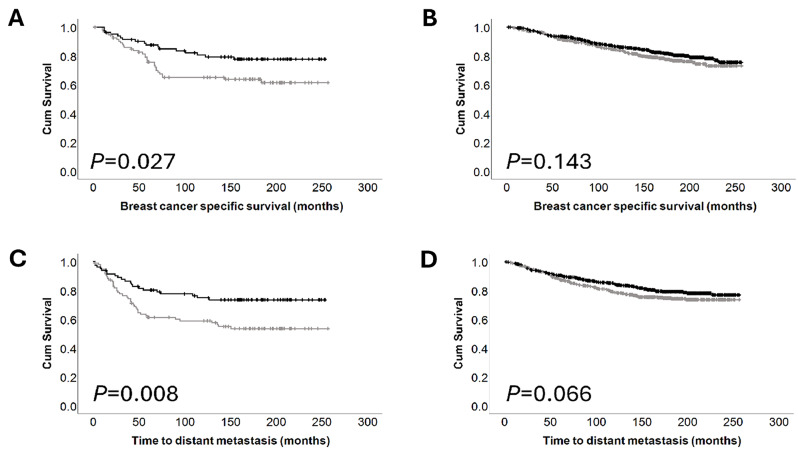
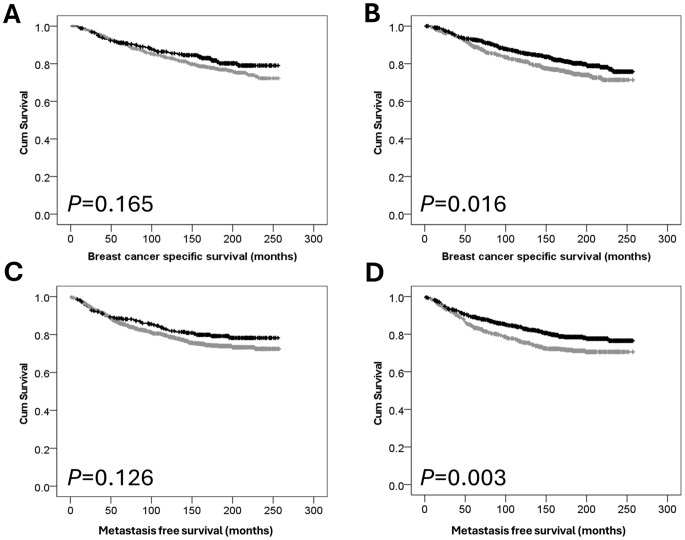
Results: Results revealed significant associations between reduced nuclear osterix protein expression and adverse clinicopathological features, including larger tumour size, higher grade, and poor Nottingham Prognostic Index. Low nuclear osterix protein expression was also linked to shorter breast cancer-specific survival and distant metastasis free survival, particularly in patients with HER2 positive tumours. No associations were found between SP7 mRNA expression and clinicopathological variables or survival outcomes. GSEA identified enrichment of genes involved in KRAS signaling in tumours with high SP7 expression.
Conclusion: These data suggest that reduced nuclear expression of osterix is associated with poor clinical outcome of breast cancer patients and may be of clinical relevance.
期刊介绍:
The Official Journal of the International Society for Cellular Oncology
Focuses on translational research
Addresses the conversion of cell biology to clinical applications
Cellular Oncology publishes scientific contributions from various biomedical and clinical disciplines involved in basic and translational cancer research on the cell and tissue level, technical and bioinformatics developments in this area, and clinical applications. This includes a variety of fields like genome technology, micro-arrays and other high-throughput techniques, genomic instability, SNP, DNA methylation, signaling pathways, DNA organization, (sub)microscopic imaging, proteomics, bioinformatics, functional effects of genomics, drug design and development, molecular diagnostics and targeted cancer therapies, genotype-phenotype interactions.
A major goal is to translate the latest developments in these fields from the research laboratory into routine patient management. To this end Cellular Oncology forms a platform of scientific information exchange between molecular biologists and geneticists, technical developers, pathologists, (medical) oncologists and other clinicians involved in the management of cancer patients.
In vitro studies are preferentially supported by validations in tumor tissue with clinicopathological associations.



 京公网安备 11010802042870号
京ICP备2023020795号-1
京公网安备 11010802042870号
京ICP备2023020795号-1

 分享
分享
 求助内容:
求助内容: 应助结果提醒方式:
 扫码关注我们
