Michael Nemec, Patrick Ringl, Kathrin Spettel, Lisa Schneider, Richard Kriz, Sonia Galazka, Marcus Sedlak, Erwin Jonke, Oleh Andrukhov, Athanasios Makristathis
{"title":"Exploring the impact of orthodontic appliances on the oral microbiome and inflammatory parameters.","authors":"Michael Nemec, Patrick Ringl, Kathrin Spettel, Lisa Schneider, Richard Kriz, Sonia Galazka, Marcus Sedlak, Erwin Jonke, Oleh Andrukhov, Athanasios Makristathis","doi":"10.1186/s40510-025-00560-8","DOIUrl":null,"url":null,"abstract":"<p><strong>Background: </strong>The symbiotic relationship between the oral microbiome and the host immune system is a prerequisite of oral health. Disruptions to this system can be associated with the development of diseases like dental caries. Introducing orthodontic treatments, such as aligners and fixed appliances, might impact this microbial ecosystem. This study evaluated potential changes in salivary microbiome and the level of inflammatory marker myeloid-related protein 8/14 in patients undergoing orthodontic treatment with aligners or fixed appliances.</p><p><strong>Methods: </strong>Forty-eight patients were divided into two groups for treatment with fixed appliances or clear aligners. Unstimulated saliva samples were collected at baseline, three, and six months for microbiome analysis via 16 S rRNA sequencing and MRP-8/14 level measurement using ELISA.</p><p><strong>Results: </strong>Among 503 identified microbial species, no significant changes were noted in overall microbiome. A considerable increase of caries-relevant species could not be observed either. MRP-8/14 levels remained unchanged across treatments, indicating no alterations in the inflammatory level.</p><p><strong>Conclusion: </strong>Orthodontic treatment with fixed or removable appliances does not significantly alter the salivary microbiome or influence inflammation, suggesting that these interventions are unlikely to affect oral health negatively.</p>","PeriodicalId":56071,"journal":{"name":"Progress in Orthodontics","volume":"26 1","pages":"13"},"PeriodicalIF":5.0000,"publicationDate":"2025-04-07","publicationTypes":"Journal Article","fieldsOfStudy":null,"isOpenAccess":false,"openAccessPdf":"https://www.ncbi.nlm.nih.gov/pmc/articles/PMC11973030/pdf/","citationCount":"0","resultStr":null,"platform":"Semanticscholar","paperid":null,"PeriodicalName":"Progress in Orthodontics","FirstCategoryId":"3","ListUrlMain":"https://doi.org/10.1186/s40510-025-00560-8","RegionNum":2,"RegionCategory":"医学","ArticlePicture":[],"TitleCN":null,"AbstractTextCN":null,"PMCID":null,"EPubDate":"","PubModel":"","JCR":"Q1","JCRName":"Dentistry","Score":null,"Total":0}
引用次数: 0
Abstract
Background: The symbiotic relationship between the oral microbiome and the host immune system is a prerequisite of oral health. Disruptions to this system can be associated with the development of diseases like dental caries. Introducing orthodontic treatments, such as aligners and fixed appliances, might impact this microbial ecosystem. This study evaluated potential changes in salivary microbiome and the level of inflammatory marker myeloid-related protein 8/14 in patients undergoing orthodontic treatment with aligners or fixed appliances.
Methods: Forty-eight patients were divided into two groups for treatment with fixed appliances or clear aligners. Unstimulated saliva samples were collected at baseline, three, and six months for microbiome analysis via 16 S rRNA sequencing and MRP-8/14 level measurement using ELISA.
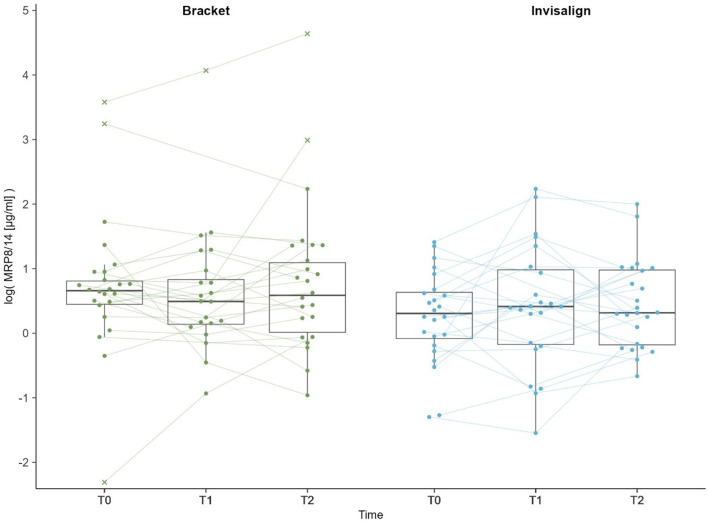
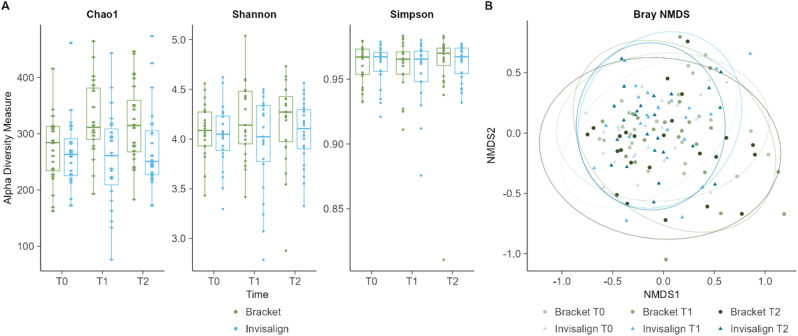
Results: Among 503 identified microbial species, no significant changes were noted in overall microbiome. A considerable increase of caries-relevant species could not be observed either. MRP-8/14 levels remained unchanged across treatments, indicating no alterations in the inflammatory level.
Conclusion: Orthodontic treatment with fixed or removable appliances does not significantly alter the salivary microbiome or influence inflammation, suggesting that these interventions are unlikely to affect oral health negatively.
期刊介绍:
Progress in Orthodontics is a fully open access, international journal owned by the Italian Society of Orthodontics and published under the brand SpringerOpen. The Society is currently covering all publication costs so there are no article processing charges for authors.
It is a premier journal of international scope that fosters orthodontic research, including both basic research and development of innovative clinical techniques, with an emphasis on the following areas:
• Mechanisms to improve orthodontics
• Clinical studies and control animal studies
• Orthodontics and genetics, genomics
• Temporomandibular joint (TMJ) control clinical trials
• Efficacy of orthodontic appliances and animal models
• Systematic reviews and meta analyses
• Mechanisms to speed orthodontic treatment
Progress in Orthodontics will consider for publication only meritorious and original contributions. These may be:
• Original articles reporting the findings of clinical trials, clinically relevant basic scientific investigations, or novel therapeutic or diagnostic systems
• Review articles on current topics
• Articles on novel techniques and clinical tools
• Articles of contemporary interest



 京公网安备 11010802042870号
京ICP备2023020795号-1
京公网安备 11010802042870号
京ICP备2023020795号-1

 分享
分享
 求助内容:
求助内容: 应助结果提醒方式:
 扫码关注我们
