Clinical predictors of outcome after pharyngeal electrical stimulation (PES) in non-stroke related neurogenic dysphagia after mechanical ventilation and tracheotomy: results from subgroup analysis of PHADER study.
Ivy Cheng, Philip M Bath, Shaheen Hamdy, Paul Muhle, Satish Mistry, Rainer Dziewas, Sonja Suntrup-Krüger
{"title":"Clinical predictors of outcome after pharyngeal electrical stimulation (PES) in non-stroke related neurogenic dysphagia after mechanical ventilation and tracheotomy: results from subgroup analysis of PHADER study.","authors":"Ivy Cheng, Philip M Bath, Shaheen Hamdy, Paul Muhle, Satish Mistry, Rainer Dziewas, Sonja Suntrup-Krüger","doi":"10.1186/s42466-025-00380-5","DOIUrl":null,"url":null,"abstract":"<p><strong>Background: </strong>Pharyngeal electrical stimulation (PES) is a neurostimulation intervention that can improve swallowing and facilitate decannulation in tracheotomised stroke patients with dysphagia. The PHAryngeal electrical stimulation for treatment of neurogenic Dysphagia European Registry (PHADER) study found that PES can reduce dysphagia severity in patients with neurogenic (non-stroke) dysphagia who required mechanical ventilation and tracheotomy. However, the predictive factors for treatment success among these patients remain unclear.</p><p><strong>Methods: </strong>We conducted a subgroup analysis using data from PHADER, with a focus on non-stroke participants who had required mechanical ventilation and tracheotomy. Multiple linear regression was performed to predict treatment success, as measured in improvement in dysphagia severity rating scale (DSRS) total score, accounting for age, sex, time from diagnosis to PES, PES perceptual threshold and PES stimulation intensity at the first session.</p><p><strong>Results: </strong>Fifty-seven participants (mean[standard deviation] age: 63.6[15.5] years; male: 70.2%) were included in the analysis. These comprised traumatic brain injury (22[38.6%]), critical illness polyneuropathy (15[26.4%]), and other neurological conditions that caused dysphagia (20[35.0%]). Regression analyses identified that a lower PES perceptual threshold at the first session (p = 0.027) and early intervention (p = 0.004) were significant predictors associated with treatment success at Day 9 and 3 months post PES respectively.</p><p><strong>Conclusions: </strong>We identified two predictive factors associated with successful PES treatment in patients with neurogenic (non-stroke) dysphagia requiring mechanical ventilation and tracheotomy: a lower PES perceptual threshold at the first session and early intervention. These predictors provide critical guidance for optimizing clinical decision-making in managing non-stroke neurogenic dysphagia patients in critical care settings.</p>","PeriodicalId":94156,"journal":{"name":"Neurological research and practice","volume":"7 1","pages":"23"},"PeriodicalIF":3.2000,"publicationDate":"2025-04-07","publicationTypes":"Journal Article","fieldsOfStudy":null,"isOpenAccess":false,"openAccessPdf":"https://www.ncbi.nlm.nih.gov/pmc/articles/PMC11974081/pdf/","citationCount":"0","resultStr":null,"platform":"Semanticscholar","paperid":null,"PeriodicalName":"Neurological research and practice","FirstCategoryId":"1085","ListUrlMain":"https://doi.org/10.1186/s42466-025-00380-5","RegionNum":0,"RegionCategory":null,"ArticlePicture":[],"TitleCN":null,"AbstractTextCN":null,"PMCID":null,"EPubDate":"","PubModel":"","JCR":"Q2","JCRName":"Medicine","Score":null,"Total":0}
引用次数: 0
Abstract
Background: Pharyngeal electrical stimulation (PES) is a neurostimulation intervention that can improve swallowing and facilitate decannulation in tracheotomised stroke patients with dysphagia. The PHAryngeal electrical stimulation for treatment of neurogenic Dysphagia European Registry (PHADER) study found that PES can reduce dysphagia severity in patients with neurogenic (non-stroke) dysphagia who required mechanical ventilation and tracheotomy. However, the predictive factors for treatment success among these patients remain unclear.
Methods: We conducted a subgroup analysis using data from PHADER, with a focus on non-stroke participants who had required mechanical ventilation and tracheotomy. Multiple linear regression was performed to predict treatment success, as measured in improvement in dysphagia severity rating scale (DSRS) total score, accounting for age, sex, time from diagnosis to PES, PES perceptual threshold and PES stimulation intensity at the first session.
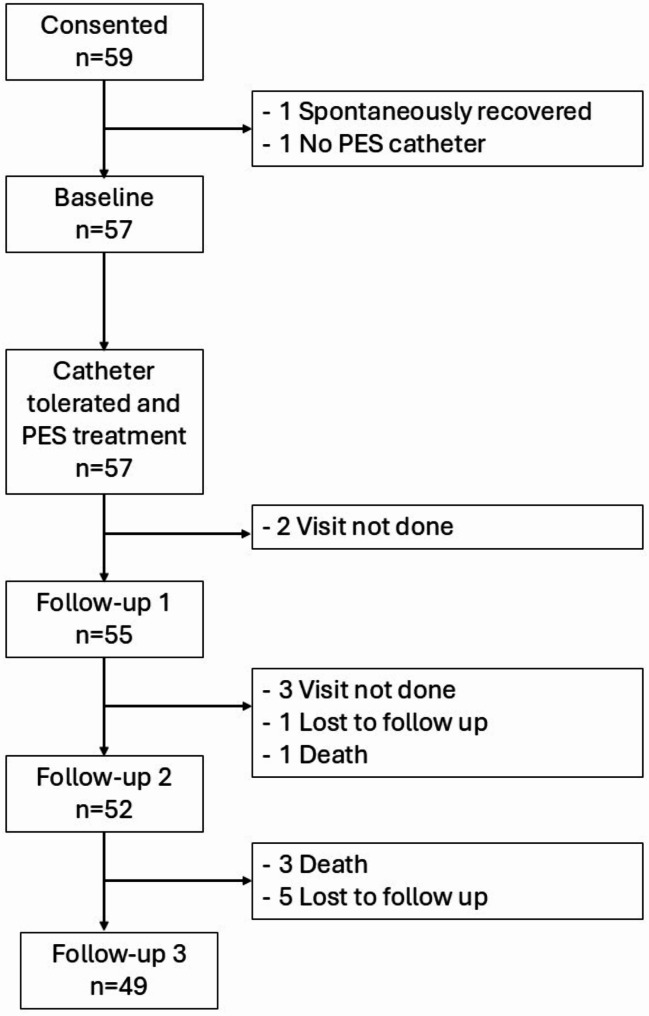
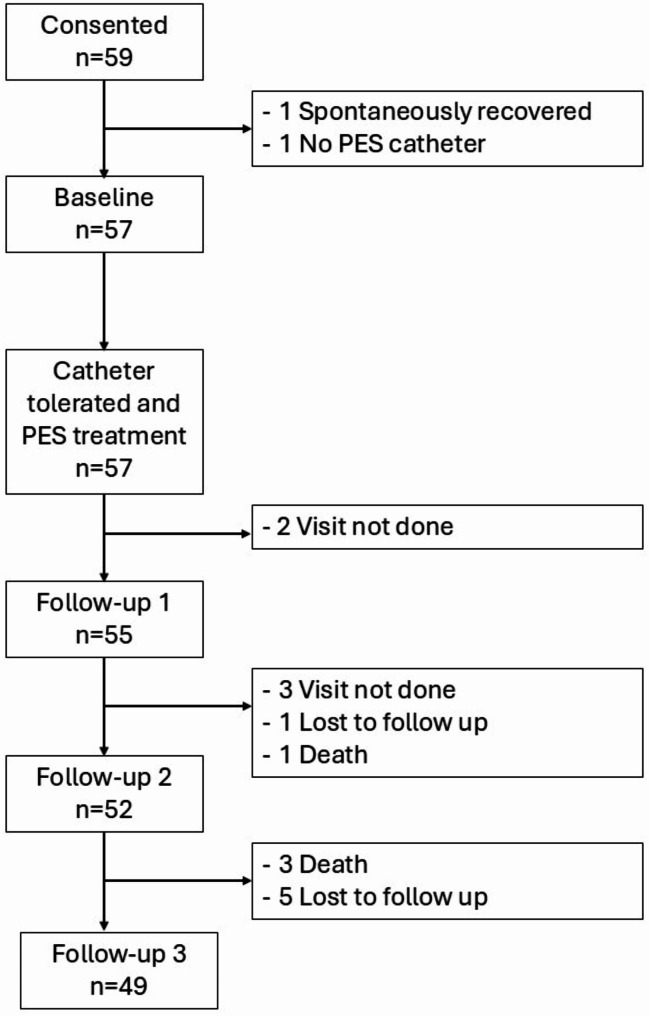
Results: Fifty-seven participants (mean[standard deviation] age: 63.6[15.5] years; male: 70.2%) were included in the analysis. These comprised traumatic brain injury (22[38.6%]), critical illness polyneuropathy (15[26.4%]), and other neurological conditions that caused dysphagia (20[35.0%]). Regression analyses identified that a lower PES perceptual threshold at the first session (p = 0.027) and early intervention (p = 0.004) were significant predictors associated with treatment success at Day 9 and 3 months post PES respectively.
Conclusions: We identified two predictive factors associated with successful PES treatment in patients with neurogenic (non-stroke) dysphagia requiring mechanical ventilation and tracheotomy: a lower PES perceptual threshold at the first session and early intervention. These predictors provide critical guidance for optimizing clinical decision-making in managing non-stroke neurogenic dysphagia patients in critical care settings.



 京公网安备 11010802042870号
京ICP备2023020795号-1
京公网安备 11010802042870号
京ICP备2023020795号-1

 分享
分享

 求助内容:
求助内容: 应助结果提醒方式:
 扫码关注我们
