Yulong Li , Mengyao Luo , Changqing Ye , Hongli Bao
{"title":"Recent advancements in dual-locked optical probe for precise imaging of atherosclerosis","authors":"Yulong Li , Mengyao Luo , Changqing Ye , Hongli Bao","doi":"10.1039/d5ob00312a","DOIUrl":null,"url":null,"abstract":"<div><div>Atherosclerosis (AS) is the primary pathological basis for cardiovascular and cerebrovascular events, making early diagnosis and dynamic risk assessment crucial for reducing the incidence of thrombotic occurrences. Traditional imaging techniques, such as CT, MRI, and PET, provide morphological information about plaques; however, they are limited in their ability to detect the molecular activity characteristics of these plaques, which hampers the assessment of thrombotic risk. In recent years, molecular optical probes have offered new insights into plaque activity detection by targeting specific biomarkers. However, single-target probes often produce false positive signals due to the cross-expression of biomarkers, which limits their clinical application. To overcome this challenge, dual-lock optical probes have been developed, achieving dual-target synergistic activation, which significantly enhances the specificity and signal-to-noise ratio of imaging. This article reviews the targeted imaging strategies and recent advancements in dual-lock optical probes in the context of AS, with a particular emphasis on their application in lipid droplet enrichment, oxidative stress, and specific enzymes. Although the technology still faces challenges regarding sensitivity, specificity, and multi-target design, its potential for future development is substantial. Through interdisciplinary collaboration and technological innovation, dual-lock optical probes are poised to evolve from ‘imaging tools’ to ‘integrated diagnosis and treatment platforms’, thereby advancing the precise diagnosis and treatment of complex diseases.</div></div>","PeriodicalId":96,"journal":{"name":"Organic & Biomolecular Chemistry","volume":"23 17","pages":"Pages 4024-4035"},"PeriodicalIF":2.7000,"publicationDate":"2025-03-24","publicationTypes":"Journal Article","fieldsOfStudy":null,"isOpenAccess":false,"openAccessPdf":"","citationCount":"0","resultStr":null,"platform":"Semanticscholar","paperid":null,"PeriodicalName":"Organic & Biomolecular Chemistry","FirstCategoryId":"92","ListUrlMain":"https://www.sciencedirect.com/org/science/article/pii/S1477052025002496","RegionNum":3,"RegionCategory":"化学","ArticlePicture":[],"TitleCN":null,"AbstractTextCN":null,"PMCID":null,"EPubDate":"2025/4/3 0:00:00","PubModel":"Epub","JCR":"Q1","JCRName":"CHEMISTRY, ORGANIC","Score":null,"Total":0}
引用次数: 0
Abstract
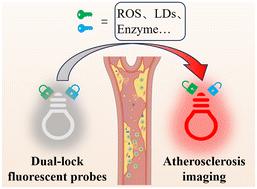
Atherosclerosis (AS) is the primary pathological basis for cardiovascular and cerebrovascular events, making early diagnosis and dynamic risk assessment crucial for reducing the incidence of thrombotic occurrences. Traditional imaging techniques, such as CT, MRI, and PET, provide morphological information about plaques; however, they are limited in their ability to detect the molecular activity characteristics of these plaques, which hampers the assessment of thrombotic risk. In recent years, molecular optical probes have offered new insights into plaque activity detection by targeting specific biomarkers. However, single-target probes often produce false positive signals due to the cross-expression of biomarkers, which limits their clinical application. To overcome this challenge, dual-lock optical probes have been developed, achieving dual-target synergistic activation, which significantly enhances the specificity and signal-to-noise ratio of imaging. This article reviews the targeted imaging strategies and recent advancements in dual-lock optical probes in the context of AS, with a particular emphasis on their application in lipid droplet enrichment, oxidative stress, and specific enzymes. Although the technology still faces challenges regarding sensitivity, specificity, and multi-target design, its potential for future development is substantial. Through interdisciplinary collaboration and technological innovation, dual-lock optical probes are poised to evolve from ‘imaging tools’ to ‘integrated diagnosis and treatment platforms’, thereby advancing the precise diagnosis and treatment of complex diseases.
期刊介绍:
Organic & Biomolecular Chemistry is an international journal using integrated research in chemistry-organic chemistry. Founded in 2003 by the Royal Society of Chemistry, the journal is published in Semimonthly issues and has been indexed by SCIE, a leading international database. The journal focuses on the key research and cutting-edge progress in the field of chemistry-organic chemistry, publishes and reports the research results in this field in a timely manner, and is committed to becoming a window and platform for rapid academic exchanges among peers in this field. The journal's impact factor in 2023 is 2.9, and its CiteScore is 5.5.



 京公网安备 11010802042870号
京ICP备2023020795号-1
京公网安备 11010802042870号
京ICP备2023020795号-1

 分享
分享
 求助内容:
求助内容: 应助结果提醒方式:
 扫码关注我们
