Rui-Xin Ge, Miao Chen, Qing-Chao Li, Min Liu, Jun Zhou, Song-Bo Xie
{"title":"Targeting neurodegenerative disease-associated protein aggregation with proximity-inducing modalities.","authors":"Rui-Xin Ge, Miao Chen, Qing-Chao Li, Min Liu, Jun Zhou, Song-Bo Xie","doi":"10.1038/s41401-025-01538-2","DOIUrl":null,"url":null,"abstract":"<p><p>Neurodegenerative diseases (NDDs) are characterized by progressive neuronal dysfunction and anatomical changes caused by neuron loss and gliosis, ultimately leading to severe declines in brain function. While these disorders arise from a variety of pathological mechanisms, a common molecular feature is the accumulation of misfolded proteins, which occurs both inside and outside neurons. For example, Alzheimer's disease (AD) is defined by extracellular β-amyloid plaques and intracellular tau neurofibrillary tangles. These pathological protein aggregates are often resistant to traditional small molecule drugs. Recent advances in proximity-inducing chimeras such as proteolysis-targeting chimeras (PROTACs), lysosome-targeting chimeras (LYTACs), autophagy-targeted chimeras (AUTOTACs), dephosphorylation-targeting chimeras (DEPTACs) and ribonuclease-targeting chimeras (RIBOTACs) offer promising strategies to eliminate pathological proteins or mRNAs through intracellular degradation pathways. These innovative approaches open avenues for developing new therapies for NDDs. In this review we summarize the regulatory mechanisms of protein aggregation, highlight the advancements in proximity-inducing modalities for NDDs, and discuss the current challenges and future directions in therapeutic development.</p>","PeriodicalId":6942,"journal":{"name":"Acta Pharmacologica Sinica","volume":" ","pages":"2337-2346"},"PeriodicalIF":8.4000,"publicationDate":"2025-09-01","publicationTypes":"Journal Article","fieldsOfStudy":null,"isOpenAccess":false,"openAccessPdf":"https://www.ncbi.nlm.nih.gov/pmc/articles/PMC12373808/pdf/","citationCount":"0","resultStr":null,"platform":"Semanticscholar","paperid":null,"PeriodicalName":"Acta Pharmacologica Sinica","FirstCategoryId":"3","ListUrlMain":"https://doi.org/10.1038/s41401-025-01538-2","RegionNum":1,"RegionCategory":"医学","ArticlePicture":[],"TitleCN":null,"AbstractTextCN":null,"PMCID":null,"EPubDate":"2025/4/7 0:00:00","PubModel":"Epub","JCR":"Q1","JCRName":"CHEMISTRY, MULTIDISCIPLINARY","Score":null,"Total":0}
引用次数: 0
Abstract
Neurodegenerative diseases (NDDs) are characterized by progressive neuronal dysfunction and anatomical changes caused by neuron loss and gliosis, ultimately leading to severe declines in brain function. While these disorders arise from a variety of pathological mechanisms, a common molecular feature is the accumulation of misfolded proteins, which occurs both inside and outside neurons. For example, Alzheimer's disease (AD) is defined by extracellular β-amyloid plaques and intracellular tau neurofibrillary tangles. These pathological protein aggregates are often resistant to traditional small molecule drugs. Recent advances in proximity-inducing chimeras such as proteolysis-targeting chimeras (PROTACs), lysosome-targeting chimeras (LYTACs), autophagy-targeted chimeras (AUTOTACs), dephosphorylation-targeting chimeras (DEPTACs) and ribonuclease-targeting chimeras (RIBOTACs) offer promising strategies to eliminate pathological proteins or mRNAs through intracellular degradation pathways. These innovative approaches open avenues for developing new therapies for NDDs. In this review we summarize the regulatory mechanisms of protein aggregation, highlight the advancements in proximity-inducing modalities for NDDs, and discuss the current challenges and future directions in therapeutic development.
期刊介绍:
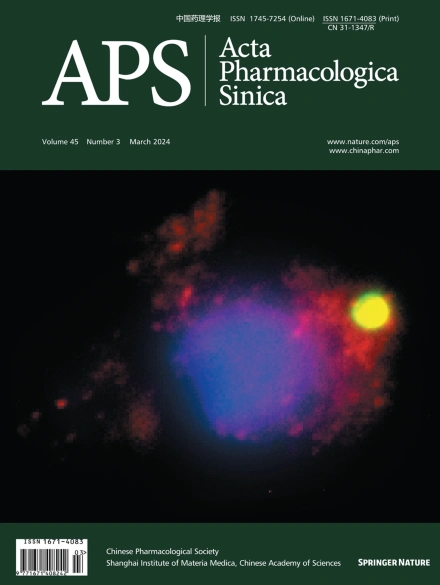
APS (Acta Pharmacologica Sinica) welcomes submissions from diverse areas of pharmacology and the life sciences. While we encourage contributions across a broad spectrum, topics of particular interest include, but are not limited to: anticancer pharmacology, cardiovascular and pulmonary pharmacology, clinical pharmacology, drug discovery, gastrointestinal and hepatic pharmacology, genitourinary, renal, and endocrine pharmacology, immunopharmacology and inflammation, molecular and cellular pharmacology, neuropharmacology, pharmaceutics, and pharmacokinetics. Join us in sharing your research and insights in pharmacology and the life sciences.



 京公网安备 11010802042870号
京ICP备2023020795号-1
京公网安备 11010802042870号
京ICP备2023020795号-1

 分享
分享
 求助内容:
求助内容: 应助结果提醒方式:
 扫码关注我们
