Development and validation of a cost-effective three-dimensional-printed cervical spine model for endoscopic posterior cervical foraminotomy training: a prospective educational study from Turkey.
Bilal Bahadır Akbulut, Elif Ezgi Çenberlitaş, Mustafa Serdar Bölük, Taşkın Yurtseven, Hüseyin Biçeroğlu
{"title":"Development and validation of a cost-effective three-dimensional-printed cervical spine model for endoscopic posterior cervical foraminotomy training: a prospective educational study from Turkey.","authors":"Bilal Bahadır Akbulut, Elif Ezgi Çenberlitaş, Mustafa Serdar Bölük, Taşkın Yurtseven, Hüseyin Biçeroğlu","doi":"10.31616/asj.2025.0050","DOIUrl":null,"url":null,"abstract":"<p><strong>Study design: </strong>Expanding upon established surgical simulation methods, we developed a fused deposition modeling three-dimensional (3D)-printed model of the C1-T1 vertebra for posterior cervical foraminotomy training that features silicone-based neural elements, polyurethane foam-based ligaments, and polyethylene terephthalate glycol vertebrae.</p><p><strong>Purpose: </strong>This study evaluated the effectiveness of a cost-efficient 3D-printed training model designed to help neurosurgical residents acquire fundamental skills in endoscopic posterior cervical foraminotomy while addressing the technique's challenging learning curve and limited training resources.</p><p><strong>Overview of literature: </strong>Only a few studies have investigated the efficacy of such a model.</p><p><strong>Methods: </strong>Eight neurosurgery residents each with over 2 years of training completed four training sessions on two randomly assigned cervical spine levels using the newly developed 3D-printed model. A simple plumbing endoscope was used for real-time surgical visualization.</p><p><strong>Results: </strong>Among the 64 completed surgical levels, left-sided procedures showed significantly higher insufficient decompression rates than did right-sided procedures (25.0% vs. 3.6%, p=0.002). However, no significant difference in overall complication rates was observed between sides (p=0.073). Surgical parameters remained consistent across sides, with no significant differences in operative duration. Brunner-Langer analysis revealed substantial improvements in operative duration (mean duration decrease from 21:42±2:15 to 6:33±0:42 minutes, p=0.004) and total complications (mean decrease from 2.1±0.8 to 0.4±0.5, p=0.007) across sessions. Although fluoroscopy timing showed marginal improvement (mean duration decrease from 2:12±1:15 to 0:55±0:23 minutes, p=0.057), the number of fluoroscopic images tended to decrease.</p><p><strong>Conclusions: </strong>Our findings suggest that this novel 3D-printed cervical spine model could be a viable, low-cost option for neurosurgical training programs aiming to help residents develop essential endoscopic skills in a controlled setting. Facilitating early proficiency in posterior cervical foraminotomy can serve as a valuable intermediate step before transitioning to cadaveric models and clinical practice.</p>","PeriodicalId":8555,"journal":{"name":"Asian Spine Journal","volume":" ","pages":"183-193"},"PeriodicalIF":2.7000,"publicationDate":"2025-04-01","publicationTypes":"Journal Article","fieldsOfStudy":null,"isOpenAccess":false,"openAccessPdf":"https://www.ncbi.nlm.nih.gov/pmc/articles/PMC12061599/pdf/","citationCount":"0","resultStr":null,"platform":"Semanticscholar","paperid":null,"PeriodicalName":"Asian Spine Journal","FirstCategoryId":"1085","ListUrlMain":"https://doi.org/10.31616/asj.2025.0050","RegionNum":0,"RegionCategory":null,"ArticlePicture":[],"TitleCN":null,"AbstractTextCN":null,"PMCID":null,"EPubDate":"2025/4/7 0:00:00","PubModel":"Epub","JCR":"Q2","JCRName":"ORTHOPEDICS","Score":null,"Total":0}
引用次数: 0
Abstract
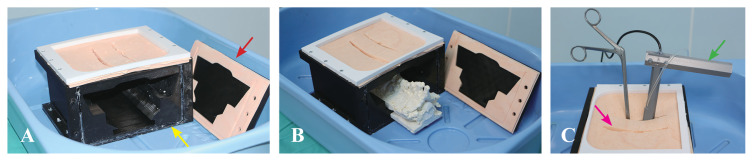
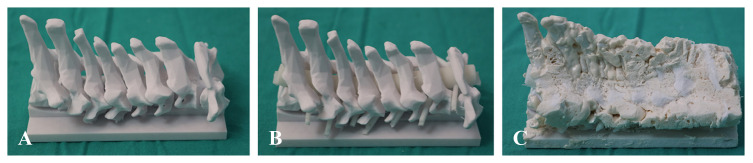
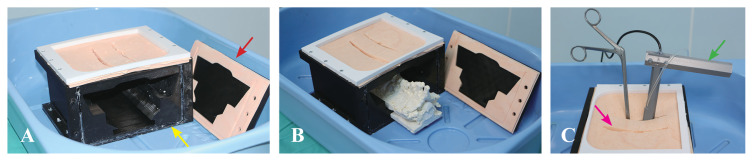
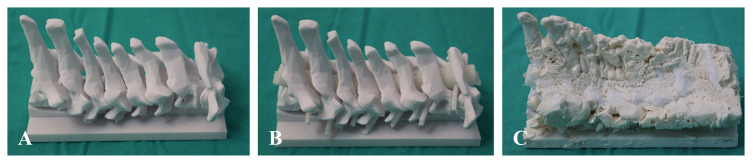
Study design: Expanding upon established surgical simulation methods, we developed a fused deposition modeling three-dimensional (3D)-printed model of the C1-T1 vertebra for posterior cervical foraminotomy training that features silicone-based neural elements, polyurethane foam-based ligaments, and polyethylene terephthalate glycol vertebrae.
Purpose: This study evaluated the effectiveness of a cost-efficient 3D-printed training model designed to help neurosurgical residents acquire fundamental skills in endoscopic posterior cervical foraminotomy while addressing the technique's challenging learning curve and limited training resources.
Overview of literature: Only a few studies have investigated the efficacy of such a model.
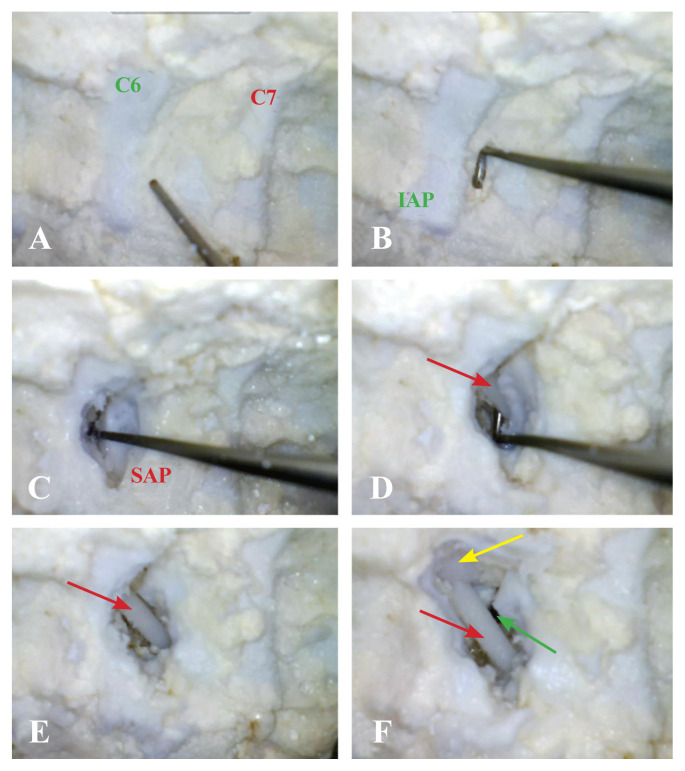
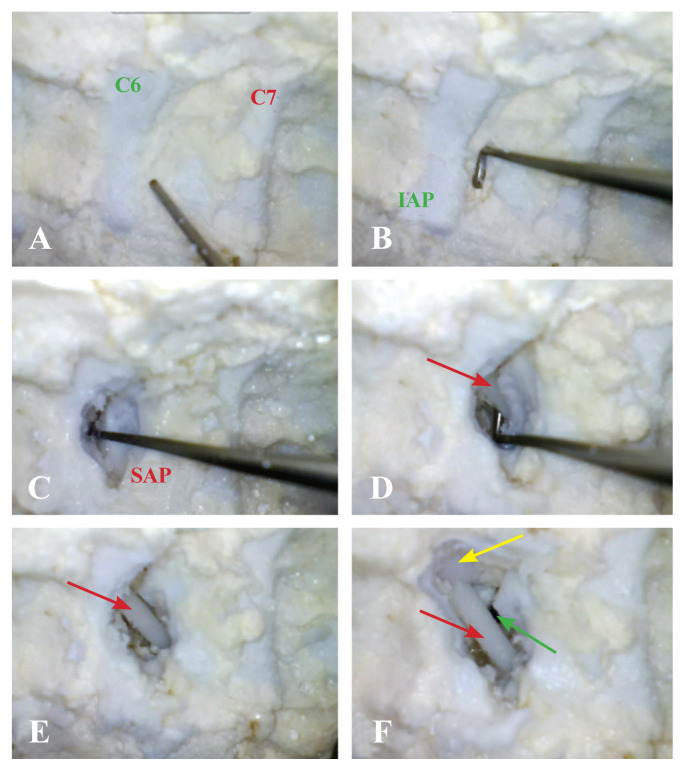
Methods: Eight neurosurgery residents each with over 2 years of training completed four training sessions on two randomly assigned cervical spine levels using the newly developed 3D-printed model. A simple plumbing endoscope was used for real-time surgical visualization.
Results: Among the 64 completed surgical levels, left-sided procedures showed significantly higher insufficient decompression rates than did right-sided procedures (25.0% vs. 3.6%, p=0.002). However, no significant difference in overall complication rates was observed between sides (p=0.073). Surgical parameters remained consistent across sides, with no significant differences in operative duration. Brunner-Langer analysis revealed substantial improvements in operative duration (mean duration decrease from 21:42±2:15 to 6:33±0:42 minutes, p=0.004) and total complications (mean decrease from 2.1±0.8 to 0.4±0.5, p=0.007) across sessions. Although fluoroscopy timing showed marginal improvement (mean duration decrease from 2:12±1:15 to 0:55±0:23 minutes, p=0.057), the number of fluoroscopic images tended to decrease.
Conclusions: Our findings suggest that this novel 3D-printed cervical spine model could be a viable, low-cost option for neurosurgical training programs aiming to help residents develop essential endoscopic skills in a controlled setting. Facilitating early proficiency in posterior cervical foraminotomy can serve as a valuable intermediate step before transitioning to cadaveric models and clinical practice.
研究设计:在已建立的手术模拟方法的基础上,我们开发了一种用于颈椎后椎间孔切开术训练的C1-T1椎体融合沉积建模三维(3D)打印模型,该模型具有硅基神经元件、聚氨酯泡沫韧带和聚对苯二甲酸乙二醇酯椎体。目的:本研究评估了成本效益高的3d打印培训模型的有效性,该模型旨在帮助神经外科住院医师获得内窥镜后颈椎椎间孔切开术的基本技能,同时解决了该技术具有挑战性的学习曲线和有限的培训资源。文献综述:只有少数研究调查了这种模型的功效。方法:8名神经外科住院医师均接受了2年以上的培训,使用新开发的3d打印模型在两个随机分配的颈椎水平上完成了4次培训。一个简单的管道内窥镜用于实时手术可视化。结果:在64个完成的手术水平中,左侧手术的减压不足率明显高于右侧手术(25.0% vs. 3.6%, p=0.002)。但两组总并发症发生率无显著差异(p=0.073)。手术参数在两侧保持一致,手术时间无显著差异。Brunner-Langer分析显示,手术时间(平均时间从21:42±2:15分钟减少到6:33±0:42分钟,p=0.004)和总并发症(平均从2.1±0.8分钟减少到0.4±0.5分钟,p=0.007)显著改善。虽然透视时间略有改善(平均时间从2:12±1:15分钟减少到0:55±0:23分钟,p=0.057),但透视图像的数量有减少的趋势。结论:我们的研究结果表明,这种新型的3d打印颈椎模型可能是一种可行的、低成本的选择,用于神经外科培训项目,旨在帮助住院医生在受控环境下发展基本的内窥镜技能。促进早期熟练掌握后颈椎椎间孔切开术可以作为过渡到尸体模型和临床实践之前有价值的中间步骤。




 京公网安备 11010802042870号
京ICP备2023020795号-1
京公网安备 11010802042870号
京ICP备2023020795号-1

 分享
分享
 求助内容:
求助内容: 应助结果提醒方式:
 扫码关注我们
