Yi Zou, Wenhao Ni, Yong Zhou, Dan Sun, Feng Chen, Xianyun Li
{"title":"Gut microbiota dysbiosis in infantile cholestatic hepatopathy.","authors":"Yi Zou, Wenhao Ni, Yong Zhou, Dan Sun, Feng Chen, Xianyun Li","doi":"10.3389/fped.2025.1547958","DOIUrl":null,"url":null,"abstract":"<p><strong>Background: </strong>Cholestatic hepatopathy is common in infants. While many studies link gut microbiota to liver and gallbladder diseases, the relationship between infantile cholestatic hepatopathy (ICH) and gut microbiota remains unclear.</p><p><strong>Methods: </strong>We collected stool samples from 19 healthy controls and 33 infants with ICH aged ≤3 months, then determined the intestinal microbiota by 16S rDNA sequencing. The differences of microbiota structure and functional between the two groups were analyzed.</p><p><strong>Results: </strong>Alpha-diversity analysis showed that the Chao1 and ACE indexes were significantly higher in the ICH group than control group (<i>p</i> < 0.05). LEfSe analysis showed that 18 bacteria taxa, including <i>Streptococcus, Streptococcaceae,</i> and <i>Staphylococcales,</i> enriched significantly in the ICH group, and 3 bacteria taxa were enriched in the control group. At the genus level, the relative abundance of <i>Streptococcus, Escherichia-Shigella,</i> and <i>Lactobacillus</i> in ICH group was higher than control group (<i>p</i> < 0.05). The Receiver Operating Characteristic (ROC) analysis demonstrated that <i>Streptococcus</i> was highly valuable in distinguishing ICH from healthy controls. Moreover, functional prediction analysis identified 59 metabolic pathways potentially associated with ICH.</p><p><strong>Conclusion: </strong>Gut microbiota dysbiosis is associated with infantile cholestatic hepatopathy, and <i>Streptococcus</i> can be used as an essential biomarker to identify ICH.</p>","PeriodicalId":12637,"journal":{"name":"Frontiers in Pediatrics","volume":"13 ","pages":"1547958"},"PeriodicalIF":2.0000,"publicationDate":"2025-03-24","publicationTypes":"Journal Article","fieldsOfStudy":null,"isOpenAccess":false,"openAccessPdf":"https://www.ncbi.nlm.nih.gov/pmc/articles/PMC11973382/pdf/","citationCount":"0","resultStr":null,"platform":"Semanticscholar","paperid":null,"PeriodicalName":"Frontiers in Pediatrics","FirstCategoryId":"3","ListUrlMain":"https://doi.org/10.3389/fped.2025.1547958","RegionNum":3,"RegionCategory":"医学","ArticlePicture":[],"TitleCN":null,"AbstractTextCN":null,"PMCID":null,"EPubDate":"2025/1/1 0:00:00","PubModel":"eCollection","JCR":"Q2","JCRName":"PEDIATRICS","Score":null,"Total":0}
引用次数: 0
Abstract
Background: Cholestatic hepatopathy is common in infants. While many studies link gut microbiota to liver and gallbladder diseases, the relationship between infantile cholestatic hepatopathy (ICH) and gut microbiota remains unclear.
Methods: We collected stool samples from 19 healthy controls and 33 infants with ICH aged ≤3 months, then determined the intestinal microbiota by 16S rDNA sequencing. The differences of microbiota structure and functional between the two groups were analyzed.
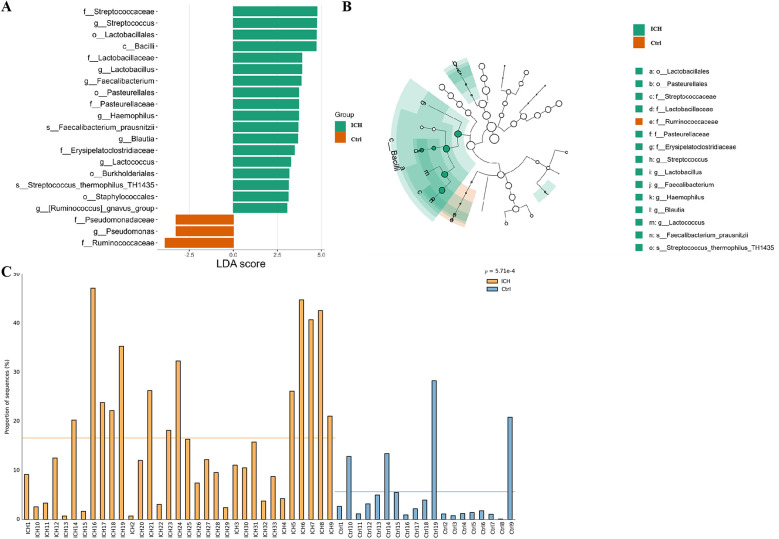
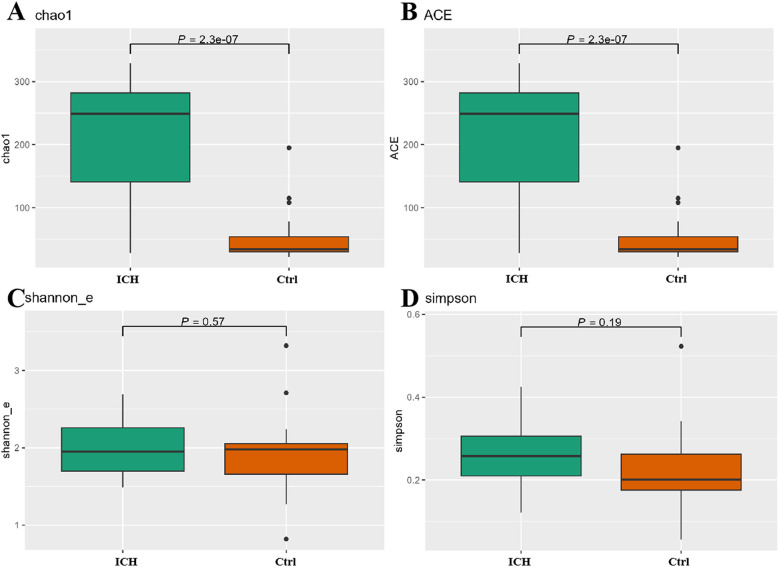
Results: Alpha-diversity analysis showed that the Chao1 and ACE indexes were significantly higher in the ICH group than control group (p < 0.05). LEfSe analysis showed that 18 bacteria taxa, including Streptococcus, Streptococcaceae, and Staphylococcales, enriched significantly in the ICH group, and 3 bacteria taxa were enriched in the control group. At the genus level, the relative abundance of Streptococcus, Escherichia-Shigella, and Lactobacillus in ICH group was higher than control group (p < 0.05). The Receiver Operating Characteristic (ROC) analysis demonstrated that Streptococcus was highly valuable in distinguishing ICH from healthy controls. Moreover, functional prediction analysis identified 59 metabolic pathways potentially associated with ICH.
Conclusion: Gut microbiota dysbiosis is associated with infantile cholestatic hepatopathy, and Streptococcus can be used as an essential biomarker to identify ICH.
期刊介绍:
Frontiers in Pediatrics (Impact Factor 2.33) publishes rigorously peer-reviewed research broadly across the field, from basic to clinical research that meets ongoing challenges in pediatric patient care and child health. Field Chief Editors Arjan Te Pas at Leiden University and Michael L. Moritz at the Children''s Hospital of Pittsburgh are supported by an outstanding Editorial Board of international experts. This multidisciplinary open-access journal is at the forefront of disseminating and communicating scientific knowledge and impactful discoveries to researchers, academics, clinicians and the public worldwide.
Frontiers in Pediatrics also features Research Topics, Frontiers special theme-focused issues managed by Guest Associate Editors, addressing important areas in pediatrics. In this fashion, Frontiers serves as an outlet to publish the broadest aspects of pediatrics in both basic and clinical research, including high-quality reviews, case reports, editorials and commentaries related to all aspects of pediatrics.





 京公网安备 11010802042870号
京ICP备2023020795号-1
京公网安备 11010802042870号
京ICP备2023020795号-1

 分享
分享
 求助内容:
求助内容: 应助结果提醒方式:
 扫码关注我们
