Josephine Nambi Najjuma, Timothy Mwanje Kintu, Jane Nakibuuka, Mark Kaddumukasa, Scovia N Mbalinda, Martin Kaddumukasa, Christopher Burant, Shirley Moore, Martha Sajatovic, Edwin Nuwagira
{"title":"Characterizing stroke presenting to a regional referral hospital before and during the COVID-19 pandemic in Uganda: a retrospective analysis.","authors":"Josephine Nambi Najjuma, Timothy Mwanje Kintu, Jane Nakibuuka, Mark Kaddumukasa, Scovia N Mbalinda, Martin Kaddumukasa, Christopher Burant, Shirley Moore, Martha Sajatovic, Edwin Nuwagira","doi":"10.1186/s12245-025-00830-6","DOIUrl":null,"url":null,"abstract":"<p><strong>Introduction: </strong>Stroke, a leading cause of global morbidity and mortality, disproportionately impacts low and middle-income countries, particularly in sub-Saharan Africa (SSA) which reports the highest stroke burden. The COVID-19 pandemic further complicated this situation, emerging as a significant stroke risk factor. The pandemic also disrupted healthcare systems worldwide, affecting stroke management and care accessibility, and leading to deteriorated conditions in stroke patients upon hospital admission. In this pre/during COVID-19 pandemic analysis of acute stroke cases presenting to a Ugandan hospital, we investigated the relationship between stroke admissions, management and treatment outcomes.</p><p><strong>Methods: </strong>This was a retrospective medical record review in which we analyzed medical charts of stroke patients admitted to Mbarara Regional Referral Hospital in 2019 (pre-COVID-19) and 2020 (during COVID-19). Socio-demographic data, stroke subtypes, medical history, and physical examination findings were extracted from the hospital records. Data analysis was performed using R-Studio, employing descriptive statistics and inferential analyses to compare stroke characteristics and outcomes across the two periods.</p><p><strong>Results: </strong>Data from 175 stroke patients was analyzed, with higher admission numbers in 2020 (69.7%), but a slightly higher mortality rate in 2019 as compared to 2020 (22.6% versus 18.9%, p = 0.711). A significant increase in acute ischemic stroke cases was observed in 2020, with no significant differences in stroke severity or functional ability between the two years. Clinical parameters such as admission oxygen saturation, blood sugar, temperature, and Glasgow Coma Scale (GCS) score, along with complications like aspiration pneumonia and infections, correlated with mortality. There was no significant difference in survival probability between pre- and during-pandemic periods. Admission GCS, pulse rate, and aspiration pneumonia were significant predictors of 14-day in-hospital mortality.</p><p><strong>Conclusions: </strong>The surge in acute ischemic stroke cases during the pandemic highlights the need for robust stroke care systems, especially in high-burden regions like SSA. Some key predictors of mortality are potentially modifiable, suggesting that early intervention and vigilant monitoring of risk parameters could improve survival rates. Findings also highlight the need for tailored care strategies and health system improvements especially during public health emergencies to enhance patient outcomes.</p><p><strong>Trial registration: </strong>Not Applicable.</p>","PeriodicalId":13967,"journal":{"name":"International Journal of Emergency Medicine","volume":"18 1","pages":"72"},"PeriodicalIF":2.0000,"publicationDate":"2025-04-07","publicationTypes":"Journal Article","fieldsOfStudy":null,"isOpenAccess":false,"openAccessPdf":"https://www.ncbi.nlm.nih.gov/pmc/articles/PMC11974050/pdf/","citationCount":"0","resultStr":null,"platform":"Semanticscholar","paperid":null,"PeriodicalName":"International Journal of Emergency Medicine","FirstCategoryId":"1085","ListUrlMain":"https://doi.org/10.1186/s12245-025-00830-6","RegionNum":0,"RegionCategory":null,"ArticlePicture":[],"TitleCN":null,"AbstractTextCN":null,"PMCID":null,"EPubDate":"","PubModel":"","JCR":"Q2","JCRName":"EMERGENCY MEDICINE","Score":null,"Total":0}
引用次数: 0
Abstract
Introduction: Stroke, a leading cause of global morbidity and mortality, disproportionately impacts low and middle-income countries, particularly in sub-Saharan Africa (SSA) which reports the highest stroke burden. The COVID-19 pandemic further complicated this situation, emerging as a significant stroke risk factor. The pandemic also disrupted healthcare systems worldwide, affecting stroke management and care accessibility, and leading to deteriorated conditions in stroke patients upon hospital admission. In this pre/during COVID-19 pandemic analysis of acute stroke cases presenting to a Ugandan hospital, we investigated the relationship between stroke admissions, management and treatment outcomes.
Methods: This was a retrospective medical record review in which we analyzed medical charts of stroke patients admitted to Mbarara Regional Referral Hospital in 2019 (pre-COVID-19) and 2020 (during COVID-19). Socio-demographic data, stroke subtypes, medical history, and physical examination findings were extracted from the hospital records. Data analysis was performed using R-Studio, employing descriptive statistics and inferential analyses to compare stroke characteristics and outcomes across the two periods.
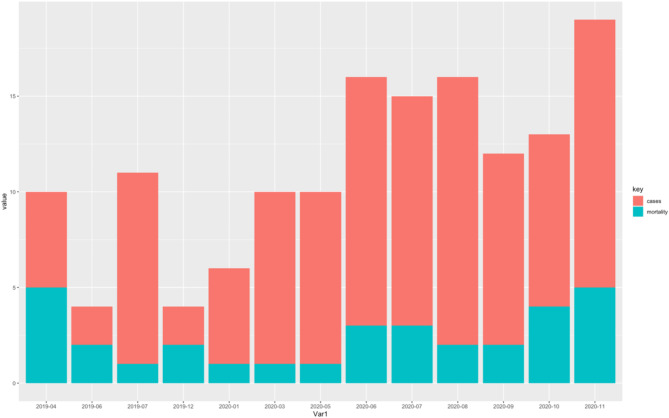
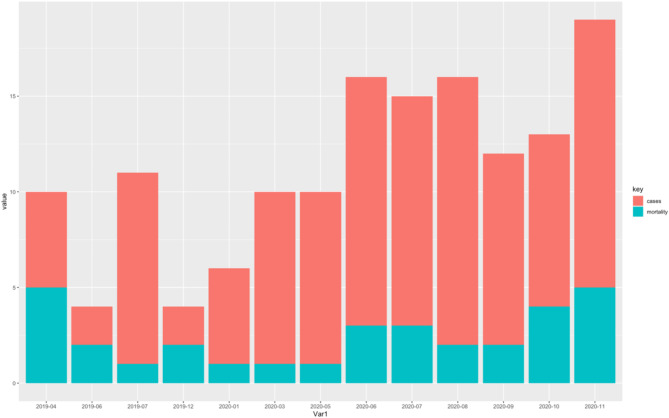
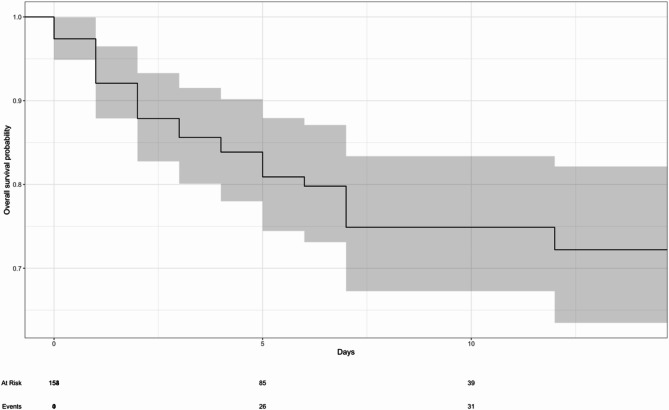
Results: Data from 175 stroke patients was analyzed, with higher admission numbers in 2020 (69.7%), but a slightly higher mortality rate in 2019 as compared to 2020 (22.6% versus 18.9%, p = 0.711). A significant increase in acute ischemic stroke cases was observed in 2020, with no significant differences in stroke severity or functional ability between the two years. Clinical parameters such as admission oxygen saturation, blood sugar, temperature, and Glasgow Coma Scale (GCS) score, along with complications like aspiration pneumonia and infections, correlated with mortality. There was no significant difference in survival probability between pre- and during-pandemic periods. Admission GCS, pulse rate, and aspiration pneumonia were significant predictors of 14-day in-hospital mortality.
Conclusions: The surge in acute ischemic stroke cases during the pandemic highlights the need for robust stroke care systems, especially in high-burden regions like SSA. Some key predictors of mortality are potentially modifiable, suggesting that early intervention and vigilant monitoring of risk parameters could improve survival rates. Findings also highlight the need for tailored care strategies and health system improvements especially during public health emergencies to enhance patient outcomes.
期刊介绍:
The aim of the journal is to bring to light the various clinical advancements and research developments attained over the world and thus help the specialty forge ahead. It is directed towards physicians and medical personnel undergoing training or working within the field of Emergency Medicine. Medical students who are interested in pursuing a career in Emergency Medicine will also benefit from the journal. This is particularly useful for trainees in countries where the specialty is still in its infancy. Disciplines covered will include interesting clinical cases, the latest evidence-based practice and research developments in Emergency medicine including emergency pediatrics.






 京公网安备 11010802042870号
京ICP备2023020795号-1
京公网安备 11010802042870号
京ICP备2023020795号-1

 分享
分享
 求助内容:
求助内容: 应助结果提醒方式:
 扫码关注我们
