{"title":"Traditional vs. AI-generated meteorological risks for emergency predictions.","authors":"Naoufal Sirri, Christophe Guyeux","doi":"10.3389/frai.2025.1545851","DOIUrl":null,"url":null,"abstract":"<p><p>This study aims to analyze and examine in-depth the feature selection process using Large Language Models (LLMs) to optimize firefighter prediction performance. Although features from reliable sources are known to significantly aid predictions, their accuracy may be limited in critical situations requiring rigorous prioritization. Therefore, the focus was placed on meteorological risks for a comparative diagnosis between their extraction from Météo France and those generated by LLMs across various dimensions. Given the crucial role of meteorological risks as key informational sources for decision-making, this study explores the impact of feature extraction methods related to these risks on predicting firefighter interventions over nine years, from 2015 to 2024. Annual reports on firefighter activities in France highlight the growing influence of weather-related risks, underscoring the urgent need for precise and actionable meteorological information to support rapid and effective emergency response strategies. The methodology implemented involved comprehensive data preparation, an in-depth analysis of feature extraction through different approaches, and their evaluation from multiple perspectives. This required leveraging machine learning models such as XGBoost, Random Forest, and Support Vector Machines (SVM) to assess and analyze prediction results based on two feature spaces: F1 (including general features and meteorological risks extracted from Météo France) and F2 (including general features and meteorological risks generated by LLMs). The results revealed that models trained with the F2 feature space consistently demonstrated superior performance. Notably, annual improvements were observed, particularly for high and very high intervention activities. However, the use of the F2 space proved less effective for low intervention activities and underperformed compared to F1 during the summer season. In conclusion, this work presents a concrete methodology for forecasting and enhancing resource management, accelerating firefighter response times, and ultimately contributing to life preservation by reducing the risk of failure during critical incidents.</p>","PeriodicalId":33315,"journal":{"name":"Frontiers in Artificial Intelligence","volume":"8 ","pages":"1545851"},"PeriodicalIF":4.7000,"publicationDate":"2025-03-24","publicationTypes":"Journal Article","fieldsOfStudy":null,"isOpenAccess":false,"openAccessPdf":"https://www.ncbi.nlm.nih.gov/pmc/articles/PMC11973294/pdf/","citationCount":"0","resultStr":null,"platform":"Semanticscholar","paperid":null,"PeriodicalName":"Frontiers in Artificial Intelligence","FirstCategoryId":"1085","ListUrlMain":"https://doi.org/10.3389/frai.2025.1545851","RegionNum":0,"RegionCategory":null,"ArticlePicture":[],"TitleCN":null,"AbstractTextCN":null,"PMCID":null,"EPubDate":"2025/1/1 0:00:00","PubModel":"eCollection","JCR":"Q2","JCRName":"COMPUTER SCIENCE, ARTIFICIAL INTELLIGENCE","Score":null,"Total":0}
引用次数: 0
Abstract
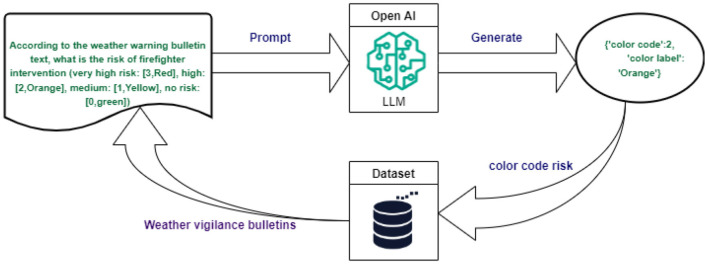
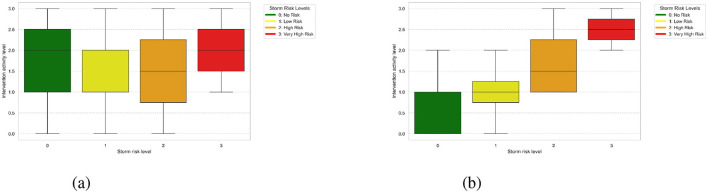
This study aims to analyze and examine in-depth the feature selection process using Large Language Models (LLMs) to optimize firefighter prediction performance. Although features from reliable sources are known to significantly aid predictions, their accuracy may be limited in critical situations requiring rigorous prioritization. Therefore, the focus was placed on meteorological risks for a comparative diagnosis between their extraction from Météo France and those generated by LLMs across various dimensions. Given the crucial role of meteorological risks as key informational sources for decision-making, this study explores the impact of feature extraction methods related to these risks on predicting firefighter interventions over nine years, from 2015 to 2024. Annual reports on firefighter activities in France highlight the growing influence of weather-related risks, underscoring the urgent need for precise and actionable meteorological information to support rapid and effective emergency response strategies. The methodology implemented involved comprehensive data preparation, an in-depth analysis of feature extraction through different approaches, and their evaluation from multiple perspectives. This required leveraging machine learning models such as XGBoost, Random Forest, and Support Vector Machines (SVM) to assess and analyze prediction results based on two feature spaces: F1 (including general features and meteorological risks extracted from Météo France) and F2 (including general features and meteorological risks generated by LLMs). The results revealed that models trained with the F2 feature space consistently demonstrated superior performance. Notably, annual improvements were observed, particularly for high and very high intervention activities. However, the use of the F2 space proved less effective for low intervention activities and underperformed compared to F1 during the summer season. In conclusion, this work presents a concrete methodology for forecasting and enhancing resource management, accelerating firefighter response times, and ultimately contributing to life preservation by reducing the risk of failure during critical incidents.




 京公网安备 11010802042870号
京ICP备2023020795号-1
京公网安备 11010802042870号
京ICP备2023020795号-1

 分享
分享
 求助内容:
求助内容: 应助结果提醒方式:
 扫码关注我们
