Diego F Rivera-Parrado, José L Colín-Ortiz, Miguel F Barrera-Colín, Javier López-Terrazas, Paulina Sánchez-Grande, Camilo A Rivera-Parrado, Ever Munive-Molina
{"title":"[Ductal stenting versus Blalock-Taussig-Thomas fistula in a Latin-American country].","authors":"Diego F Rivera-Parrado, José L Colín-Ortiz, Miguel F Barrera-Colín, Javier López-Terrazas, Paulina Sánchez-Grande, Camilo A Rivera-Parrado, Ever Munive-Molina","doi":"10.24875/ACM.24000129","DOIUrl":null,"url":null,"abstract":"<p><strong>Objectives: </strong>Patients with congenital heart disease with ductus arteriosus-dependent pulmonary flow have as a palliative procedure the placement of a Blalock-Taussig-Thomas fistula (BTTF) or ductal stent (DSt) and subsequently undergoing to definitive palliation or repair. BTTF has been associated with increased morbidity and mortality. The objective of this research is to compare the morbidity and mortality of BTTF versus DSt, as well as their short- and medium-term outcomes.</p><p><strong>Methods: </strong>The study population was patients undergoing BTTF or DSt placement from January 2012 to December 2022.</p><p><strong>Results: </strong>164 patients were identified, 128 with BTTF and 36 with DSt. 87.5% of the BTTF group presented complications, and 22.2% of the DSt group (p < 0.001). The OR for BTTF for development of complications was 19.58 (95%CI: 7.79-51.17). Intensive care unit stay was shortzer in DSt compared to FBTT (MD: -4.69 days; 95%CI: -7.30 to -2.07; I2 = 80%; p = 0.0004). The relative risk of FBTT patients for death was 2.32 (95%CI: 0.755-7.149), but there was no statistically significant difference for mortality (p = 0.135).</p><p><strong>Conclusions: </strong>Mortality presented a lower tendency in patients with DSt. However, in other variables such as morbidity, hospital stay and reintervention were less frequent in the DSt group and were statistically significant. This evidence is the first in Latin-America and supports DSt as the safest and most effective option compared to FBTT in our setting.</p>","PeriodicalId":93885,"journal":{"name":"Archivos de cardiologia de Mexico","volume":" ","pages":"301-310"},"PeriodicalIF":0.0000,"publicationDate":"2025-04-07","publicationTypes":"Journal Article","fieldsOfStudy":null,"isOpenAccess":false,"openAccessPdf":"https://www.ncbi.nlm.nih.gov/pmc/articles/PMC12324831/pdf/","citationCount":"0","resultStr":null,"platform":"Semanticscholar","paperid":null,"PeriodicalName":"Archivos de cardiologia de Mexico","FirstCategoryId":"1085","ListUrlMain":"https://doi.org/10.24875/ACM.24000129","RegionNum":0,"RegionCategory":null,"ArticlePicture":[],"TitleCN":null,"AbstractTextCN":null,"PMCID":null,"EPubDate":"","PubModel":"","JCR":"","JCRName":"","Score":null,"Total":0}
引用次数: 0
Abstract
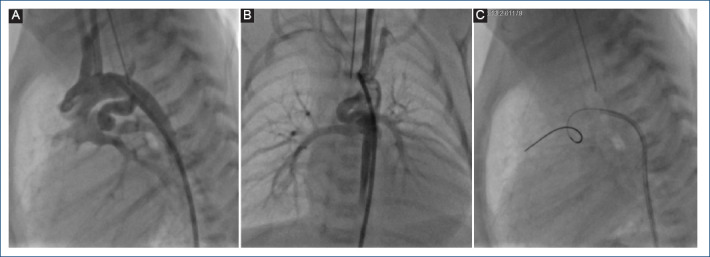
Objectives: Patients with congenital heart disease with ductus arteriosus-dependent pulmonary flow have as a palliative procedure the placement of a Blalock-Taussig-Thomas fistula (BTTF) or ductal stent (DSt) and subsequently undergoing to definitive palliation or repair. BTTF has been associated with increased morbidity and mortality. The objective of this research is to compare the morbidity and mortality of BTTF versus DSt, as well as their short- and medium-term outcomes.
Methods: The study population was patients undergoing BTTF or DSt placement from January 2012 to December 2022.
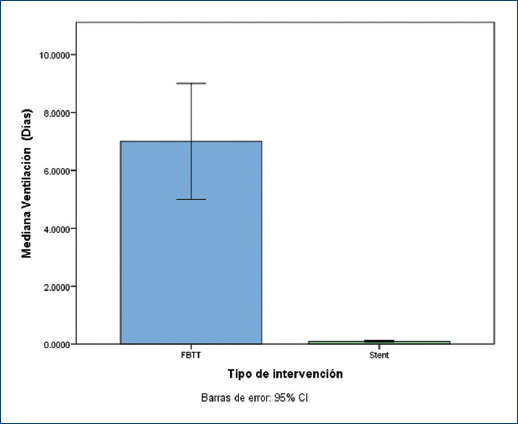
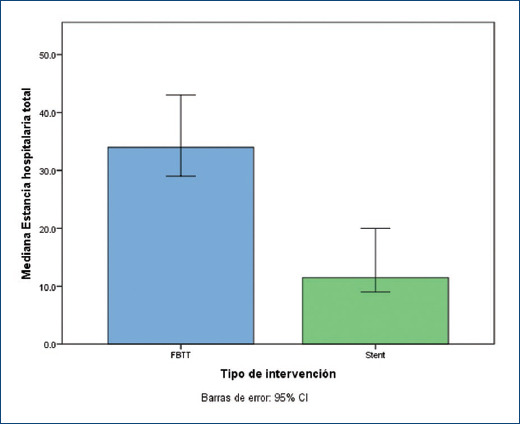
Results: 164 patients were identified, 128 with BTTF and 36 with DSt. 87.5% of the BTTF group presented complications, and 22.2% of the DSt group (p < 0.001). The OR for BTTF for development of complications was 19.58 (95%CI: 7.79-51.17). Intensive care unit stay was shortzer in DSt compared to FBTT (MD: -4.69 days; 95%CI: -7.30 to -2.07; I2 = 80%; p = 0.0004). The relative risk of FBTT patients for death was 2.32 (95%CI: 0.755-7.149), but there was no statistically significant difference for mortality (p = 0.135).
Conclusions: Mortality presented a lower tendency in patients with DSt. However, in other variables such as morbidity, hospital stay and reintervention were less frequent in the DSt group and were statistically significant. This evidence is the first in Latin-America and supports DSt as the safest and most effective option compared to FBTT in our setting.



 京公网安备 11010802042870号
京ICP备2023020795号-1
京公网安备 11010802042870号
京ICP备2023020795号-1

 分享
分享

 求助内容:
求助内容: 应助结果提醒方式:
 扫码关注我们
