{"title":"Dexmedetomidine Promotes Angiogenesis After Ischemic Stroke Through the NRF2/HO-1/VEGF Pathway","authors":"Zhenxing Tao, Pengpeng Li, Yushi Tang, Wenhui Yang, Yilu Li, Jieqiong Yang, Jiajia Tian, Yating Zhang, Yan Zou, Bai Xu, Xudong Zhao","doi":"10.1007/s11064-025-04394-y","DOIUrl":null,"url":null,"abstract":"<div><p>Neurological dysfunction following stroke presents a significant challenge for patients. Recent studies suggest that angiogenesis can improve neurological function and enhance neuronal survival after ischemic stroke. Dexmedetomidine exhibits neuroprotective effects through various mechanisms; therefore, this study aimed to investigate whether it promotes angiogenesis and improves neurological function after stroke. A mouse model of ischemic stroke was developed by embolizing the middle cerebral arteries. Neurological function was assessed using scoring methods, the water maze test, and histological analyses, including Nissl and hematoxylin and eosin staining, to evaluate neuronal survival in the ischemic penumbra. Angiogenesis was observed through immunofluorescence staining, whereas pathway protein expression was analyzed via western blotting. Additionally, a model of oxygen-glucose deprivation/reoxygenation was established in mouse cerebral microvascular cells to conduct angiogenesis-related experiments. Dexmedetomidine reduced cerebral infarction size, alleviated neurological damage, promoted angiogenesis in the ischemic penumbra, and decreased neuronal death through the Nrf2/HO-1/VEGF pathway. However, these neuroprotective effects were reversed by the NRF2 inhibitor ML385. In vitro, dexmedetomidine enhanced the proliferation, migration, and tube-formation of cerebral microvascular cells in mice. ML385 also reversed the protective effects of dexmedetomidine against hypoxia and glucose deprivation-induced axonal damage. Dexmedetomidine enhances angiogenesis, reduces neuronal damage, and promotes cerebral microvascular cell migration and tube formation in the ischemic penumbra of an ischemic stroke mouse model through the Nrf2/HO-1/VEGF pathway.</p><h3>Graphical Abstract</h3><div><figure><div><div><picture><source><img></source></picture></div></div></figure></div></div>","PeriodicalId":719,"journal":{"name":"Neurochemical Research","volume":"50 2","pages":""},"PeriodicalIF":3.8000,"publicationDate":"2025-04-09","publicationTypes":"Journal Article","fieldsOfStudy":null,"isOpenAccess":false,"openAccessPdf":"","citationCount":"0","resultStr":null,"platform":"Semanticscholar","paperid":null,"PeriodicalName":"Neurochemical Research","FirstCategoryId":"3","ListUrlMain":"https://link.springer.com/article/10.1007/s11064-025-04394-y","RegionNum":3,"RegionCategory":"医学","ArticlePicture":[],"TitleCN":null,"AbstractTextCN":null,"PMCID":null,"EPubDate":"","PubModel":"","JCR":"Q2","JCRName":"BIOCHEMISTRY & MOLECULAR BIOLOGY","Score":null,"Total":0}
引用次数: 0
Abstract
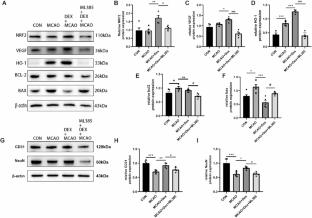
Neurological dysfunction following stroke presents a significant challenge for patients. Recent studies suggest that angiogenesis can improve neurological function and enhance neuronal survival after ischemic stroke. Dexmedetomidine exhibits neuroprotective effects through various mechanisms; therefore, this study aimed to investigate whether it promotes angiogenesis and improves neurological function after stroke. A mouse model of ischemic stroke was developed by embolizing the middle cerebral arteries. Neurological function was assessed using scoring methods, the water maze test, and histological analyses, including Nissl and hematoxylin and eosin staining, to evaluate neuronal survival in the ischemic penumbra. Angiogenesis was observed through immunofluorescence staining, whereas pathway protein expression was analyzed via western blotting. Additionally, a model of oxygen-glucose deprivation/reoxygenation was established in mouse cerebral microvascular cells to conduct angiogenesis-related experiments. Dexmedetomidine reduced cerebral infarction size, alleviated neurological damage, promoted angiogenesis in the ischemic penumbra, and decreased neuronal death through the Nrf2/HO-1/VEGF pathway. However, these neuroprotective effects were reversed by the NRF2 inhibitor ML385. In vitro, dexmedetomidine enhanced the proliferation, migration, and tube-formation of cerebral microvascular cells in mice. ML385 also reversed the protective effects of dexmedetomidine against hypoxia and glucose deprivation-induced axonal damage. Dexmedetomidine enhances angiogenesis, reduces neuronal damage, and promotes cerebral microvascular cell migration and tube formation in the ischemic penumbra of an ischemic stroke mouse model through the Nrf2/HO-1/VEGF pathway.
期刊介绍:
Neurochemical Research is devoted to the rapid publication of studies that use neurochemical methodology in research on nervous system structure and function. The journal publishes original reports of experimental and clinical research results, perceptive reviews of significant problem areas in the neurosciences, brief comments of a methodological or interpretive nature, and research summaries conducted by leading scientists whose works are not readily available in English.



 京公网安备 11010802042870号
京ICP备2023020795号-1
京公网安备 11010802042870号
京ICP备2023020795号-1

 分享
分享
 求助内容:
求助内容: 应助结果提醒方式:
 扫码关注我们
