Characterization and identification of hot pepper-associated endospore-forming bacteria with potential applications as biofertilizers and in biocontrol of pepper wilt pathogens.
{"title":"Characterization and identification of hot pepper-associated endospore-forming bacteria with potential applications as biofertilizers and in biocontrol of pepper wilt pathogens.","authors":"Shiferaw Demissie Tola, Diriba Muleta, Fassil Assefa, Farideh Ghadamgahi, Ramesh Raju Vetukuri, Beira Hailu Meressa","doi":"10.1186/s12866-025-03896-7","DOIUrl":null,"url":null,"abstract":"<p><strong>Background: </strong>Although hot pepper contributes significantly to Ethiopia's national economy, its production is hindered by devastating outbreaks of phytopathogens such as Fusarium wilt and Meloidogyne incognita disease complexes. It is known that bacteria in the pepper rhizosphere can promote plant growth by suppressing soil-borne pathogens and producing growth-promoting substances. Therefore, hot pepper-associated endospore-forming bacteria were evaluated for plant growth-promoting traits and in vitro antagonism to pepper wilt-causing pathogens, revealing some potentially valuable isolates.</p><p><strong>Results: </strong>One hundred and forty-seven heat-resistant endospore-forming rhizobacteria were recovered from 48 rhizosphere samples. Thirty-five of these isolates solubilized phosphate efficiently with solubilization index values of 2.8-10, and produced indole acetic acid (27. 31-59.16 µg/ml). Moreover, 20 isolates hydrolyzed chitin effectively, 21 of them reduced the radial growth of three pathogenic Fusarium oxysporum strains by between 26.7% and 79.2%, and cell-free supernatants of 12 isolates reduced the hatching of M. incognita eggs by 51-96.4% while also increasing juvenile mortality by 45-98.7%. After 16S rRNA gene sequence analysis, 31 of the isolates were identified as Bacillus spp. (B. siamensis, B. velezensis, and B. cereus; n = 26) and Paenibacillus polymyxa (n = 5).</p><p><strong>Conclusions: </strong>The bacterial strains JUBC7 (B. cereus) and JUBC12 (B. siamensis) have multiple phytobeneficial traits that make them promising microbial inoculants for protecting high value crops against phytopathogens.</p>","PeriodicalId":9233,"journal":{"name":"BMC Microbiology","volume":"25 1","pages":"198"},"PeriodicalIF":4.2000,"publicationDate":"2025-04-08","publicationTypes":"Journal Article","fieldsOfStudy":null,"isOpenAccess":false,"openAccessPdf":"https://www.ncbi.nlm.nih.gov/pmc/articles/PMC11977898/pdf/","citationCount":"0","resultStr":null,"platform":"Semanticscholar","paperid":null,"PeriodicalName":"BMC Microbiology","FirstCategoryId":"99","ListUrlMain":"https://doi.org/10.1186/s12866-025-03896-7","RegionNum":2,"RegionCategory":"生物学","ArticlePicture":[],"TitleCN":null,"AbstractTextCN":null,"PMCID":null,"EPubDate":"","PubModel":"","JCR":"Q2","JCRName":"MICROBIOLOGY","Score":null,"Total":0}
引用次数: 0
Abstract
Background: Although hot pepper contributes significantly to Ethiopia's national economy, its production is hindered by devastating outbreaks of phytopathogens such as Fusarium wilt and Meloidogyne incognita disease complexes. It is known that bacteria in the pepper rhizosphere can promote plant growth by suppressing soil-borne pathogens and producing growth-promoting substances. Therefore, hot pepper-associated endospore-forming bacteria were evaluated for plant growth-promoting traits and in vitro antagonism to pepper wilt-causing pathogens, revealing some potentially valuable isolates.
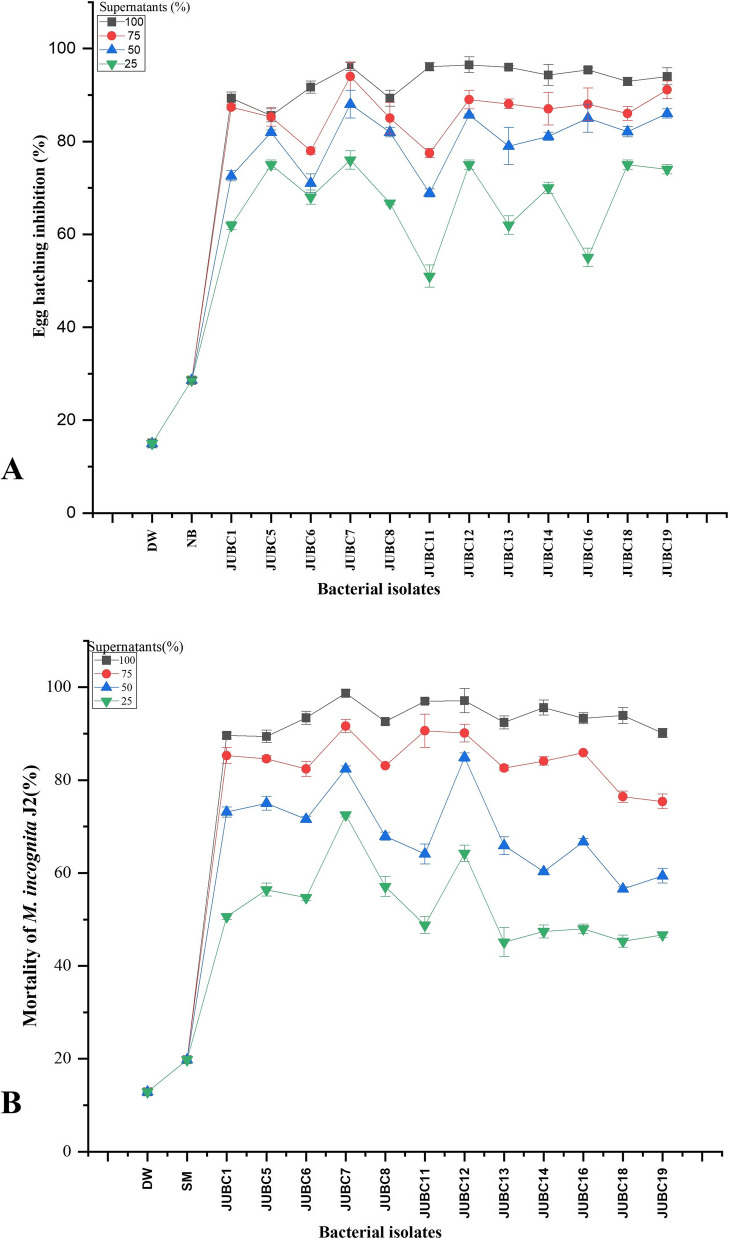
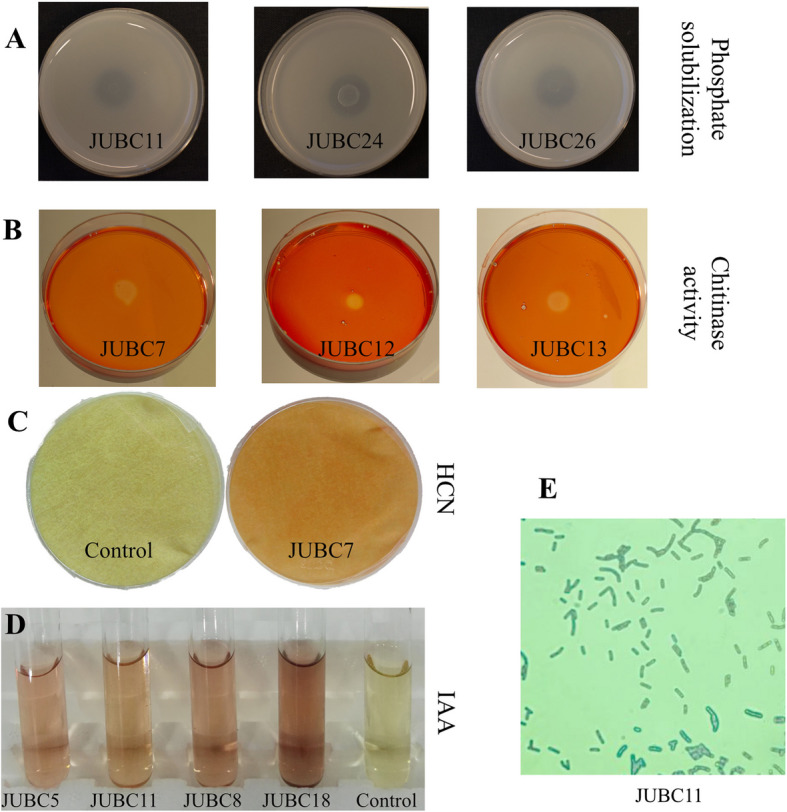
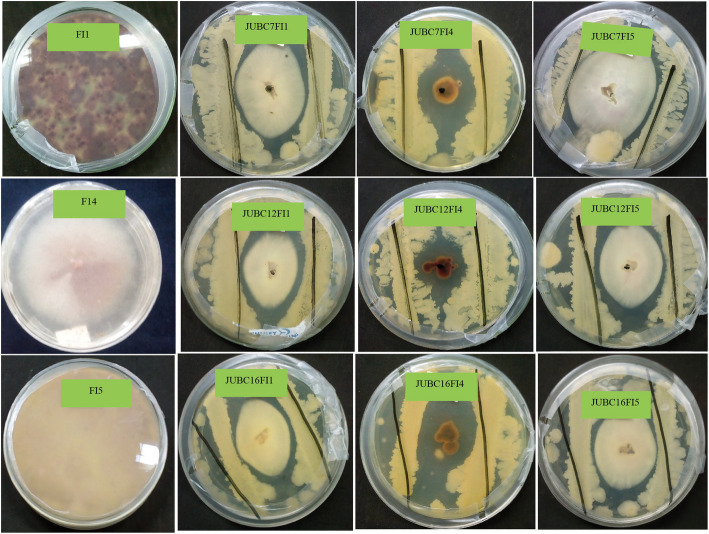
Results: One hundred and forty-seven heat-resistant endospore-forming rhizobacteria were recovered from 48 rhizosphere samples. Thirty-five of these isolates solubilized phosphate efficiently with solubilization index values of 2.8-10, and produced indole acetic acid (27. 31-59.16 µg/ml). Moreover, 20 isolates hydrolyzed chitin effectively, 21 of them reduced the radial growth of three pathogenic Fusarium oxysporum strains by between 26.7% and 79.2%, and cell-free supernatants of 12 isolates reduced the hatching of M. incognita eggs by 51-96.4% while also increasing juvenile mortality by 45-98.7%. After 16S rRNA gene sequence analysis, 31 of the isolates were identified as Bacillus spp. (B. siamensis, B. velezensis, and B. cereus; n = 26) and Paenibacillus polymyxa (n = 5).
Conclusions: The bacterial strains JUBC7 (B. cereus) and JUBC12 (B. siamensis) have multiple phytobeneficial traits that make them promising microbial inoculants for protecting high value crops against phytopathogens.
期刊介绍:
BMC Microbiology is an open access, peer-reviewed journal that considers articles on analytical and functional studies of prokaryotic and eukaryotic microorganisms, viruses and small parasites, as well as host and therapeutic responses to them and their interaction with the environment.



 京公网安备 11010802042870号
京ICP备2023020795号-1
京公网安备 11010802042870号
京ICP备2023020795号-1

 分享
分享
 求助内容:
求助内容: 应助结果提醒方式:
 扫码关注我们
