Federico Sala, Petra Paiè, Alessia Candeo, Francesco Ceccarelli, Roberto Osellame, Andrea Bassi, Francesca Bragheri
{"title":"Femtosecond laser microfabrication of a fully-integrated optofluidic device for 3D imaging flow cytometry.","authors":"Federico Sala, Petra Paiè, Alessia Candeo, Francesco Ceccarelli, Roberto Osellame, Andrea Bassi, Francesca Bragheri","doi":"10.1038/s41598-025-93118-x","DOIUrl":null,"url":null,"abstract":"<p><p>In recent years imaging flow cytometry (IFC) is gaining increasing attention as it combines the characteristics of conventional flow cytometry with optical microscopy techniques, allowing for high-throughput, multi-parameter screening of single cell populations. In the field of biology, the always increasing demand for high content morphological and spatial information led to the development of systems for volumetric imaging. However, current 3D IFC systems are often limited by the incompatibility with available microfluidic devices or by instrumental complexity that might lead to optical misalignment or mechanical instabilities in day-by-day operation. To this end, here we demonstrate the importance of advancing the laser fabrication technique by reporting on a fully integrated optofluidic platform composed of a borosilicate glass chip encompassing reconfigurable integrated photonic circuits for patterned light generation, bonded to a fused silica glass chip incorporating cylindrical hollow lenses, for light-sheet illumination, perfectly aligned to a microchannel where the sample under investigation flows. The system is capable of high-resolution imaging flow cytometry by implementing structured light sheet microscopy in a heterogeneously integrated platform with unprecedented stability. All the components are realized by femtosecond laser irradiation followed by chemical etching. The extreme level of integration permitted by the advanced optimization of the laser fabrication technique allowed the reduction of the assembled components and the absence of moving parts, thus ensuring durable alignment as well as mechanical and thermal stability both in short and long-term operation of the device, for the automated fluorescence signal acquisition during the sample flow.</p>","PeriodicalId":21811,"journal":{"name":"Scientific Reports","volume":"15 1","pages":"11950"},"PeriodicalIF":3.9000,"publicationDate":"2025-04-08","publicationTypes":"Journal Article","fieldsOfStudy":null,"isOpenAccess":false,"openAccessPdf":"https://www.ncbi.nlm.nih.gov/pmc/articles/PMC11978988/pdf/","citationCount":"0","resultStr":null,"platform":"Semanticscholar","paperid":null,"PeriodicalName":"Scientific Reports","FirstCategoryId":"103","ListUrlMain":"https://doi.org/10.1038/s41598-025-93118-x","RegionNum":2,"RegionCategory":"综合性期刊","ArticlePicture":[],"TitleCN":null,"AbstractTextCN":null,"PMCID":null,"EPubDate":"","PubModel":"","JCR":"Q1","JCRName":"MULTIDISCIPLINARY SCIENCES","Score":null,"Total":0}
引用次数: 0
Abstract
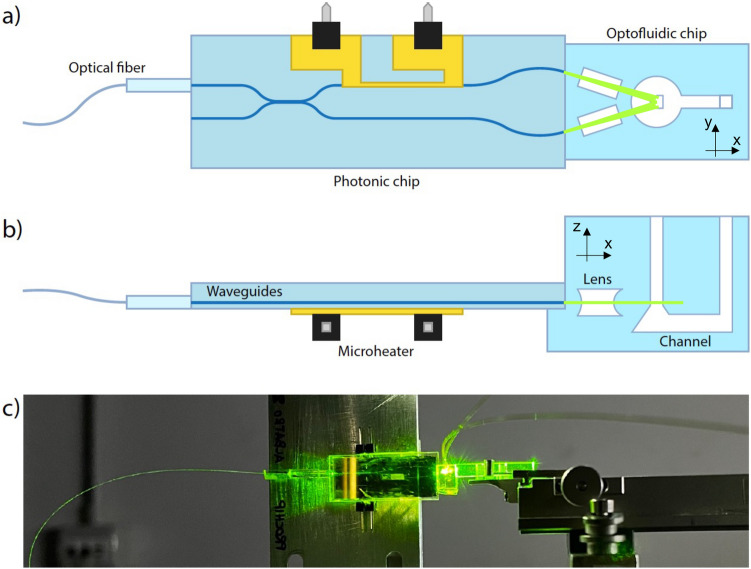
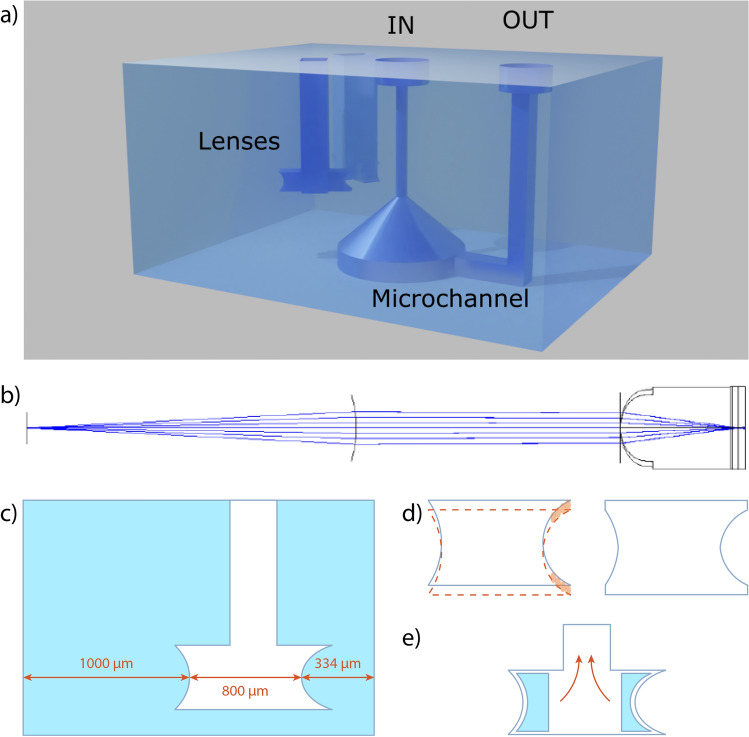
In recent years imaging flow cytometry (IFC) is gaining increasing attention as it combines the characteristics of conventional flow cytometry with optical microscopy techniques, allowing for high-throughput, multi-parameter screening of single cell populations. In the field of biology, the always increasing demand for high content morphological and spatial information led to the development of systems for volumetric imaging. However, current 3D IFC systems are often limited by the incompatibility with available microfluidic devices or by instrumental complexity that might lead to optical misalignment or mechanical instabilities in day-by-day operation. To this end, here we demonstrate the importance of advancing the laser fabrication technique by reporting on a fully integrated optofluidic platform composed of a borosilicate glass chip encompassing reconfigurable integrated photonic circuits for patterned light generation, bonded to a fused silica glass chip incorporating cylindrical hollow lenses, for light-sheet illumination, perfectly aligned to a microchannel where the sample under investigation flows. The system is capable of high-resolution imaging flow cytometry by implementing structured light sheet microscopy in a heterogeneously integrated platform with unprecedented stability. All the components are realized by femtosecond laser irradiation followed by chemical etching. The extreme level of integration permitted by the advanced optimization of the laser fabrication technique allowed the reduction of the assembled components and the absence of moving parts, thus ensuring durable alignment as well as mechanical and thermal stability both in short and long-term operation of the device, for the automated fluorescence signal acquisition during the sample flow.
期刊介绍:
We publish original research from all areas of the natural sciences, psychology, medicine and engineering. You can learn more about what we publish by browsing our specific scientific subject areas below or explore Scientific Reports by browsing all articles and collections.
Scientific Reports has a 2-year impact factor: 4.380 (2021), and is the 6th most-cited journal in the world, with more than 540,000 citations in 2020 (Clarivate Analytics, 2021).
•Engineering
Engineering covers all aspects of engineering, technology, and applied science. It plays a crucial role in the development of technologies to address some of the world''s biggest challenges, helping to save lives and improve the way we live.
•Physical sciences
Physical sciences are those academic disciplines that aim to uncover the underlying laws of nature — often written in the language of mathematics. It is a collective term for areas of study including astronomy, chemistry, materials science and physics.
•Earth and environmental sciences
Earth and environmental sciences cover all aspects of Earth and planetary science and broadly encompass solid Earth processes, surface and atmospheric dynamics, Earth system history, climate and climate change, marine and freshwater systems, and ecology. It also considers the interactions between humans and these systems.
•Biological sciences
Biological sciences encompass all the divisions of natural sciences examining various aspects of vital processes. The concept includes anatomy, physiology, cell biology, biochemistry and biophysics, and covers all organisms from microorganisms, animals to plants.
•Health sciences
The health sciences study health, disease and healthcare. This field of study aims to develop knowledge, interventions and technology for use in healthcare to improve the treatment of patients.




 京公网安备 11010802042870号
京ICP备2023020795号-1
京公网安备 11010802042870号
京ICP备2023020795号-1

 分享
分享
 求助内容:
求助内容: 应助结果提醒方式:
 扫码关注我们
