{"title":"Environmental impacts of coal mining and mitigation measures: a review","authors":"Vaishali Srivastava, Pawan Kumar Jha","doi":"10.1007/s10661-025-13939-1","DOIUrl":null,"url":null,"abstract":"<div><p>This study aims to elucidate the hazards associated with the coal mining sector and its repercussions on various environmental components. Research publications from academic databases, such as Scopus, Web of Science, Google Scholar, and ScienceDirect, served as the basis for this review. Though economically feasible, coal extraction devastates the landscape, biodiversity, and natural habitats. Acidic trailing, excavation of the overburden rock, and associated biogeochemical alterations (like acid mine drainage) alter the landscape of the area concerned and pollute air, water, and soil. Heavy metal pollution can be mitigated with the use of remediation techniques such as biological (biosorption and bioaugmentation), chemical (using alkaline waste and chemical neutralization), and physical barriers (use of limestone filters and constructed wetlands). Despite global efforts and numerous techno-legal measures to address this issue, completely replacing coal with alternative energy sources remains a significant challenge that must be addressed.</p><h3>Graphical Abstract</h3>\n<div><figure><div><div><picture><source><img></source></picture></div></div></figure></div></div>","PeriodicalId":544,"journal":{"name":"Environmental Monitoring and Assessment","volume":"197 5","pages":""},"PeriodicalIF":3.0000,"publicationDate":"2025-04-12","publicationTypes":"Journal Article","fieldsOfStudy":null,"isOpenAccess":false,"openAccessPdf":"","citationCount":"0","resultStr":null,"platform":"Semanticscholar","paperid":null,"PeriodicalName":"Environmental Monitoring and Assessment","FirstCategoryId":"93","ListUrlMain":"https://link.springer.com/article/10.1007/s10661-025-13939-1","RegionNum":4,"RegionCategory":"环境科学与生态学","ArticlePicture":[],"TitleCN":null,"AbstractTextCN":null,"PMCID":null,"EPubDate":"","PubModel":"","JCR":"Q3","JCRName":"ENVIRONMENTAL SCIENCES","Score":null,"Total":0}
引用次数: 0
Abstract
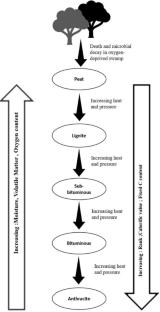
This study aims to elucidate the hazards associated with the coal mining sector and its repercussions on various environmental components. Research publications from academic databases, such as Scopus, Web of Science, Google Scholar, and ScienceDirect, served as the basis for this review. Though economically feasible, coal extraction devastates the landscape, biodiversity, and natural habitats. Acidic trailing, excavation of the overburden rock, and associated biogeochemical alterations (like acid mine drainage) alter the landscape of the area concerned and pollute air, water, and soil. Heavy metal pollution can be mitigated with the use of remediation techniques such as biological (biosorption and bioaugmentation), chemical (using alkaline waste and chemical neutralization), and physical barriers (use of limestone filters and constructed wetlands). Despite global efforts and numerous techno-legal measures to address this issue, completely replacing coal with alternative energy sources remains a significant challenge that must be addressed.
本研究旨在阐明与煤炭开采部门有关的危害及其对各种环境组成部分的影响。来自学术数据库的研究出版物,如Scopus、Web of Science、b谷歌Scholar和ScienceDirect,作为本综述的基础。尽管经济上可行,但煤炭开采破坏了景观、生物多样性和自然栖息地。酸性拖尾、上覆岩层的开挖以及相关的生物地球化学变化(如酸性矿井排水)改变了相关地区的景观,污染了空气、水和土壤。重金属污染可以通过使用诸如生物(生物吸附和生物增强)、化学(使用碱性废物和化学中和)和物理屏障(使用石灰石过滤器和人工湿地)等补救技术来减轻。尽管全球努力并采取了许多技术法律措施来解决这一问题,但用替代能源完全取代煤炭仍然是一个必须解决的重大挑战。图形抽象
期刊介绍:
Environmental Monitoring and Assessment emphasizes technical developments and data arising from environmental monitoring and assessment, the use of scientific principles in the design of monitoring systems at the local, regional and global scales, and the use of monitoring data in assessing the consequences of natural resource management actions and pollution risks to man and the environment.



 京公网安备 11010802042870号
京ICP备2023020795号-1
京公网安备 11010802042870号
京ICP备2023020795号-1

 分享
分享
 求助内容:
求助内容: 应助结果提醒方式:
 扫码关注我们
