{"title":"Assessment of leaf litter decomposition for biomonitoring in urban watercourses under contrasting thermal conditions","authors":"Marina Tagliaferro, Ricardo Albariño, Adonis Giorgi","doi":"10.1007/s10661-025-14004-7","DOIUrl":null,"url":null,"abstract":"<div><p>Urbanization affects the structure and function of aquatic ecosystems, and its effect might depend on seasonal conditions. We aim to evaluate the applicability of in situ leaf litter decomposition experiments to assess the ecological integrity of urbanized streams in cool (autumn–winter) and warm (spring–summer) periods. Along these two periods, three reaches were selected in urban and three in reference segments in Pampean streams. In each reach at both periods, 25 bags of 450 μm (FM) and 25 bags of 20 mm (CM) mesh size were placed containing dry leaves of <i>Populus nigra</i>, and five bags of each type were periodically collected up to day 104. Decomposition rates were determined from mass loss by fitting to a negative exponential model against time (<i>k</i><sub>d</sub>) and cumulate degree days (<i>k</i><sub>dd</sub>). In both periods, <i>k</i><sub>dd</sub> were lower in urban than in reference reaches (p<sub>condition</sub> = 0.020, df = 1, 137), but a larger difference occurred in the warm period. Even removing the effect of temperature, higher <i>k</i><sub>dd</sub> were observed in warm than in cool waters (p<sub>period</sub> = 0.0004, df = 1, 137 for FM and p<sub>period</sub> = 0.002, df = 1, 129 for CM). During the warm period experiment, the <i>k</i><sub>dd</sub> reduction due to urbanization was 2.5 times higher than during the cool period. Invertebrates colonizing litter bags differed between stream conditions and between seasons. Tolerant insect larvae were more abundant in the warm period; Gastropods, nematodes, and crabs during the cool period. In conclusion, our experimental methodology was effective to assess the effects of urbanization on stream ecological integrity. As we predicted, season stood out as an important factor in the assessment.</p></div>","PeriodicalId":544,"journal":{"name":"Environmental Monitoring and Assessment","volume":"197 5","pages":""},"PeriodicalIF":3.0000,"publicationDate":"2025-04-14","publicationTypes":"Journal Article","fieldsOfStudy":null,"isOpenAccess":false,"openAccessPdf":"","citationCount":"0","resultStr":null,"platform":"Semanticscholar","paperid":null,"PeriodicalName":"Environmental Monitoring and Assessment","FirstCategoryId":"93","ListUrlMain":"https://link.springer.com/article/10.1007/s10661-025-14004-7","RegionNum":4,"RegionCategory":"环境科学与生态学","ArticlePicture":[],"TitleCN":null,"AbstractTextCN":null,"PMCID":null,"EPubDate":"","PubModel":"","JCR":"Q3","JCRName":"ENVIRONMENTAL SCIENCES","Score":null,"Total":0}
引用次数: 0
Abstract
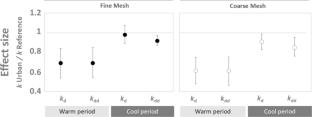
Urbanization affects the structure and function of aquatic ecosystems, and its effect might depend on seasonal conditions. We aim to evaluate the applicability of in situ leaf litter decomposition experiments to assess the ecological integrity of urbanized streams in cool (autumn–winter) and warm (spring–summer) periods. Along these two periods, three reaches were selected in urban and three in reference segments in Pampean streams. In each reach at both periods, 25 bags of 450 μm (FM) and 25 bags of 20 mm (CM) mesh size were placed containing dry leaves of Populus nigra, and five bags of each type were periodically collected up to day 104. Decomposition rates were determined from mass loss by fitting to a negative exponential model against time (kd) and cumulate degree days (kdd). In both periods, kdd were lower in urban than in reference reaches (pcondition = 0.020, df = 1, 137), but a larger difference occurred in the warm period. Even removing the effect of temperature, higher kdd were observed in warm than in cool waters (pperiod = 0.0004, df = 1, 137 for FM and pperiod = 0.002, df = 1, 129 for CM). During the warm period experiment, the kdd reduction due to urbanization was 2.5 times higher than during the cool period. Invertebrates colonizing litter bags differed between stream conditions and between seasons. Tolerant insect larvae were more abundant in the warm period; Gastropods, nematodes, and crabs during the cool period. In conclusion, our experimental methodology was effective to assess the effects of urbanization on stream ecological integrity. As we predicted, season stood out as an important factor in the assessment.
期刊介绍:
Environmental Monitoring and Assessment emphasizes technical developments and data arising from environmental monitoring and assessment, the use of scientific principles in the design of monitoring systems at the local, regional and global scales, and the use of monitoring data in assessing the consequences of natural resource management actions and pollution risks to man and the environment.



 京公网安备 11010802042870号
京ICP备2023020795号-1
京公网安备 11010802042870号
京ICP备2023020795号-1

 分享
分享
 求助内容:
求助内容: 应助结果提醒方式:
 扫码关注我们
