Manu Suvarna, Rubén Laplaza, Romain Graux, Núria López, Clémence Corminboeuf, Kjell Jorner, Javier Pérez-Ramírez
{"title":"SPOCK Tool for Constructing Empirical Volcano Diagrams from Catalytic Data","authors":"Manu Suvarna, Rubén Laplaza, Romain Graux, Núria López, Clémence Corminboeuf, Kjell Jorner, Javier Pérez-Ramírez","doi":"10.1021/acscatal.5c00412","DOIUrl":null,"url":null,"abstract":"Volcano plots, stemming from the Sabatier principle, visualize descriptor–performance relationships, allowing rational catalyst design. Manually drawn volcanoes originating from experimental studies are potentially prone to human bias as no guidelines or metrics exist to quantify the goodness of fit. To address this limitation, we introduce a framework called SPOCK (systematic piecewise regression for volcanic kinetics) and validate it using experimental data from heterogeneous, homogeneous, and enzymatic catalysis to fit volcano-like relationships. We then generalize this approach to DFT-derived volcanoes and evaluate the tool’s robustness against noisy kinetic data and in identifying false-positive volcanoes, i.e., cases where studies claim a volcano-like relationship exists, but such correlations are not statistically significant. Once the SPOCK’s functional features are established, we demonstrate its potential to identify descriptor–performance relationships, exemplified via the ceria-promoted water–gas shift and single-atom-catalyzed electrocatalytic carbon dioxide reduction reactions. In both cases, the model uncovers descriptors previously unreported, revealing insights that are not easily recognized by human experts. Finally, we showcase SPOCK’s capabilities to formulate multivariable descriptors, an emerging topic in catalysis research. Our work pioneers an automated and standardized tool for volcano plot construction and validation, and we release the model as an open-source web application for greater accessibility and knowledge generation in catalysis.","PeriodicalId":9,"journal":{"name":"ACS Catalysis ","volume":"1 1","pages":""},"PeriodicalIF":13.6000,"publicationDate":"2025-04-18","publicationTypes":"Journal Article","fieldsOfStudy":null,"isOpenAccess":false,"openAccessPdf":"","citationCount":"0","resultStr":null,"platform":"Semanticscholar","paperid":null,"PeriodicalName":"ACS Catalysis ","FirstCategoryId":"92","ListUrlMain":"https://doi.org/10.1021/acscatal.5c00412","RegionNum":1,"RegionCategory":"化学","ArticlePicture":[],"TitleCN":null,"AbstractTextCN":null,"PMCID":null,"EPubDate":"","PubModel":"","JCR":"Q1","JCRName":"CHEMISTRY, PHYSICAL","Score":null,"Total":0}
引用次数: 0
Abstract
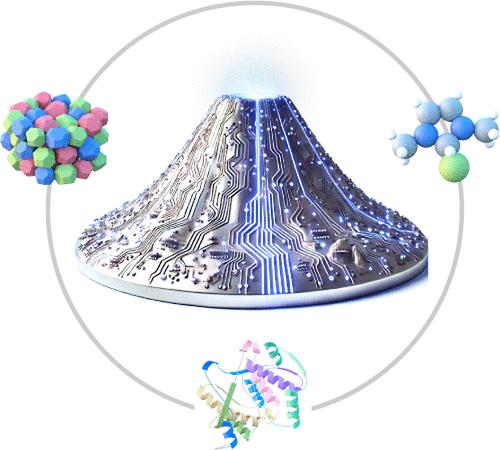
Volcano plots, stemming from the Sabatier principle, visualize descriptor–performance relationships, allowing rational catalyst design. Manually drawn volcanoes originating from experimental studies are potentially prone to human bias as no guidelines or metrics exist to quantify the goodness of fit. To address this limitation, we introduce a framework called SPOCK (systematic piecewise regression for volcanic kinetics) and validate it using experimental data from heterogeneous, homogeneous, and enzymatic catalysis to fit volcano-like relationships. We then generalize this approach to DFT-derived volcanoes and evaluate the tool’s robustness against noisy kinetic data and in identifying false-positive volcanoes, i.e., cases where studies claim a volcano-like relationship exists, but such correlations are not statistically significant. Once the SPOCK’s functional features are established, we demonstrate its potential to identify descriptor–performance relationships, exemplified via the ceria-promoted water–gas shift and single-atom-catalyzed electrocatalytic carbon dioxide reduction reactions. In both cases, the model uncovers descriptors previously unreported, revealing insights that are not easily recognized by human experts. Finally, we showcase SPOCK’s capabilities to formulate multivariable descriptors, an emerging topic in catalysis research. Our work pioneers an automated and standardized tool for volcano plot construction and validation, and we release the model as an open-source web application for greater accessibility and knowledge generation in catalysis.
期刊介绍:
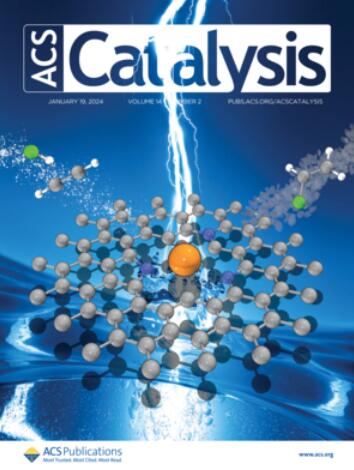
ACS Catalysis is an esteemed journal that publishes original research in the fields of heterogeneous catalysis, molecular catalysis, and biocatalysis. It offers broad coverage across diverse areas such as life sciences, organometallics and synthesis, photochemistry and electrochemistry, drug discovery and synthesis, materials science, environmental protection, polymer discovery and synthesis, and energy and fuels.
The scope of the journal is to showcase innovative work in various aspects of catalysis. This includes new reactions and novel synthetic approaches utilizing known catalysts, the discovery or modification of new catalysts, elucidation of catalytic mechanisms through cutting-edge investigations, practical enhancements of existing processes, as well as conceptual advances in the field. Contributions to ACS Catalysis can encompass both experimental and theoretical research focused on catalytic molecules, macromolecules, and materials that exhibit catalytic turnover.




 京公网安备 11010802042870号
京ICP备2023020795号-1
京公网安备 11010802042870号
京ICP备2023020795号-1

 分享
分享
 求助内容:
求助内容: 应助结果提醒方式:
 扫码关注我们
