Marwa Rabie, Dalia M. El-Tanbouly, Esraa A. Kandil, Helmy M. Sayed
{"title":"Oxytocin Anti-Apoptotic Potential Mediates Neuroprotection Against 3-Nitropropionic Acid-Induced Huntington’s Disease-Like Pathophysiology in Rats: Involvement of Calpain-2/p25 Cdk5/MEF-2 Signaling Pathway","authors":"Marwa Rabie, Dalia M. El-Tanbouly, Esraa A. Kandil, Helmy M. Sayed","doi":"10.1007/s11064-025-04397-9","DOIUrl":null,"url":null,"abstract":"<div><p>The increasing interest in the pro-apoptotic function of calpain-2 in the course of Huntington’s disease (HD) is attributed to the involvement of its substrate, cyclin-dependent kinase 5 (Cdk5), in neuronal death during neurodegeneration. Oxytocin has been demonstrated to suppress apoptosis in many neurodegenerative disorders. This research aimed to investigate the effect of oxytocin on several calpain 2-induced apoptogenic factors in 3-nitropropionic acid (3-NP) animal model of HD in rats. For 14 days, rats received 3-NP (10 mg/kg, i.p.), and oxytocin (160 µg/kg, i.p.) 1 h before 3-NP administration. Oxytocin reversed the detrimental effects of 3-NP on the striatum, which was evidenced by improvement of motor behavior, as well as histological picture and neurochemical balance. Oxytocin markedly reduced striatal calpain-2 and p25 Cdk5 protein expressions and increased the endogenous calpain inhibitor, calpastatin expression along with the pro-survival factor, myocyte-enhancer factor 2 (MEF-2) contents. Moreover, it suppressed striatal content of the pro-apoptotic biomarkers (BCl-2-associated X protein (Bax), tumor suppressor protein (p53), and caspase-3) and elevated striatal anti-apoptotic B-cell lymphoma/leukemia 2 (BCl-2) content. It repressed the release of mitochondrial cytochrome c and apoptosis-inducing factor (AIF) to hinder caspase-dependent and caspase-independent apoptotic neuronal death. Oxytocin could be a promising candidate for HD management by hampering both mitochondrial and non-mitochondrial apoptosis through inhibition of calpain-2/p25 Cdk5/MEF-2 pathway.</p></div>","PeriodicalId":719,"journal":{"name":"Neurochemical Research","volume":"50 3","pages":""},"PeriodicalIF":3.8000,"publicationDate":"2025-04-19","publicationTypes":"Journal Article","fieldsOfStudy":null,"isOpenAccess":false,"openAccessPdf":"","citationCount":"0","resultStr":null,"platform":"Semanticscholar","paperid":null,"PeriodicalName":"Neurochemical Research","FirstCategoryId":"3","ListUrlMain":"https://link.springer.com/article/10.1007/s11064-025-04397-9","RegionNum":3,"RegionCategory":"医学","ArticlePicture":[],"TitleCN":null,"AbstractTextCN":null,"PMCID":null,"EPubDate":"","PubModel":"","JCR":"Q2","JCRName":"BIOCHEMISTRY & MOLECULAR BIOLOGY","Score":null,"Total":0}
引用次数: 0
Abstract
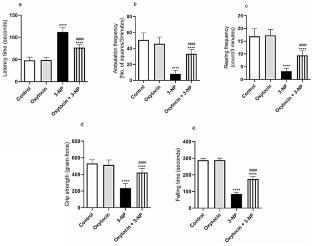
The increasing interest in the pro-apoptotic function of calpain-2 in the course of Huntington’s disease (HD) is attributed to the involvement of its substrate, cyclin-dependent kinase 5 (Cdk5), in neuronal death during neurodegeneration. Oxytocin has been demonstrated to suppress apoptosis in many neurodegenerative disorders. This research aimed to investigate the effect of oxytocin on several calpain 2-induced apoptogenic factors in 3-nitropropionic acid (3-NP) animal model of HD in rats. For 14 days, rats received 3-NP (10 mg/kg, i.p.), and oxytocin (160 µg/kg, i.p.) 1 h before 3-NP administration. Oxytocin reversed the detrimental effects of 3-NP on the striatum, which was evidenced by improvement of motor behavior, as well as histological picture and neurochemical balance. Oxytocin markedly reduced striatal calpain-2 and p25 Cdk5 protein expressions and increased the endogenous calpain inhibitor, calpastatin expression along with the pro-survival factor, myocyte-enhancer factor 2 (MEF-2) contents. Moreover, it suppressed striatal content of the pro-apoptotic biomarkers (BCl-2-associated X protein (Bax), tumor suppressor protein (p53), and caspase-3) and elevated striatal anti-apoptotic B-cell lymphoma/leukemia 2 (BCl-2) content. It repressed the release of mitochondrial cytochrome c and apoptosis-inducing factor (AIF) to hinder caspase-dependent and caspase-independent apoptotic neuronal death. Oxytocin could be a promising candidate for HD management by hampering both mitochondrial and non-mitochondrial apoptosis through inhibition of calpain-2/p25 Cdk5/MEF-2 pathway.
期刊介绍:
Neurochemical Research is devoted to the rapid publication of studies that use neurochemical methodology in research on nervous system structure and function. The journal publishes original reports of experimental and clinical research results, perceptive reviews of significant problem areas in the neurosciences, brief comments of a methodological or interpretive nature, and research summaries conducted by leading scientists whose works are not readily available in English.



 京公网安备 11010802042870号
京ICP备2023020795号-1
京公网安备 11010802042870号
京ICP备2023020795号-1

 分享
分享
 求助内容:
求助内容: 应助结果提醒方式:
 扫码关注我们
