{"title":"Effect of nanoparticle concentration on the crystallinity, vibrational dynamics and morphology of PS/TiO2 nanocomposites: a comprehensive study†","authors":"A. Rahimli and M. Jafarov","doi":"10.1039/D5CP00521C","DOIUrl":null,"url":null,"abstract":"<p >This study investigates the influence of rutile-phase TiO<small><sub>2</sub></small> nanoparticles on the structural, morphological, and vibrational properties of polystyrene (PS)-based nanocomposites at 3%, 5%, and 10%TiO<small><sub>2</sub></small> concentrations. Nanocomposites were fabricated <em>via</em> solution mixing and hot pressing. TEM revealed well-dispersed nanoparticles (30–50 nm) in 3% TiO<small><sub>2</sub></small> samples, with agglomeration increasing at 5%TiO<small><sub>2</sub></small>. AFM showed a rougher surface for 3% TiO<small><sub>2</sub></small> (90–160 nm) and smoother, more uniform surfaces for 10%TiO<small><sub>2</sub></small> (50–130 nm), attributed to improved dispersion. XRD indicated enhanced crystallinity with higher TiO<small><sub>2</sub></small> content, with crystallite sizes between 5.77 nm and 8.05 nm. Williamson–Hall and Halder–Wagner analyses highlighted strain effects at lower concentrations. Raman spectroscopy identified TiO<small><sub>2</sub></small> peaks (447 cm<small><sup>−1</sup></small>, 618 cm<small><sup>−1</sup></small>, 905 cm<small><sup>−1</sup></small>) intensifying with TiO<small><sub>2</sub></small> content, while PS peak shifts suggested matrix-nanoparticle interactions. These results underscore the critical role of TiO<small><sub>2</sub></small> dispersion and loading in determining PS nanocomposite properties.</p>","PeriodicalId":99,"journal":{"name":"Physical Chemistry Chemical Physics","volume":" 18","pages":" 9659-9667"},"PeriodicalIF":2.9000,"publicationDate":"2025-04-22","publicationTypes":"Journal Article","fieldsOfStudy":null,"isOpenAccess":false,"openAccessPdf":"","citationCount":"0","resultStr":null,"platform":"Semanticscholar","paperid":null,"PeriodicalName":"Physical Chemistry Chemical Physics","FirstCategoryId":"92","ListUrlMain":"https://pubs.rsc.org/en/content/articlelanding/2025/cp/d5cp00521c","RegionNum":3,"RegionCategory":"化学","ArticlePicture":[],"TitleCN":null,"AbstractTextCN":null,"PMCID":null,"EPubDate":"","PubModel":"","JCR":"Q3","JCRName":"CHEMISTRY, PHYSICAL","Score":null,"Total":0}
引用次数: 0
Abstract
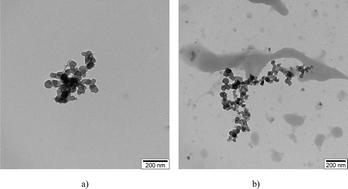
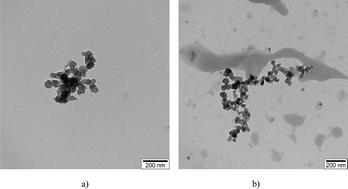
This study investigates the influence of rutile-phase TiO2 nanoparticles on the structural, morphological, and vibrational properties of polystyrene (PS)-based nanocomposites at 3%, 5%, and 10%TiO2 concentrations. Nanocomposites were fabricated via solution mixing and hot pressing. TEM revealed well-dispersed nanoparticles (30–50 nm) in 3% TiO2 samples, with agglomeration increasing at 5%TiO2. AFM showed a rougher surface for 3% TiO2 (90–160 nm) and smoother, more uniform surfaces for 10%TiO2 (50–130 nm), attributed to improved dispersion. XRD indicated enhanced crystallinity with higher TiO2 content, with crystallite sizes between 5.77 nm and 8.05 nm. Williamson–Hall and Halder–Wagner analyses highlighted strain effects at lower concentrations. Raman spectroscopy identified TiO2 peaks (447 cm−1, 618 cm−1, 905 cm−1) intensifying with TiO2 content, while PS peak shifts suggested matrix-nanoparticle interactions. These results underscore the critical role of TiO2 dispersion and loading in determining PS nanocomposite properties.
期刊介绍:
Physical Chemistry Chemical Physics (PCCP) is an international journal co-owned by 19 physical chemistry and physics societies from around the world. This journal publishes original, cutting-edge research in physical chemistry, chemical physics and biophysical chemistry. To be suitable for publication in PCCP, articles must include significant innovation and/or insight into physical chemistry; this is the most important criterion that reviewers and Editors will judge against when evaluating submissions.
The journal has a broad scope and welcomes contributions spanning experiment, theory, computation and data science. Topical coverage includes spectroscopy, dynamics, kinetics, statistical mechanics, thermodynamics, electrochemistry, catalysis, surface science, quantum mechanics, quantum computing and machine learning. Interdisciplinary research areas such as polymers and soft matter, materials, nanoscience, energy, surfaces/interfaces, and biophysical chemistry are welcomed if they demonstrate significant innovation and/or insight into physical chemistry. Joined experimental/theoretical studies are particularly appreciated when complementary and based on up-to-date approaches.




 京公网安备 11010802042870号
京ICP备2023020795号-1
京公网安备 11010802042870号
京ICP备2023020795号-1

 分享
分享
 求助内容:
求助内容: 应助结果提醒方式:
 扫码关注我们
