Pyeong Geun Choi , Hee Soo Kim , So-Hyun Park , Hyo-Deok Seo , Jeong-Hoon Hahm , Yang Hoon Huh , Tae-Il Jeon , Jiyun Ahn , Chang Hwa Jung
{"title":"Niclosamide extends health span and reduces frailty by ameliorating mTORC1 hyperactivation in aging models","authors":"Pyeong Geun Choi , Hee Soo Kim , So-Hyun Park , Hyo-Deok Seo , Jeong-Hoon Hahm , Yang Hoon Huh , Tae-Il Jeon , Jiyun Ahn , Chang Hwa Jung","doi":"10.1016/j.jare.2025.04.027","DOIUrl":null,"url":null,"abstract":"<div><h3>Introduction</h3><div>Frailty is characterized by an increased vulnerability to disease and physical debilitation due to a decline in the body’s capacity to maintain homeostasis during aging. Therefore, effective management of frailty is crucial for promoting health. Although the role of niclosamide (NIC), an autophagy promoter, has been studied for the treatment of cancer, infectious diseases, and metabolic disorders, no research has focused on its effects on aging.</div></div><div><h3>Objectives</h3><div>In this study, we aimed to evaluate the effects of NIC on the aging process and assess its potential as a novel anti-aging therapeutic agent.</div></div><div><h3>Methods</h3><div>We evaluated the effects of NIC on frailty, physical function, and metabolic function using <em>Caenorhabditis elegans</em> (<em>C. elegans</em>) and aging mouse models. NIC effectiveness was assessed using behavioral experiments, histological analysis, and molecular biological analysis.</div></div><div><h3>Results</h3><div>We identified NIC as a compound that enhanced exercise capacity and metabolism, thereby alleviating frailty. Briefly, NIC extended the lifespan and improved frailty-related phenotypes in <em>C. elegans</em>, and effectively ameliorated frailty in aging mice, particularly in muscle aging. Additionally, NIC treatment suppressed the muscle atrophy-related ubiquitin–proteasome system induced by mammalian target of rapamycin complex 1 (mTORC1) hyperactivation, while enhancing autophagic flux, another aspect of proteostasis. Furthermore, mRNA-seq analysis revealed that NIC improved metabolism-related functions.</div></div><div><h3>Conclusion</h3><div>Collectively, these findings suggest that NIC is a promising novel candidate for the prevention of frailty.</div></div>","PeriodicalId":14952,"journal":{"name":"Journal of Advanced Research","volume":"80 ","pages":"Pages 1031-1044"},"PeriodicalIF":13.0000,"publicationDate":"2026-02-01","publicationTypes":"Journal Article","fieldsOfStudy":null,"isOpenAccess":false,"openAccessPdf":"","citationCount":"0","resultStr":null,"platform":"Semanticscholar","paperid":null,"PeriodicalName":"Journal of Advanced Research","FirstCategoryId":"103","ListUrlMain":"https://www.sciencedirect.com/science/article/pii/S2090123225002711","RegionNum":1,"RegionCategory":"综合性期刊","ArticlePicture":[],"TitleCN":null,"AbstractTextCN":null,"PMCID":null,"EPubDate":"2025/4/22 0:00:00","PubModel":"Epub","JCR":"Q1","JCRName":"MULTIDISCIPLINARY SCIENCES","Score":null,"Total":0}
引用次数: 0
Abstract
Introduction
Frailty is characterized by an increased vulnerability to disease and physical debilitation due to a decline in the body’s capacity to maintain homeostasis during aging. Therefore, effective management of frailty is crucial for promoting health. Although the role of niclosamide (NIC), an autophagy promoter, has been studied for the treatment of cancer, infectious diseases, and metabolic disorders, no research has focused on its effects on aging.
Objectives
In this study, we aimed to evaluate the effects of NIC on the aging process and assess its potential as a novel anti-aging therapeutic agent.
Methods
We evaluated the effects of NIC on frailty, physical function, and metabolic function using Caenorhabditis elegans (C. elegans) and aging mouse models. NIC effectiveness was assessed using behavioral experiments, histological analysis, and molecular biological analysis.
Results
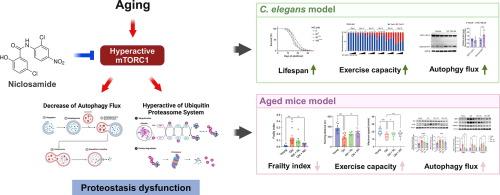
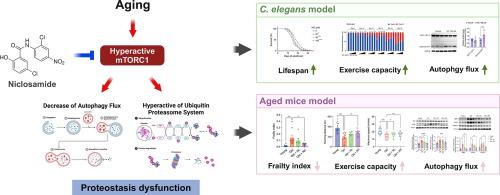
We identified NIC as a compound that enhanced exercise capacity and metabolism, thereby alleviating frailty. Briefly, NIC extended the lifespan and improved frailty-related phenotypes in C. elegans, and effectively ameliorated frailty in aging mice, particularly in muscle aging. Additionally, NIC treatment suppressed the muscle atrophy-related ubiquitin–proteasome system induced by mammalian target of rapamycin complex 1 (mTORC1) hyperactivation, while enhancing autophagic flux, another aspect of proteostasis. Furthermore, mRNA-seq analysis revealed that NIC improved metabolism-related functions.
Conclusion
Collectively, these findings suggest that NIC is a promising novel candidate for the prevention of frailty.
期刊介绍:
Journal of Advanced Research (J. Adv. Res.) is an applied/natural sciences, peer-reviewed journal that focuses on interdisciplinary research. The journal aims to contribute to applied research and knowledge worldwide through the publication of original and high-quality research articles in the fields of Medicine, Pharmaceutical Sciences, Dentistry, Physical Therapy, Veterinary Medicine, and Basic and Biological Sciences.
The following abstracting and indexing services cover the Journal of Advanced Research: PubMed/Medline, Essential Science Indicators, Web of Science, Scopus, PubMed Central, PubMed, Science Citation Index Expanded, Directory of Open Access Journals (DOAJ), and INSPEC.



 京公网安备 11010802042870号
京ICP备2023020795号-1
京公网安备 11010802042870号
京ICP备2023020795号-1

 分享
分享
 求助内容:
求助内容: 应助结果提醒方式:
 扫码关注我们
