Exploring the metabolic fate of antioxidant and hypoglycemic compounds from Pistacia vera shells through in vitro simulated digestion and untargeted metabolomics
Anna Elisabetta Maccarronello , Nunzio Cardullo , Diana Pinto , Antonella Di Francesco , Maria Gaetana Giovanna Pittalà , Francisca Rodrigues , Vera Muccilli
{"title":"Exploring the metabolic fate of antioxidant and hypoglycemic compounds from Pistacia vera shells through in vitro simulated digestion and untargeted metabolomics","authors":"Anna Elisabetta Maccarronello , Nunzio Cardullo , Diana Pinto , Antonella Di Francesco , Maria Gaetana Giovanna Pittalà , Francisca Rodrigues , Vera Muccilli","doi":"10.1016/j.foodchem.2025.144514","DOIUrl":null,"url":null,"abstract":"<div><div><em>Pistacia vera</em> L. shells (PS) are a sustainable source of health-promoting ingredients. The metabolic fate of a PS extract with antioxidant/antiradical and hypoglycemic properties prepared by microwave-assisted extraction (MAE) was investigated through <em>in vitro</em> gastrointestinal digestion to consider its potential value as nutraceutical ingredient. The results revealed significant changes in the phytochemical profile, bioactivity, and bioaccessibility of the extract during digestion. According to LC-ESI-LTQ-Orbitrap-MS analysis, compounds were mainly preserved in the oral (40.48 μg/mg DW) and gastric (73.67 μg/mg DW) phases, and less in the intestinal phase (13.24 μg/mg DW). α-Amylase inhibitory properties of PS extract remained consistent during digestion, whereas α-glucosidase inhibition and antioxidant/antiradical effects gradually decreased. Multivariate data analysis confirmed the interdependency between phytochemical composition and bioactivity of undigested extract and its digests. This study represents a step forward for developing PS-based functional foods, providing unique insights into the metabolism of PS bioactive constituents under simulated gastrointestinal conditions.</div></div>","PeriodicalId":318,"journal":{"name":"Food Chemistry","volume":"485 ","pages":"Article 144514"},"PeriodicalIF":9.8000,"publicationDate":"2025-09-01","publicationTypes":"Journal Article","fieldsOfStudy":null,"isOpenAccess":false,"openAccessPdf":"","citationCount":"0","resultStr":null,"platform":"Semanticscholar","paperid":null,"PeriodicalName":"Food Chemistry","FirstCategoryId":"97","ListUrlMain":"https://www.sciencedirect.com/science/article/pii/S0308814625017650","RegionNum":1,"RegionCategory":"农林科学","ArticlePicture":[],"TitleCN":null,"AbstractTextCN":null,"PMCID":null,"EPubDate":"2025/4/25 0:00:00","PubModel":"Epub","JCR":"Q1","JCRName":"CHEMISTRY, APPLIED","Score":null,"Total":0}
引用次数: 0
Abstract
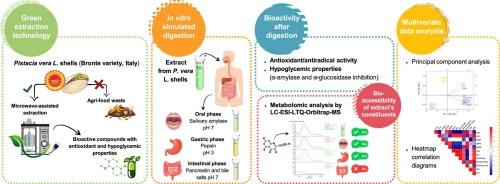
Pistacia vera L. shells (PS) are a sustainable source of health-promoting ingredients. The metabolic fate of a PS extract with antioxidant/antiradical and hypoglycemic properties prepared by microwave-assisted extraction (MAE) was investigated through in vitro gastrointestinal digestion to consider its potential value as nutraceutical ingredient. The results revealed significant changes in the phytochemical profile, bioactivity, and bioaccessibility of the extract during digestion. According to LC-ESI-LTQ-Orbitrap-MS analysis, compounds were mainly preserved in the oral (40.48 μg/mg DW) and gastric (73.67 μg/mg DW) phases, and less in the intestinal phase (13.24 μg/mg DW). α-Amylase inhibitory properties of PS extract remained consistent during digestion, whereas α-glucosidase inhibition and antioxidant/antiradical effects gradually decreased. Multivariate data analysis confirmed the interdependency between phytochemical composition and bioactivity of undigested extract and its digests. This study represents a step forward for developing PS-based functional foods, providing unique insights into the metabolism of PS bioactive constituents under simulated gastrointestinal conditions.
期刊介绍:
Food Chemistry publishes original research papers dealing with the advancement of the chemistry and biochemistry of foods or the analytical methods/ approach used. All papers should focus on the novelty of the research carried out.




 京公网安备 11010802042870号
京ICP备2023020795号-1
京公网安备 11010802042870号
京ICP备2023020795号-1

 分享
分享
 求助内容:
求助内容: 应助结果提醒方式:
 扫码关注我们
