Thomas C Schulz, Gail M Palmarini, Scott A Noggle, Deborah A Weiler, Maisam M Mitalipova, Brian G Condie
{"title":"Directed neuronal differentiation of human embryonic stem cells.","authors":"Thomas C Schulz, Gail M Palmarini, Scott A Noggle, Deborah A Weiler, Maisam M Mitalipova, Brian G Condie","doi":"10.1186/1471-2202-4-27","DOIUrl":null,"url":null,"abstract":"<p><strong>Background: </strong>We have developed a culture system for the efficient and directed differentiation of human embryonic stem cells (HESCs) to neural precursors and neurons.HESC were maintained by manual passaging and were differentiated to a morphologically distinct OCT-4+/SSEA-4- monolayer cell type prior to the derivation of embryoid bodies. Embryoid bodies were grown in suspension in serum free conditions, in the presence of 50% conditioned medium from the human hepatocarcinoma cell line HepG2 (MedII).</p><p><strong>Results: </strong>A neural precursor population was observed within HESC derived serum free embryoid bodies cultured in MedII conditioned medium, around 7-10 days after derivation. The neural precursors were organized into rosettes comprised of a central cavity surrounded by ring of cells, 4 to 8 cells in width. The central cells within rosettes were proliferating, as indicated by the presence of condensed mitotic chromosomes and by phosphoHistone H3 immunostaining. When plated and maintained in adherent culture, the rosettes of neural precursors were surrounded by large interwoven networks of neurites. Immunostaining demonstrated the expression of nestin in rosettes and associated non-neuronal cell types, and a radial expression of Map-2 in rosettes. Differentiated neurons expressed the markers Map-2 and Neurofilament H, and a subpopulation of the neurons expressed tyrosine hydroxylase, a marker for dopaminergic neurons.</p><p><strong>Conclusion: </strong>This novel directed differentiation approach led to the efficient derivation of neuronal cultures from HESCs, including the differentiation of tyrosine hydroxylase expressing neurons. HESC were morphologically differentiated to a monolayer OCT-4+ cell type, which was used to derive embryoid bodies directly into serum free conditions. Exposure to the MedII conditioned medium enhanced the derivation of neural precursors, the first example of the effect of this conditioned medium on HESC.</p>","PeriodicalId":9031,"journal":{"name":"BMC Neuroscience","volume":"4 ","pages":"27"},"PeriodicalIF":2.3000,"publicationDate":"2003-10-22","publicationTypes":"Journal Article","fieldsOfStudy":null,"isOpenAccess":false,"openAccessPdf":"https://sci-hub-pdf.com/10.1186/1471-2202-4-27","citationCount":"147","resultStr":null,"platform":"Semanticscholar","paperid":null,"PeriodicalName":"BMC Neuroscience","FirstCategoryId":"3","ListUrlMain":"https://doi.org/10.1186/1471-2202-4-27","RegionNum":4,"RegionCategory":"医学","ArticlePicture":[],"TitleCN":null,"AbstractTextCN":null,"PMCID":null,"EPubDate":"","PubModel":"","JCR":"Q3","JCRName":"NEUROSCIENCES","Score":null,"Total":0}
引用次数: 147
Abstract
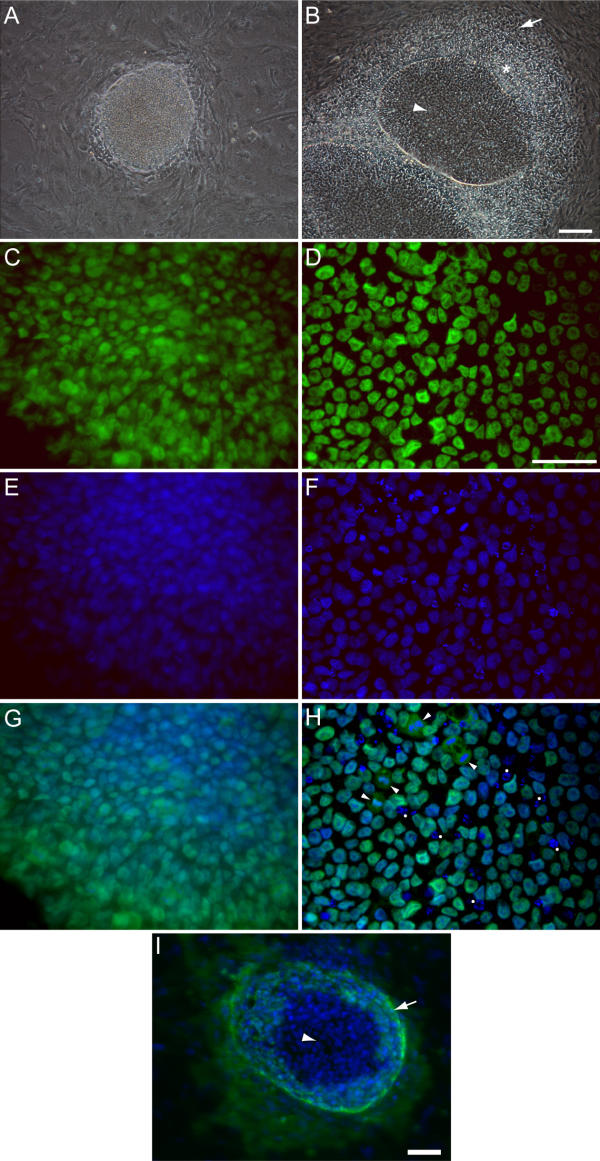
Background: We have developed a culture system for the efficient and directed differentiation of human embryonic stem cells (HESCs) to neural precursors and neurons.HESC were maintained by manual passaging and were differentiated to a morphologically distinct OCT-4+/SSEA-4- monolayer cell type prior to the derivation of embryoid bodies. Embryoid bodies were grown in suspension in serum free conditions, in the presence of 50% conditioned medium from the human hepatocarcinoma cell line HepG2 (MedII).
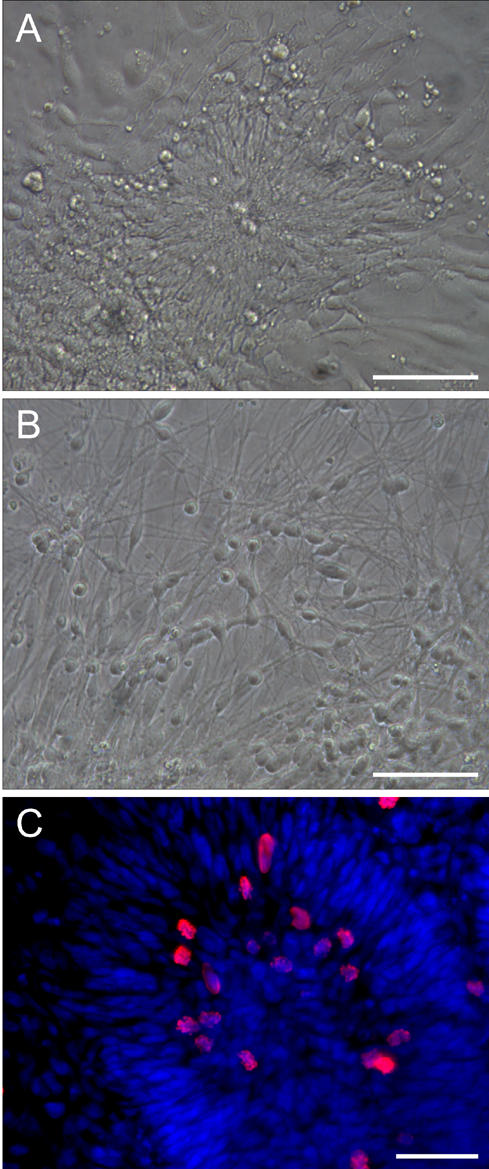
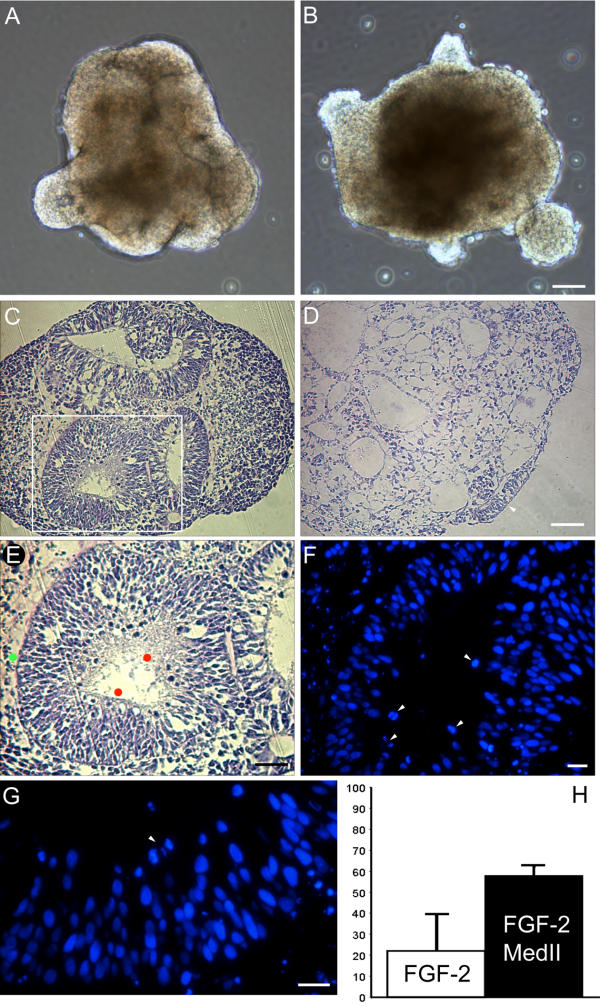
Results: A neural precursor population was observed within HESC derived serum free embryoid bodies cultured in MedII conditioned medium, around 7-10 days after derivation. The neural precursors were organized into rosettes comprised of a central cavity surrounded by ring of cells, 4 to 8 cells in width. The central cells within rosettes were proliferating, as indicated by the presence of condensed mitotic chromosomes and by phosphoHistone H3 immunostaining. When plated and maintained in adherent culture, the rosettes of neural precursors were surrounded by large interwoven networks of neurites. Immunostaining demonstrated the expression of nestin in rosettes and associated non-neuronal cell types, and a radial expression of Map-2 in rosettes. Differentiated neurons expressed the markers Map-2 and Neurofilament H, and a subpopulation of the neurons expressed tyrosine hydroxylase, a marker for dopaminergic neurons.
Conclusion: This novel directed differentiation approach led to the efficient derivation of neuronal cultures from HESCs, including the differentiation of tyrosine hydroxylase expressing neurons. HESC were morphologically differentiated to a monolayer OCT-4+ cell type, which was used to derive embryoid bodies directly into serum free conditions. Exposure to the MedII conditioned medium enhanced the derivation of neural precursors, the first example of the effect of this conditioned medium on HESC.
期刊介绍:
BMC Neuroscience is an open access, peer-reviewed journal that considers articles on all aspects of neuroscience, welcoming studies that provide insight into the molecular, cellular, developmental, genetic and genomic, systems, network, cognitive and behavioral aspects of nervous system function in both health and disease. Both experimental and theoretical studies are within scope, as are studies that describe methodological approaches to monitoring or manipulating nervous system function.



 京公网安备 11010802042870号
京ICP备2023020795号-1
京公网安备 11010802042870号
京ICP备2023020795号-1

 分享
分享
 求助内容:
求助内容: 应助结果提醒方式:
 扫码关注我们
