{"title":"Cytogenetic abnormalities and fragile-X syndrome in Autism Spectrum Disorder.","authors":"Kavita S Reddy","doi":"10.1186/1471-2350-6-3","DOIUrl":null,"url":null,"abstract":"<p><strong>Background: </strong>Autism is a behavioral disorder with impaired social interaction, communication, and repetitive and stereotypic behaviors. About 5-10 % of individuals with autism have 'secondary' autism in which an environmental agent, chromosome abnormality, or single gene disorder can be identified. Ninety percent have idiopathic autism and a major gene has not yet been identified. We have assessed the incidence of chromosome abnormalities and Fragile X syndrome in a population of autistic patients referred to our laboratory.</p><p><strong>Methods: </strong>Data was analyzed from 433 patients with autistic traits tested using chromosome analysis and/or fluorescence in situ hybridization (FISH) and/or molecular testing for fragile X syndrome by Southern and PCR methods.</p><p><strong>Results: </strong>The median age was 4 years. Sex ratio was 4.5 males to 1 female [354:79]. A chromosome (cs) abnormality was found in 14/421 [3.33 %] cases. The aberrations were: 4/14 [28%] supernumerary markers; 4/14 [28%] deletions; 1/14 [7%] duplication; 3/14 [21%] inversions; 2/14 [14%] translocations. FISH was performed on 23 cases for reasons other than to characterize a previously identified cytogenetic abnormality. All 23 cases were negative. Fragile-X testing by Southern blots and PCR analysis found 7/316 [2.2 %] with an abnormal result. The mutations detected were: a full mutation (fM) and abnormal methylation in 3 [43 %], mosaic mutations with partial methylation of variable clinical significance in 3 [43%] and a permutation carrier [14%]. The frequency of chromosome and fragile-X abnormalities appears to be within the range in reported surveys (cs 4.8-1.7%, FRAX 2-4%). Limitations of our retrospective study include paucity of behavioral diagnostic information, and a specific clinical criterion for testing.</p><p><strong>Conclusions: </strong>Twenty-eight percent of chromosome abnormalities detected in our study were subtle; therefore a high resolution cytogenetic study with a scrutiny of 15q11.2q13, 2q37 and Xp23.3 region should be standard practice when the indication is autism. The higher incidence of mosaic fragile-X mutations with partial methylation compared to FRAXA positive population [50% vs 15-40%] suggests that faint bands and variations in the Southern band pattern may occur in autistic patients.</p>","PeriodicalId":9015,"journal":{"name":"BMC Medical Genetics","volume":"6 ","pages":"3"},"PeriodicalIF":0.0000,"publicationDate":"2005-01-18","publicationTypes":"Journal Article","fieldsOfStudy":null,"isOpenAccess":false,"openAccessPdf":"https://www.ncbi.nlm.nih.gov/pmc/articles/PMC548305/pdf/","citationCount":"0","resultStr":null,"platform":"Semanticscholar","paperid":null,"PeriodicalName":"BMC Medical Genetics","FirstCategoryId":"3","ListUrlMain":"https://doi.org/10.1186/1471-2350-6-3","RegionNum":4,"RegionCategory":"医学","ArticlePicture":[],"TitleCN":null,"AbstractTextCN":null,"PMCID":null,"EPubDate":"","PubModel":"","JCR":"Q4","JCRName":"Medicine","Score":null,"Total":0}
引用次数: 0
Abstract
Background: Autism is a behavioral disorder with impaired social interaction, communication, and repetitive and stereotypic behaviors. About 5-10 % of individuals with autism have 'secondary' autism in which an environmental agent, chromosome abnormality, or single gene disorder can be identified. Ninety percent have idiopathic autism and a major gene has not yet been identified. We have assessed the incidence of chromosome abnormalities and Fragile X syndrome in a population of autistic patients referred to our laboratory.
Methods: Data was analyzed from 433 patients with autistic traits tested using chromosome analysis and/or fluorescence in situ hybridization (FISH) and/or molecular testing for fragile X syndrome by Southern and PCR methods.
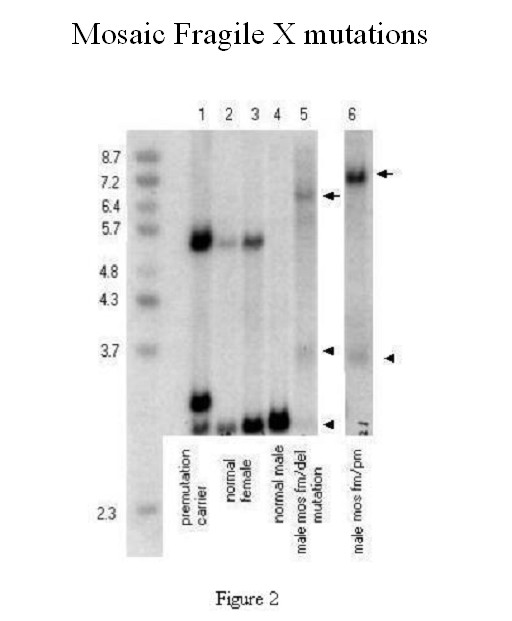
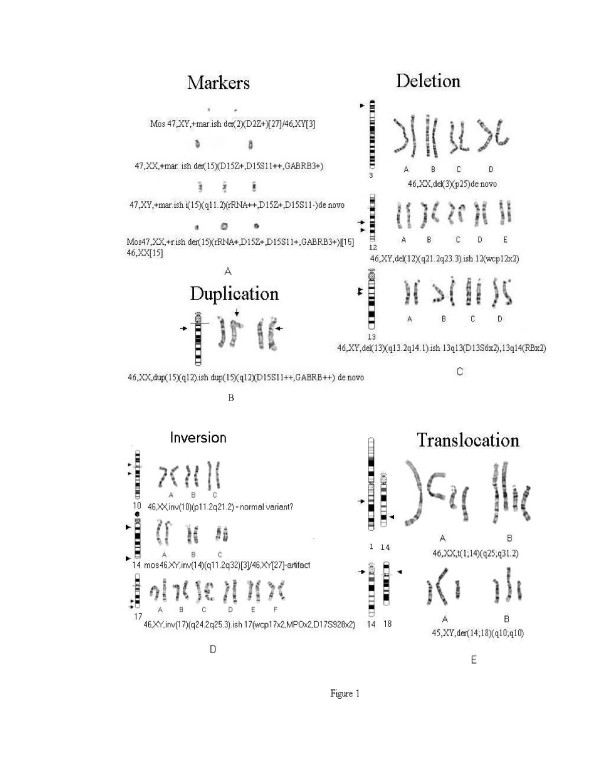
Results: The median age was 4 years. Sex ratio was 4.5 males to 1 female [354:79]. A chromosome (cs) abnormality was found in 14/421 [3.33 %] cases. The aberrations were: 4/14 [28%] supernumerary markers; 4/14 [28%] deletions; 1/14 [7%] duplication; 3/14 [21%] inversions; 2/14 [14%] translocations. FISH was performed on 23 cases for reasons other than to characterize a previously identified cytogenetic abnormality. All 23 cases were negative. Fragile-X testing by Southern blots and PCR analysis found 7/316 [2.2 %] with an abnormal result. The mutations detected were: a full mutation (fM) and abnormal methylation in 3 [43 %], mosaic mutations with partial methylation of variable clinical significance in 3 [43%] and a permutation carrier [14%]. The frequency of chromosome and fragile-X abnormalities appears to be within the range in reported surveys (cs 4.8-1.7%, FRAX 2-4%). Limitations of our retrospective study include paucity of behavioral diagnostic information, and a specific clinical criterion for testing.
Conclusions: Twenty-eight percent of chromosome abnormalities detected in our study were subtle; therefore a high resolution cytogenetic study with a scrutiny of 15q11.2q13, 2q37 and Xp23.3 region should be standard practice when the indication is autism. The higher incidence of mosaic fragile-X mutations with partial methylation compared to FRAXA positive population [50% vs 15-40%] suggests that faint bands and variations in the Southern band pattern may occur in autistic patients.
期刊介绍:
BMC Medical Genetics is an open access journal publishing original peer-reviewed research articles in the effects of genetic variation in individuals, families and among populations in relation to human health and disease.
Note: BMC Medical Genetics is now closed. This journal has merged with BMC Medical Genomics, a broad-scope, open access community journal for all medical genetics and genomics research.




 京公网安备 11010802042870号
京ICP备2023020795号-1
京公网安备 11010802042870号
京ICP备2023020795号-1

 分享
分享
 求助内容:
求助内容: 应助结果提醒方式:
 扫码关注我们
