{"title":"Resolving the Molecular Steps in Clostridial Neurotoxin Light Chain Translocation.","authors":"Madison Zuverink, Joseph T Barbieri","doi":"10.33696/Neurol.1.020","DOIUrl":null,"url":null,"abstract":"<p><p>The clostridial neurotoxins (CNTs), botulinum toxin and tetanus toxin, are the most toxic proteins for humans. Neurotoxicity is based upon the specificity of the CNTs for neural host receptors and substrates. CNTs are organized into three domains, a Light Chain (LC) that is a metalloprotease and a Heavy Chain (HC) that has two domains, an N-terminal LC translocation domain (HCN) and a C-terminal receptor binding domain (HCC). While catalysis and receptor binding functions of the CNTs have been developed, our understanding of LC translocation is limited. This is due to the intrinsic complexity of the translocation process and limited tools to assess the step-by-step events in LC translocation. Recently, we developed a novel, cell-based TT-reporter to measure LC translocation as the translocation of a β-lactamase reporter across a vesicle membrane in neurons. Using this approach, we identified a role for a <i>cis</i>-Loop, located within the HCN, in LC translocation. In this commentary, we describe our current understanding of how CNTs mediate LC translocation and place the role of the <i>cis</i>-Loop in the LC translocation process relative to other independent functions that have been implicated in LC translocation. Understanding the basis for LC translocation will enhance the use of CNTs in vaccine development and as human therapies.</p>","PeriodicalId":73744,"journal":{"name":"Journal of experimental neurology","volume":"1 4","pages":"123-134"},"PeriodicalIF":0.0000,"publicationDate":"2020-01-01","publicationTypes":"Journal Article","fieldsOfStudy":null,"isOpenAccess":false,"openAccessPdf":"https://www.ncbi.nlm.nih.gov/pmc/articles/PMC7894615/pdf/","citationCount":"1","resultStr":null,"platform":"Semanticscholar","paperid":null,"PeriodicalName":"Journal of experimental neurology","FirstCategoryId":"1085","ListUrlMain":"https://doi.org/10.33696/Neurol.1.020","RegionNum":0,"RegionCategory":null,"ArticlePicture":[],"TitleCN":null,"AbstractTextCN":null,"PMCID":null,"EPubDate":"","PubModel":"","JCR":"","JCRName":"","Score":null,"Total":0}
引用次数: 1
Abstract
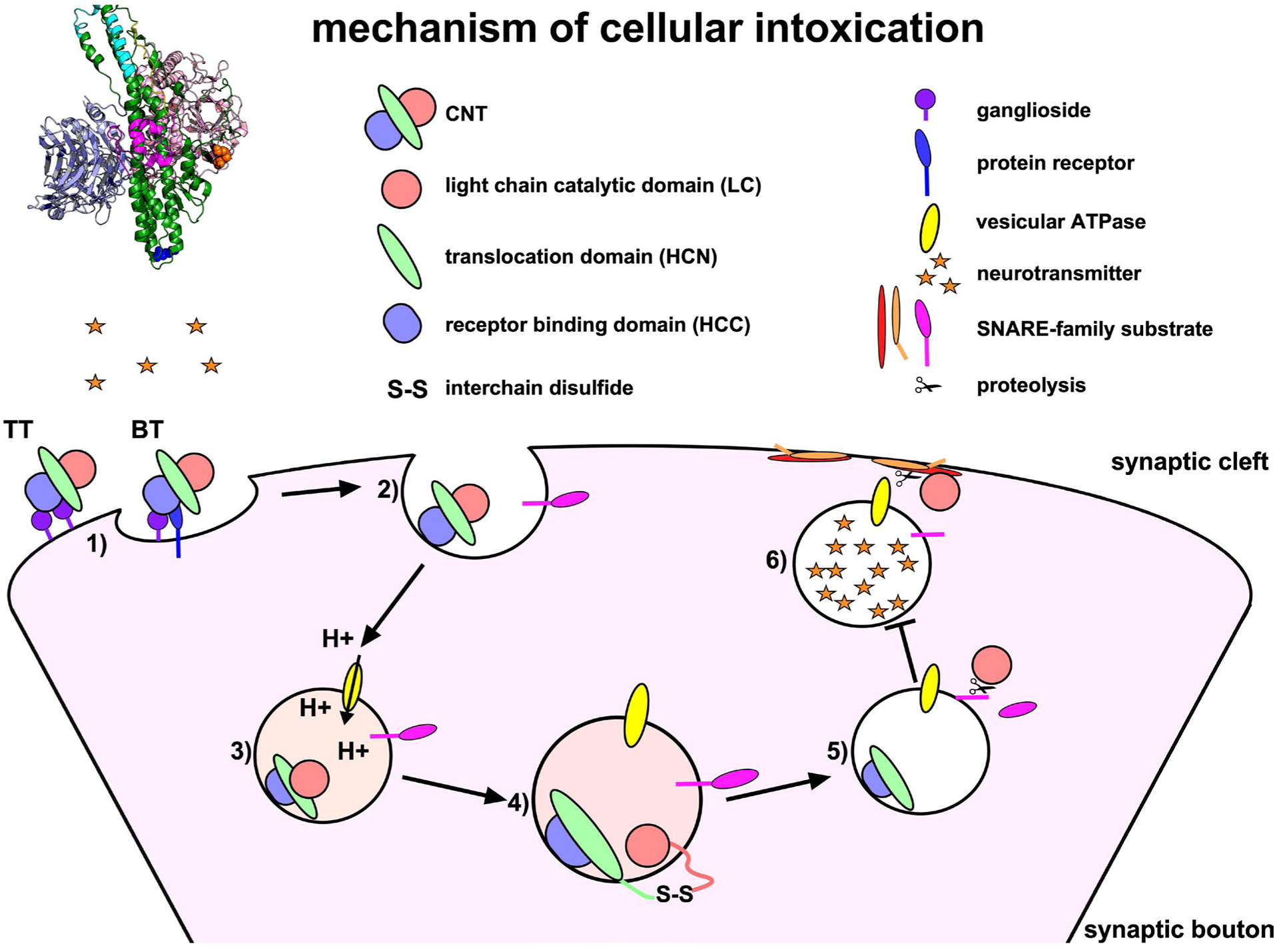
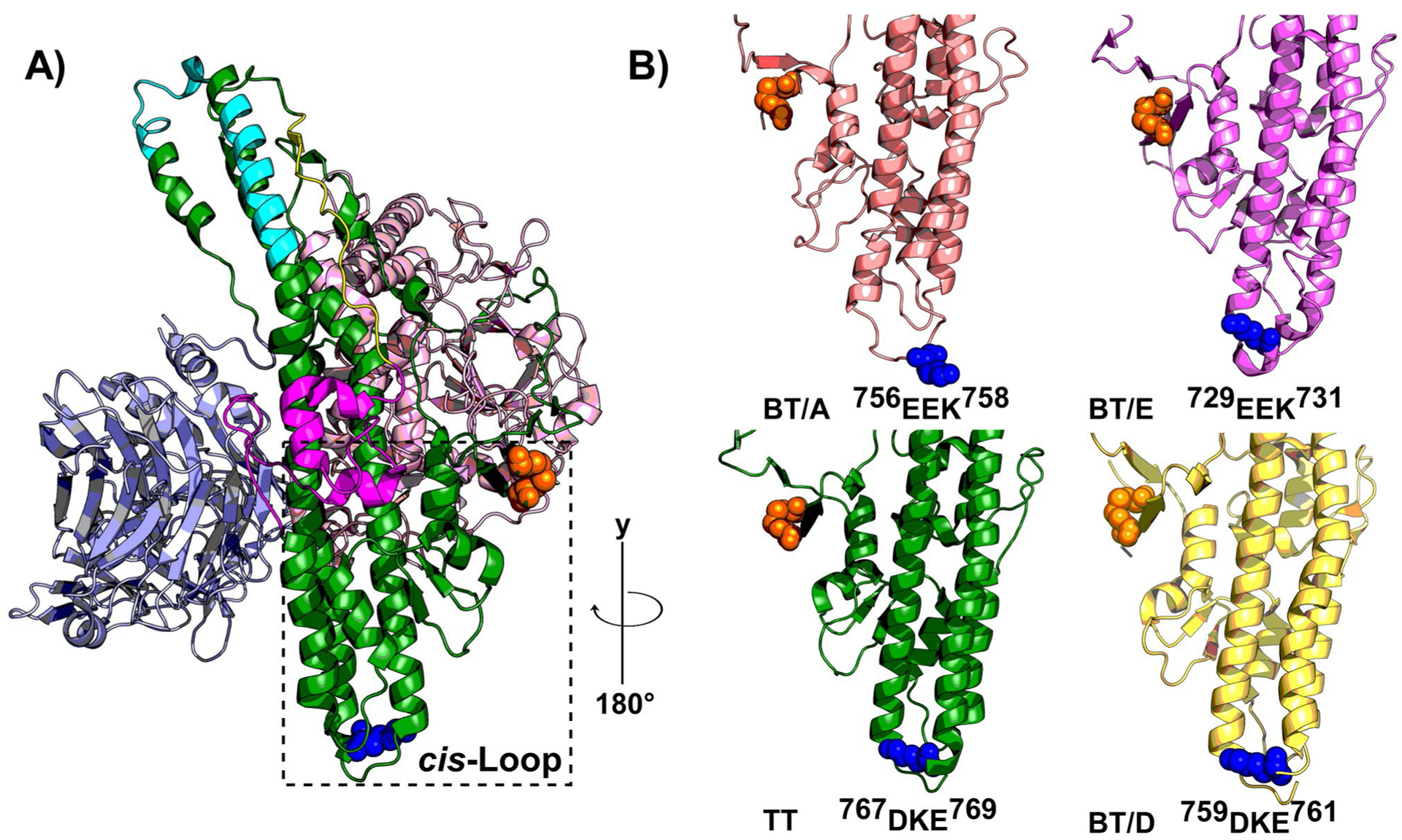
The clostridial neurotoxins (CNTs), botulinum toxin and tetanus toxin, are the most toxic proteins for humans. Neurotoxicity is based upon the specificity of the CNTs for neural host receptors and substrates. CNTs are organized into three domains, a Light Chain (LC) that is a metalloprotease and a Heavy Chain (HC) that has two domains, an N-terminal LC translocation domain (HCN) and a C-terminal receptor binding domain (HCC). While catalysis and receptor binding functions of the CNTs have been developed, our understanding of LC translocation is limited. This is due to the intrinsic complexity of the translocation process and limited tools to assess the step-by-step events in LC translocation. Recently, we developed a novel, cell-based TT-reporter to measure LC translocation as the translocation of a β-lactamase reporter across a vesicle membrane in neurons. Using this approach, we identified a role for a cis-Loop, located within the HCN, in LC translocation. In this commentary, we describe our current understanding of how CNTs mediate LC translocation and place the role of the cis-Loop in the LC translocation process relative to other independent functions that have been implicated in LC translocation. Understanding the basis for LC translocation will enhance the use of CNTs in vaccine development and as human therapies.



 京公网安备 11010802042870号
京ICP备2023020795号-1
京公网安备 11010802042870号
京ICP备2023020795号-1

 分享
分享

 求助内容:
求助内容: 应助结果提醒方式:
 扫码关注我们
