Yifan Que, Chao Hu, Kun Wan, Peng Hu, Runsheng Wang, Jiang Luo, Tianzhi Li, Rongyu Ping, Qinyong Hu, Yu Sun, Xudong Wu, Lei Tu, Yingzhen Du, Christopher Chang, Guogang Xu
{"title":"Cytokine release syndrome in COVID-19: a major mechanism of morbidity and mortality.","authors":"Yifan Que, Chao Hu, Kun Wan, Peng Hu, Runsheng Wang, Jiang Luo, Tianzhi Li, Rongyu Ping, Qinyong Hu, Yu Sun, Xudong Wu, Lei Tu, Yingzhen Du, Christopher Chang, Guogang Xu","doi":"10.1080/08830185.2021.1884248","DOIUrl":null,"url":null,"abstract":"<p><p>The coronavirus disease 2019 (COVID-19) triggered by severe acute respiratory syndrome coronavirus 2 (SARS-CoV-2) erupted in Hubei Province of China in December 2019 and has become a pandemic. Severe COVID-19 patients who suffer from acute respiratory distress syndrome (ARDS) and multi-organ dysfunction have high mortality. Several studies have shown that this is closely related to the cytokine release syndrome (CRS), often loosely referred to as cytokine storm. IL-6 is one of the key factors and its level is positively correlated with the severity of the disease. The molecular mechanisms for CRS in COVID-19 are related to the effects of the S-protein and N-protein of the virus and its ability to trigger NF-κB activation by disabling the inhibitory component IκB. This leads to activation of immune cells and the secretion of proinflammatory cytokines such as IL-6 and TNF-α. Other mechanisms related to IL-6 include its interaction with GM-CSF and interferon responses. The pivotal role of IL-6 makes it a target for therapeutic agents and studies on tocilizumab are already ongoing. Other possible targets of treating CRS in COVID-19 include IL-1β and TNF-α. Recently, reports of a CRS like illness called multisystem inflammatory syndrome in children (MIS-C) in children have surfaced, with a variable presentation which in some cases resembles Kawasaki disease. It is likely that the immunological derangement and cytokine release occurring in COVID-19 cases is variable, or on a spectrum, that can potentially be governed by genetic factors. Currently, there are no approved biological modulators for the treatment of COVID-19, but the urgency of the pandemic has led to numerous clinical trials worldwide. Ultimately, there is great promise that an anti-inflammatory modulator targeting a cytokine storm effect may prove to be very beneficial in reducing morbidity and mortality in COVID-19 patients.</p>","PeriodicalId":4,"journal":{"name":"ACS Applied Energy Materials","volume":" ","pages":"217-230"},"PeriodicalIF":5.5000,"publicationDate":"2022-01-01","publicationTypes":"Journal Article","fieldsOfStudy":null,"isOpenAccess":false,"openAccessPdf":"https://sci-hub-pdf.com/10.1080/08830185.2021.1884248","citationCount":"87","resultStr":null,"platform":"Semanticscholar","paperid":null,"PeriodicalName":"ACS Applied Energy Materials","FirstCategoryId":"3","ListUrlMain":"https://doi.org/10.1080/08830185.2021.1884248","RegionNum":3,"RegionCategory":"材料科学","ArticlePicture":[],"TitleCN":null,"AbstractTextCN":null,"PMCID":null,"EPubDate":"2021/2/22 0:00:00","PubModel":"Epub","JCR":"Q2","JCRName":"CHEMISTRY, PHYSICAL","Score":null,"Total":0}
引用次数: 87
Abstract
The coronavirus disease 2019 (COVID-19) triggered by severe acute respiratory syndrome coronavirus 2 (SARS-CoV-2) erupted in Hubei Province of China in December 2019 and has become a pandemic. Severe COVID-19 patients who suffer from acute respiratory distress syndrome (ARDS) and multi-organ dysfunction have high mortality. Several studies have shown that this is closely related to the cytokine release syndrome (CRS), often loosely referred to as cytokine storm. IL-6 is one of the key factors and its level is positively correlated with the severity of the disease. The molecular mechanisms for CRS in COVID-19 are related to the effects of the S-protein and N-protein of the virus and its ability to trigger NF-κB activation by disabling the inhibitory component IκB. This leads to activation of immune cells and the secretion of proinflammatory cytokines such as IL-6 and TNF-α. Other mechanisms related to IL-6 include its interaction with GM-CSF and interferon responses. The pivotal role of IL-6 makes it a target for therapeutic agents and studies on tocilizumab are already ongoing. Other possible targets of treating CRS in COVID-19 include IL-1β and TNF-α. Recently, reports of a CRS like illness called multisystem inflammatory syndrome in children (MIS-C) in children have surfaced, with a variable presentation which in some cases resembles Kawasaki disease. It is likely that the immunological derangement and cytokine release occurring in COVID-19 cases is variable, or on a spectrum, that can potentially be governed by genetic factors. Currently, there are no approved biological modulators for the treatment of COVID-19, but the urgency of the pandemic has led to numerous clinical trials worldwide. Ultimately, there is great promise that an anti-inflammatory modulator targeting a cytokine storm effect may prove to be very beneficial in reducing morbidity and mortality in COVID-19 patients.
期刊介绍:
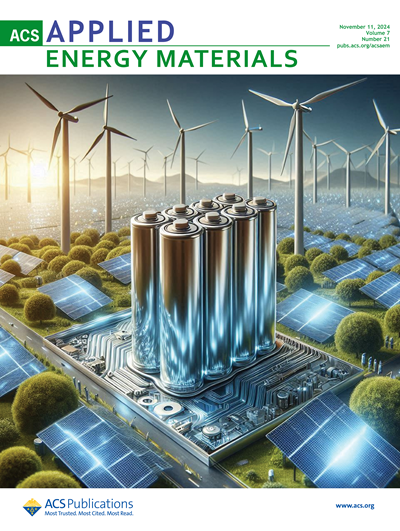
ACS Applied Energy Materials is an interdisciplinary journal publishing original research covering all aspects of materials, engineering, chemistry, physics and biology relevant to energy conversion and storage. The journal is devoted to reports of new and original experimental and theoretical research of an applied nature that integrate knowledge in the areas of materials, engineering, physics, bioscience, and chemistry into important energy applications.





 京公网安备 11010802042870号
京ICP备2023020795号-1
京公网安备 11010802042870号
京ICP备2023020795号-1

 分享
分享
 求助内容:
求助内容: 应助结果提醒方式:
 扫码关注我们
