Carlos A Ordoñez, Michael W Parra, Yaset Caicedo, Natalia Padilla, Fernando Rodríguez-Holguín, José Julián Serna, Alexander Salcedo, Alberto García, Claudia Orlas, Luis Fernando Pino, Ana Milena Del Valle, David Mejia, Juan Carlos Salamea-Molina, Megan Brenner, Tal Hörer
{"title":"REBOA as a New Damage Control Component in Hemodynamically Unstable Noncompressible Torso Hemorrhage Patients.","authors":"Carlos A Ordoñez, Michael W Parra, Yaset Caicedo, Natalia Padilla, Fernando Rodríguez-Holguín, José Julián Serna, Alexander Salcedo, Alberto García, Claudia Orlas, Luis Fernando Pino, Ana Milena Del Valle, David Mejia, Juan Carlos Salamea-Molina, Megan Brenner, Tal Hörer","doi":"10.25100/cm.v51i4.4422.4506","DOIUrl":null,"url":null,"abstract":"<p><p>Noncompressible torso hemorrhage is one of the leading causes of preventable death worldwide. An efficient and appropriate evaluation of the trauma patient with ongoing hemorrhage is essential to avoid the development of the lethal diamond (hypothermia, coagulopathy, hypocalcemia, and acidosis). Currently, the initial management strategies include permissive hypotension, hemostatic resuscitation, and damage control surgery. However, recent advances in technology have opened the doors to a wide variety of endovascular techniques that achieve these goals with minimal morbidity and limited access. An example of such advances has been the introduction of the <b>R</b>esuscitative <b>E</b>ndovascular <b>B</b>alloon <b>O</b>cclusion of the <b>A</b>orta (REBOA), which has received great interest among trauma surgeons around the world due to its potential and versatility in areas such as trauma, gynecology & obstetrics and gastroenterology. This article aims to describe the experience earned in the use of REBOA in noncompressible torso hemorrhage patients. Our results show that REBOA can be used as a new component in the damage control resuscitation of the severely injured trauma patient. To this end, we propose two new deployment algorithms for hemodynamically unstable noncompressible torso hemorrhage patients: one for blunt and another for penetrating trauma. We acknowledge that REBOA has its limitations, which include a steep learning curve, its inherent cost and availability. Although to reach the best outcomes with this new technology, it must be used in the right way, by the right surgeon with the right training and to the right patient.</p>","PeriodicalId":72638,"journal":{"name":"","volume":"51 4","pages":"e4064506"},"PeriodicalIF":0.0,"publicationDate":"2020-12-30","publicationTypes":"Journal Article","fieldsOfStudy":null,"isOpenAccess":false,"openAccessPdf":"https://ftp.ncbi.nlm.nih.gov/pub/pmc/oa_pdf/dd/88/1657-9534-cm-51-04-e4064506.PMC7968426.pdf","citationCount":"4","resultStr":null,"platform":"Semanticscholar","paperid":null,"PeriodicalName":"","FirstCategoryId":"3","ListUrlMain":"https://doi.org/10.25100/cm.v51i4.4422.4506","RegionNum":0,"RegionCategory":null,"ArticlePicture":[],"TitleCN":null,"AbstractTextCN":null,"PMCID":null,"EPubDate":"","PubModel":"","JCR":"","JCRName":"","Score":null,"Total":0}
引用次数: 4
Abstract
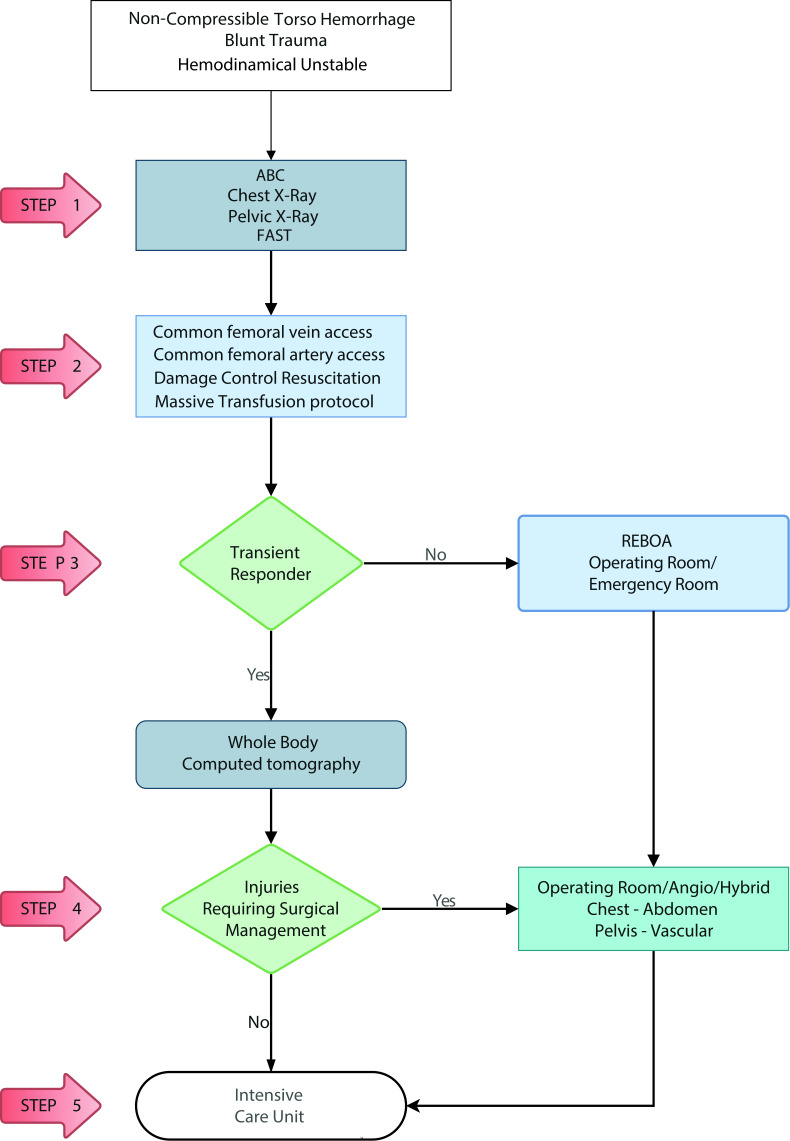
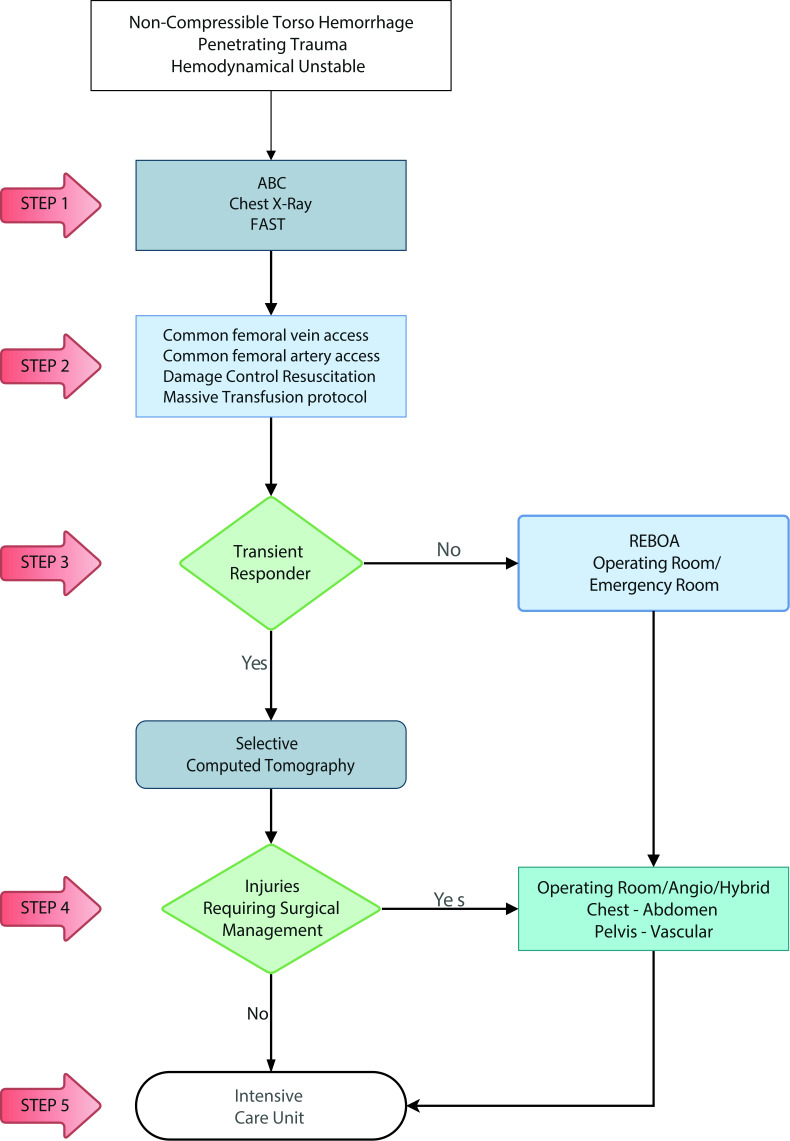
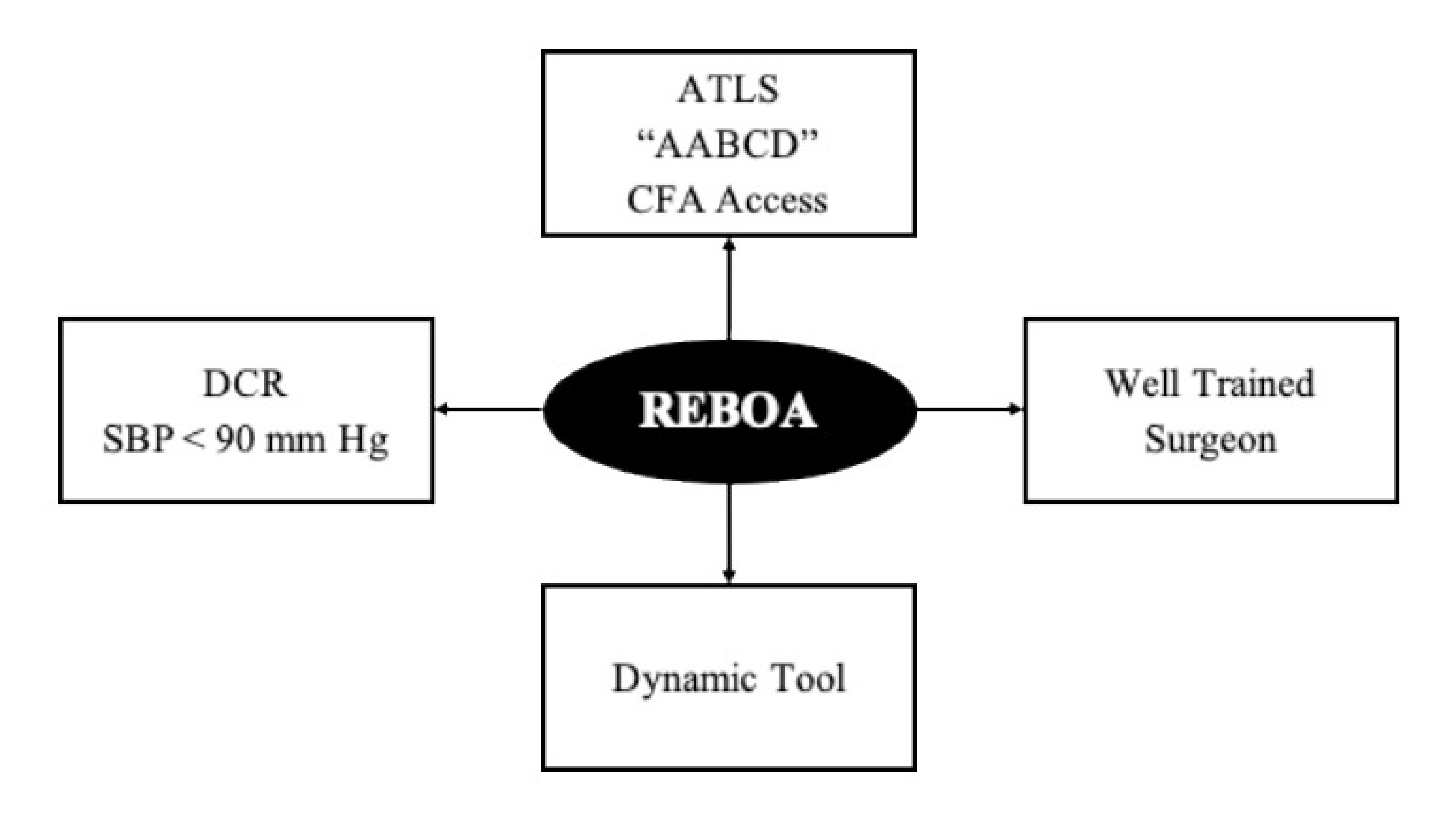
Noncompressible torso hemorrhage is one of the leading causes of preventable death worldwide. An efficient and appropriate evaluation of the trauma patient with ongoing hemorrhage is essential to avoid the development of the lethal diamond (hypothermia, coagulopathy, hypocalcemia, and acidosis). Currently, the initial management strategies include permissive hypotension, hemostatic resuscitation, and damage control surgery. However, recent advances in technology have opened the doors to a wide variety of endovascular techniques that achieve these goals with minimal morbidity and limited access. An example of such advances has been the introduction of the Resuscitative Endovascular Balloon Occlusion of the Aorta (REBOA), which has received great interest among trauma surgeons around the world due to its potential and versatility in areas such as trauma, gynecology & obstetrics and gastroenterology. This article aims to describe the experience earned in the use of REBOA in noncompressible torso hemorrhage patients. Our results show that REBOA can be used as a new component in the damage control resuscitation of the severely injured trauma patient. To this end, we propose two new deployment algorithms for hemodynamically unstable noncompressible torso hemorrhage patients: one for blunt and another for penetrating trauma. We acknowledge that REBOA has its limitations, which include a steep learning curve, its inherent cost and availability. Although to reach the best outcomes with this new technology, it must be used in the right way, by the right surgeon with the right training and to the right patient.



 京公网安备 11010802042870号
京ICP备2023020795号-1
京公网安备 11010802042870号
京ICP备2023020795号-1

 分享
分享
 求助内容:
求助内容: 应助结果提醒方式:
 扫码关注我们
