{"title":"The percentages of SARS-CoV-2 protein similarity and identity with SARS-CoV and BatCoV RaTG13 proteins can be used as indicators of virus origin.","authors":"Mohammed Elimam Ahamed Mohammed","doi":"10.1007/s42485-021-00060-3","DOIUrl":null,"url":null,"abstract":"<p><p>There are three types of proteins in coronaviruses: nonstructural, structural, and accessory proteins. Coronavirus proteins are essential for viral replication and for the binding and invasion of hosts and the regulation of host cell metabolism and immunity. This study investigated the amino acid sequence similarity and identity percentages of 10 proteins in SARS-CoV-2, SARS-CoV and the <i>Rhinolophus affinis</i> bat coronavirus (BatCoV RaTG13). The investigated proteins were the 1ab polyprotein, spike protein, orf3a, the envelope protein, the membrane protein, orf6, orf7a, orf7b, orf8, and the nucleocapsid protein. The online sequence alignment service of The European Molecular Biology Open Software Suite (EMBOSS) was used to determine the percentages of protein similarity and identity in the three viruses. The results showed that the similarity and identity percentages of the SARS-CoV-2 and BatCoV RaTG13 proteins were both greater than 95%, while the identity and similarity percentages of SARS-CoV-2 and SARS-CoV were both greater than 38%. The proteins of SARS-CoV-2 and BatCoV RaTG13 have high identity and similarity compared to those of SARS-CoV-2 and SARS-CoV.</p><p><strong>Graphic abstract: </strong>The proteins of the SARS-CoV-2 are most identical and similar to those of BatCoV RaTG13 than to the proteins of SARS-CoV.</p><p><strong>Supplementary information: </strong>The online version contains supplementary material available at 10.1007/s42485-021-00060-3.</p>","PeriodicalId":73910,"journal":{"name":"Journal of proteins and proteomics","volume":"12 2","pages":"81-91"},"PeriodicalIF":0.0000,"publicationDate":"2021-01-01","publicationTypes":"Journal Article","fieldsOfStudy":null,"isOpenAccess":false,"openAccessPdf":"https://sci-hub-pdf.com/10.1007/s42485-021-00060-3","citationCount":"20","resultStr":null,"platform":"Semanticscholar","paperid":null,"PeriodicalName":"Journal of proteins and proteomics","FirstCategoryId":"1085","ListUrlMain":"https://doi.org/10.1007/s42485-021-00060-3","RegionNum":0,"RegionCategory":null,"ArticlePicture":[],"TitleCN":null,"AbstractTextCN":null,"PMCID":null,"EPubDate":"2021/4/9 0:00:00","PubModel":"Epub","JCR":"","JCRName":"","Score":null,"Total":0}
引用次数: 20
Abstract
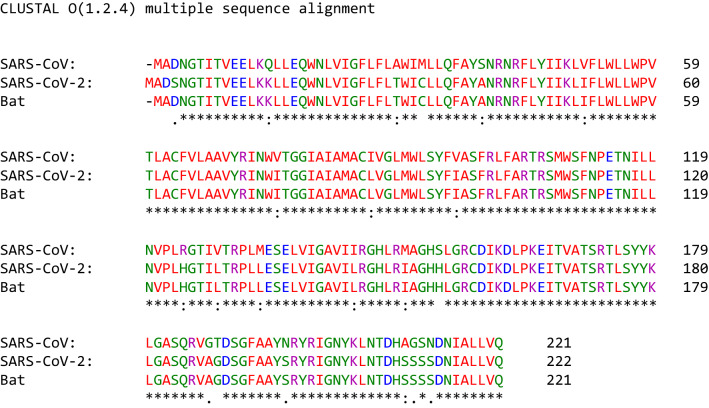
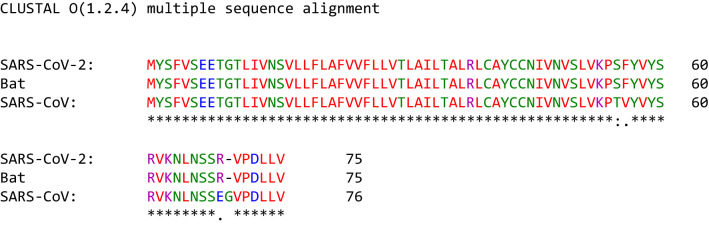
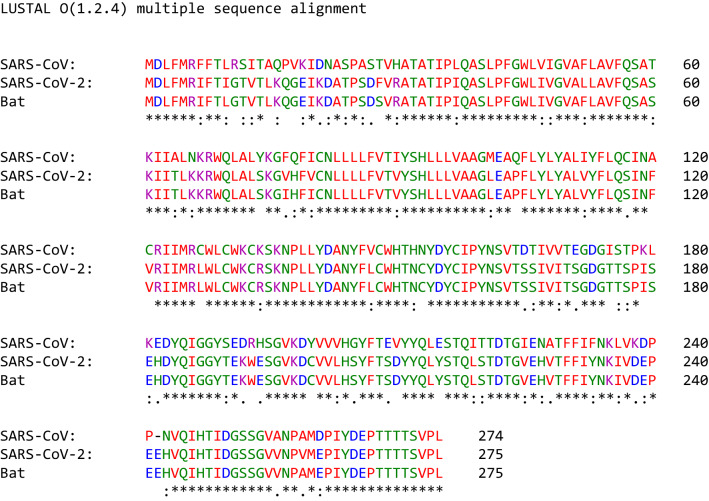
There are three types of proteins in coronaviruses: nonstructural, structural, and accessory proteins. Coronavirus proteins are essential for viral replication and for the binding and invasion of hosts and the regulation of host cell metabolism and immunity. This study investigated the amino acid sequence similarity and identity percentages of 10 proteins in SARS-CoV-2, SARS-CoV and the Rhinolophus affinis bat coronavirus (BatCoV RaTG13). The investigated proteins were the 1ab polyprotein, spike protein, orf3a, the envelope protein, the membrane protein, orf6, orf7a, orf7b, orf8, and the nucleocapsid protein. The online sequence alignment service of The European Molecular Biology Open Software Suite (EMBOSS) was used to determine the percentages of protein similarity and identity in the three viruses. The results showed that the similarity and identity percentages of the SARS-CoV-2 and BatCoV RaTG13 proteins were both greater than 95%, while the identity and similarity percentages of SARS-CoV-2 and SARS-CoV were both greater than 38%. The proteins of SARS-CoV-2 and BatCoV RaTG13 have high identity and similarity compared to those of SARS-CoV-2 and SARS-CoV.
Graphic abstract: The proteins of the SARS-CoV-2 are most identical and similar to those of BatCoV RaTG13 than to the proteins of SARS-CoV.
Supplementary information: The online version contains supplementary material available at 10.1007/s42485-021-00060-3.



 京公网安备 11010802042870号
京ICP备2023020795号-1
京公网安备 11010802042870号
京ICP备2023020795号-1

 分享
分享

 求助内容:
求助内容: 应助结果提醒方式:
 扫码关注我们
