Vinod Mishra, Martin Vaessen, J Ties Boerma, Fred Arnold, Ann Way, Bernard Barrere, Anne Cross, Rathavuth Hong, Jasbir Sangha
{"title":"HIV testing in national population-based surveys: experience from the Demographic and Health Surveys.","authors":"Vinod Mishra, Martin Vaessen, J Ties Boerma, Fred Arnold, Ann Way, Bernard Barrere, Anne Cross, Rathavuth Hong, Jasbir Sangha","doi":"10.2471/blt.05.029520","DOIUrl":null,"url":null,"abstract":"<p><strong>Objectives: </strong>To describe the methods used in the Demographic and Health Surveys (DHS) to collect nationally representative data on the prevalence of human immunodeficiency virus (HIV) and assess the value of such data to country HIV surveillance systems.</p><p><strong>Methods: </strong>During 2001-04, national samples of adult women and men in Burkina Faso, Cameroon, Dominican Republic, Ghana, Mali, Kenya, United Republic of Tanzania and Zambia were tested for HIV. Dried blood spot samples were collected for HIV testing, following internationally accepted ethical standards. The results for each country are presented by age, sex, and urban versus rural residence. To estimate the effects of non-response, HIV prevalence among non-responding males and females was predicted using multivariate statistical models for those who were tested, with a common set of predictor variables.</p><p><strong>Results: </strong>Rates of HIV testing varied from 70% among Kenyan men to 92% among women in Burkina Faso and Cameroon. Despite large differences in HIV prevalence between the surveys (1-16%), fairly consistent patterns of HIV infection were observed by age, sex and urban versus rural residence, with considerably higher rates in urban areas and in women, especially at younger ages. Analysis of non-response bias indicates that although predicted HIV prevalence tended to be higher in non-tested males and females than in those tested, the overall effects of non-response on the observed national estimates of HIV prevalence are insignificant.</p><p><strong>Conclusions: </strong>Population-based surveys can provide reliable, direct estimates of national and regional HIV seroprevalence among men and women irrespective of pregnancy status. Survey data greatly enhance surveillance systems and the accuracy of national estimates in generalized epidemics.</p>","PeriodicalId":9465,"journal":{"name":"Bulletin of the World Health Organization","volume":"84 7","pages":"537-45"},"PeriodicalIF":5.7000,"publicationDate":"2006-07-01","publicationTypes":"Journal Article","fieldsOfStudy":null,"isOpenAccess":false,"openAccessPdf":"https://www.ncbi.nlm.nih.gov/pmc/articles/PMC2627390/pdf/16878227.pdf","citationCount":"190","resultStr":null,"platform":"Semanticscholar","paperid":null,"PeriodicalName":"Bulletin of the World Health Organization","FirstCategoryId":"3","ListUrlMain":"https://doi.org/10.2471/blt.05.029520","RegionNum":2,"RegionCategory":"医学","ArticlePicture":[],"TitleCN":null,"AbstractTextCN":null,"PMCID":null,"EPubDate":"","PubModel":"","JCR":"Q1","JCRName":"PUBLIC, ENVIRONMENTAL & OCCUPATIONAL HEALTH","Score":null,"Total":0}
引用次数: 190
Abstract
Objectives: To describe the methods used in the Demographic and Health Surveys (DHS) to collect nationally representative data on the prevalence of human immunodeficiency virus (HIV) and assess the value of such data to country HIV surveillance systems.
Methods: During 2001-04, national samples of adult women and men in Burkina Faso, Cameroon, Dominican Republic, Ghana, Mali, Kenya, United Republic of Tanzania and Zambia were tested for HIV. Dried blood spot samples were collected for HIV testing, following internationally accepted ethical standards. The results for each country are presented by age, sex, and urban versus rural residence. To estimate the effects of non-response, HIV prevalence among non-responding males and females was predicted using multivariate statistical models for those who were tested, with a common set of predictor variables.
Results: Rates of HIV testing varied from 70% among Kenyan men to 92% among women in Burkina Faso and Cameroon. Despite large differences in HIV prevalence between the surveys (1-16%), fairly consistent patterns of HIV infection were observed by age, sex and urban versus rural residence, with considerably higher rates in urban areas and in women, especially at younger ages. Analysis of non-response bias indicates that although predicted HIV prevalence tended to be higher in non-tested males and females than in those tested, the overall effects of non-response on the observed national estimates of HIV prevalence are insignificant.
Conclusions: Population-based surveys can provide reliable, direct estimates of national and regional HIV seroprevalence among men and women irrespective of pregnancy status. Survey data greatly enhance surveillance systems and the accuracy of national estimates in generalized epidemics.
期刊介绍:
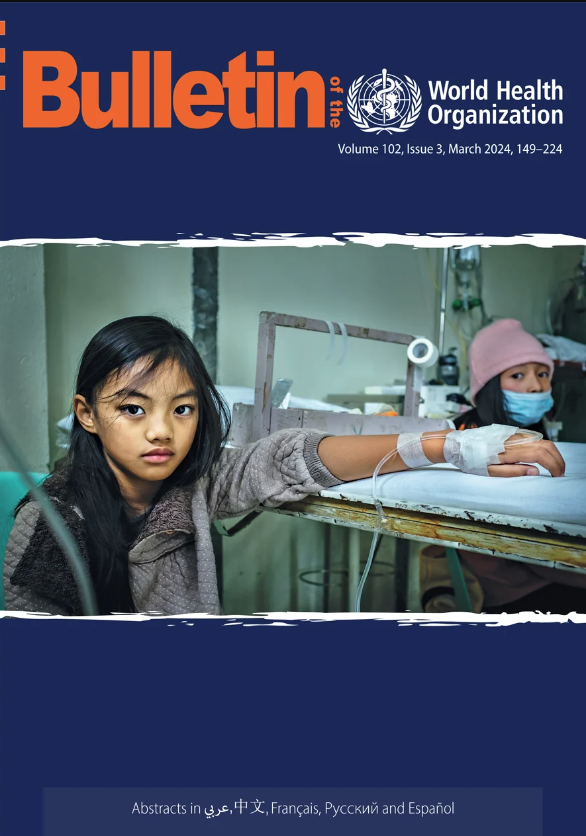
The Bulletin of the World Health Organization
Journal Overview:
Leading public health journal
Peer-reviewed monthly journal
Special focus on developing countries
Global scope and authority
Top public and environmental health journal
Impact factor of 6.818 (2018), according to Web of Science ranking
Audience:
Essential reading for public health decision-makers and researchers
Provides blend of research, well-informed opinion, and news



 京公网安备 11010802042870号
京ICP备2023020795号-1
京公网安备 11010802042870号
京ICP备2023020795号-1

 分享
分享
 求助内容:
求助内容: 应助结果提醒方式:
 扫码关注我们
