{"title":"Photosensitive-polyimide based method for fabricating various neural electrode architectures.","authors":"Yasuhiro X Kato, Shigeto Furukawa, Kazuyuki Samejima, Naoyuki Hironaka, Makio Kashino","doi":"10.3389/fneng.2012.00011","DOIUrl":null,"url":null,"abstract":"<p><p>An extensive photosensitive-polyimide (PSPI)-based method for designing and fabricating various neural electrode architectures was developed. The method aims to broaden the design flexibility and expand the fabrication capability for neural electrodes to improve the quality of recorded signals and integrate other functions. After characterizing PSPI's properties for micromachining processes, we successfully designed and fabricated various neural electrodes even on a non-flat substrate using only one PSPI as an insulation material and without the time-consuming dry etching processes. The fabricated neural electrodes were an electrocorticogram (ECoG) electrode, a mesh intracortical electrode with a unique lattice-like mesh structure to fixate neural tissue, and a guide cannula electrode with recording microelectrodes placed on the curved surface of a guide cannula as a microdialysis probe. In vivo neural recordings using anesthetized rats demonstrated that these electrodes can be used to record neural activities repeatedly without any breakage and mechanical failures, which potentially promises stable recordings for long periods of time. These successes make us believe that this PSPI-based fabrication is a powerful method, permitting flexible design, and easy optimization of electrode architectures for a variety of electrophysiological experimental research with improved neural recording performance.</p>","PeriodicalId":73093,"journal":{"name":"Frontiers in neuroengineering","volume":"5 ","pages":"11"},"PeriodicalIF":0.0000,"publicationDate":"2012-06-18","publicationTypes":"Journal Article","fieldsOfStudy":null,"isOpenAccess":false,"openAccessPdf":"https://sci-hub-pdf.com/10.3389/fneng.2012.00011","citationCount":"23","resultStr":null,"platform":"Semanticscholar","paperid":null,"PeriodicalName":"Frontiers in neuroengineering","FirstCategoryId":"1085","ListUrlMain":"https://doi.org/10.3389/fneng.2012.00011","RegionNum":0,"RegionCategory":null,"ArticlePicture":[],"TitleCN":null,"AbstractTextCN":null,"PMCID":null,"EPubDate":"2012/1/1 0:00:00","PubModel":"eCollection","JCR":"","JCRName":"","Score":null,"Total":0}
引用次数: 23
Abstract
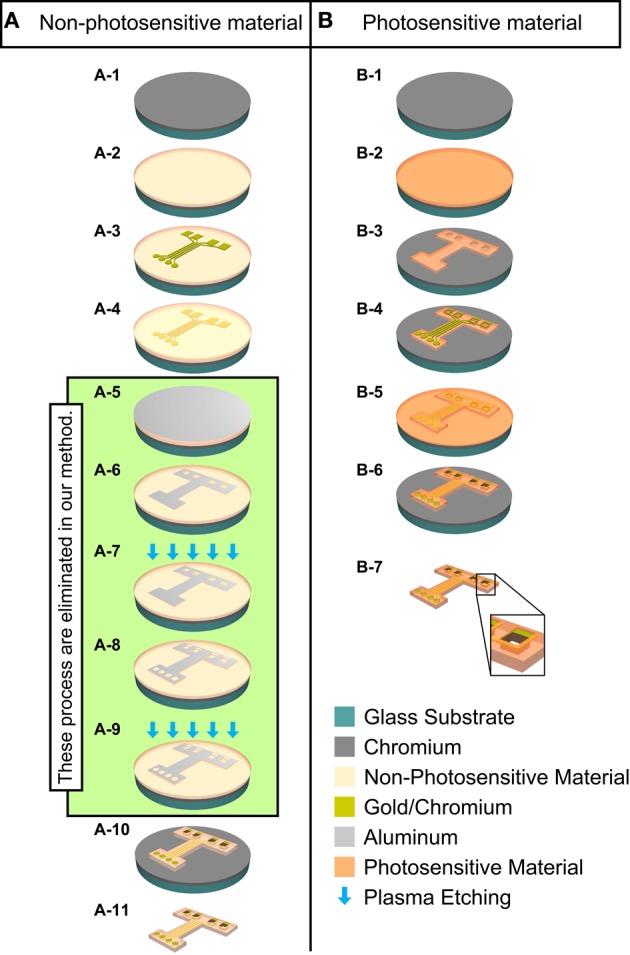
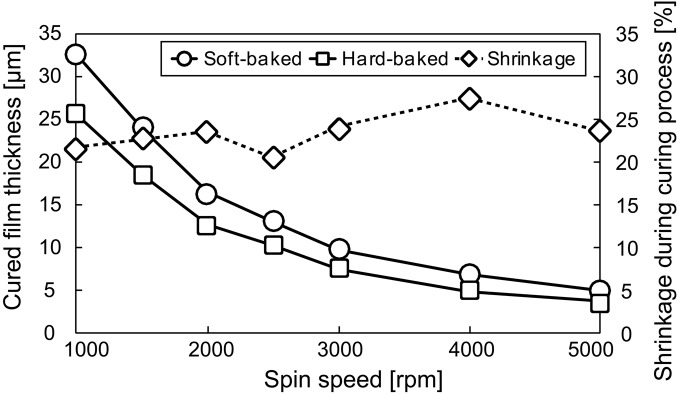
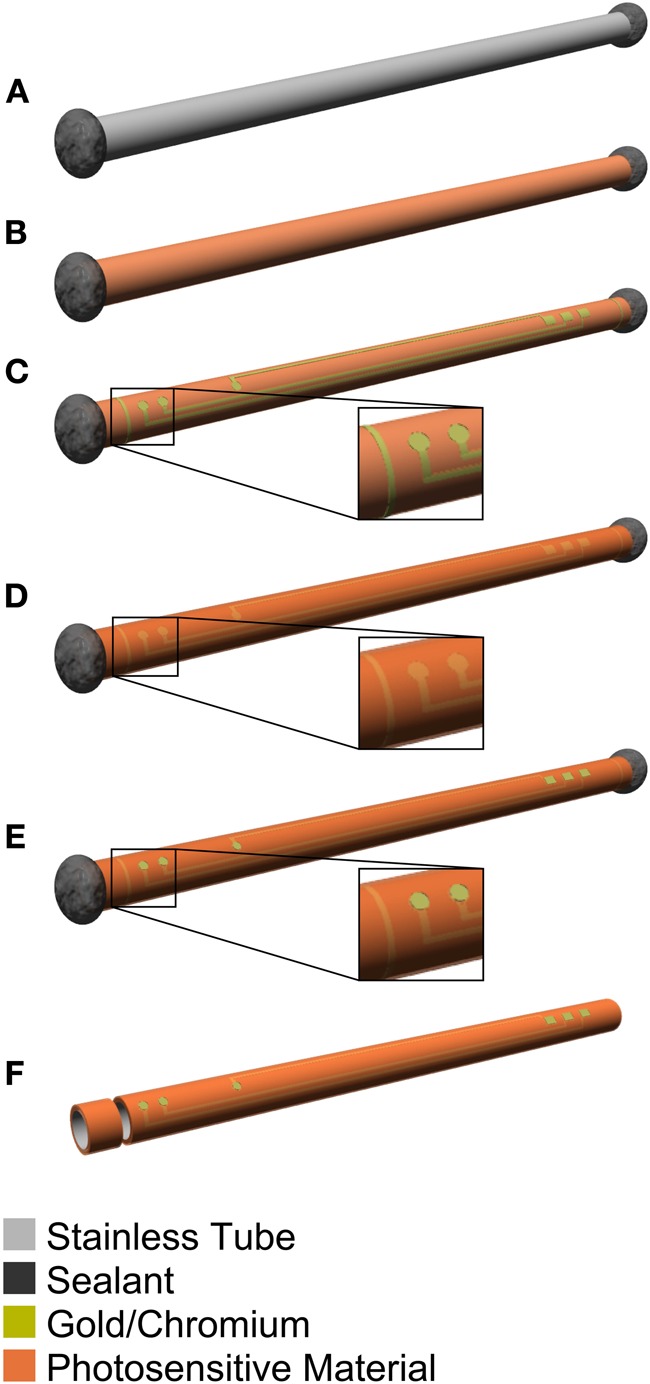
An extensive photosensitive-polyimide (PSPI)-based method for designing and fabricating various neural electrode architectures was developed. The method aims to broaden the design flexibility and expand the fabrication capability for neural electrodes to improve the quality of recorded signals and integrate other functions. After characterizing PSPI's properties for micromachining processes, we successfully designed and fabricated various neural electrodes even on a non-flat substrate using only one PSPI as an insulation material and without the time-consuming dry etching processes. The fabricated neural electrodes were an electrocorticogram (ECoG) electrode, a mesh intracortical electrode with a unique lattice-like mesh structure to fixate neural tissue, and a guide cannula electrode with recording microelectrodes placed on the curved surface of a guide cannula as a microdialysis probe. In vivo neural recordings using anesthetized rats demonstrated that these electrodes can be used to record neural activities repeatedly without any breakage and mechanical failures, which potentially promises stable recordings for long periods of time. These successes make us believe that this PSPI-based fabrication is a powerful method, permitting flexible design, and easy optimization of electrode architectures for a variety of electrophysiological experimental research with improved neural recording performance.



 京公网安备 11010802042870号
京ICP备2023020795号-1
京公网安备 11010802042870号
京ICP备2023020795号-1

 分享
分享

 求助内容:
求助内容: 应助结果提醒方式:
 扫码关注我们
