M Mattia, S Spadacenta, L Pavone, P Quarato, V Esposito, A Sparano, F Sebastiano, G Di Gennaro, R Morace, G Cantore, G Mirabella
{"title":"Stop-event-related potentials from intracranial electrodes reveal a key role of premotor and motor cortices in stopping ongoing movements.","authors":"M Mattia, S Spadacenta, L Pavone, P Quarato, V Esposito, A Sparano, F Sebastiano, G Di Gennaro, R Morace, G Cantore, G Mirabella","doi":"10.3389/fneng.2012.00012","DOIUrl":null,"url":null,"abstract":"<p><p>In humans, the ability to withhold manual motor responses seems to rely on a right-lateralized frontal-basal ganglia-thalamic network, including the pre-supplementary motor area and the inferior frontal gyrus (IFG). These areas should drive subthalamic nuclei to implement movement inhibition via the hyperdirect pathway. The output of this network is expected to influence those cortical areas underlying limb movement preparation and initiation, i.e., premotor (PMA) and primary motor (M1) cortices. Electroencephalographic (EEG) studies have shown an enhancement of the N200/P300 complex in the event-related potentials (ERPs) when a planned reaching movement is successfully stopped after the presentation of an infrequent stop-signal. PMA and M1 have been suggested as possible neural sources of this ERP complex but, due to the limited spatial resolution of scalp EEG, it is not yet clear which cortical areas contribute to its generation. To elucidate the role of motor cortices, we recorded epicortical ERPs from the lateral surface of the fronto-temporal lobes of five pharmacoresistant epileptic patients performing a reaching version of the countermanding task while undergoing presurgical monitoring. We consistently found a stereotyped ERP complex on a single-trial level when a movement was successfully cancelled. These ERPs were selectively expressed in M1, PMA, and Brodmann's area (BA) 9 and their onsets preceded the end of the stop process, suggesting a causal involvement in this executive function. Such ERPs also occurred in unsuccessful-stop (US) trials, that is, when subjects moved despite the occurrence of a stop-signal, mostly when they had long reaction times (RTs). These findings support the hypothesis that motor cortices are the final target of the inhibitory command elaborated by the frontal-basal ganglia-thalamic network.</p>","PeriodicalId":73093,"journal":{"name":"Frontiers in neuroengineering","volume":"5 ","pages":"12"},"PeriodicalIF":0.0000,"publicationDate":"2012-06-29","publicationTypes":"Journal Article","fieldsOfStudy":null,"isOpenAccess":false,"openAccessPdf":"https://sci-hub-pdf.com/10.3389/fneng.2012.00012","citationCount":"76","resultStr":null,"platform":"Semanticscholar","paperid":null,"PeriodicalName":"Frontiers in neuroengineering","FirstCategoryId":"1085","ListUrlMain":"https://doi.org/10.3389/fneng.2012.00012","RegionNum":0,"RegionCategory":null,"ArticlePicture":[],"TitleCN":null,"AbstractTextCN":null,"PMCID":null,"EPubDate":"2012/1/1 0:00:00","PubModel":"eCollection","JCR":"","JCRName":"","Score":null,"Total":0}
引用次数: 76
Abstract
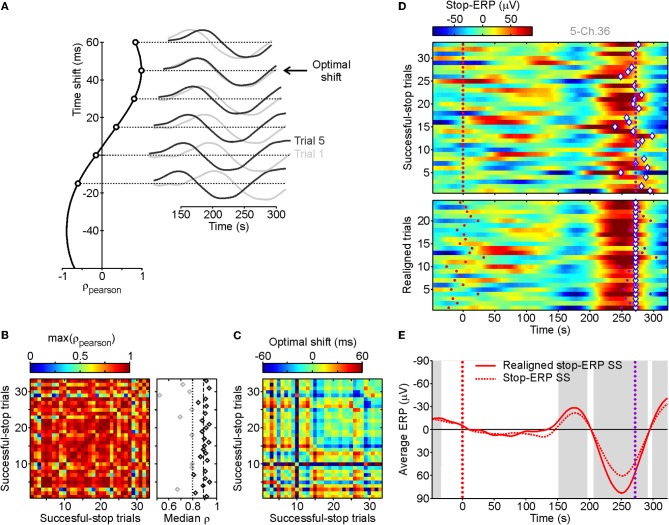
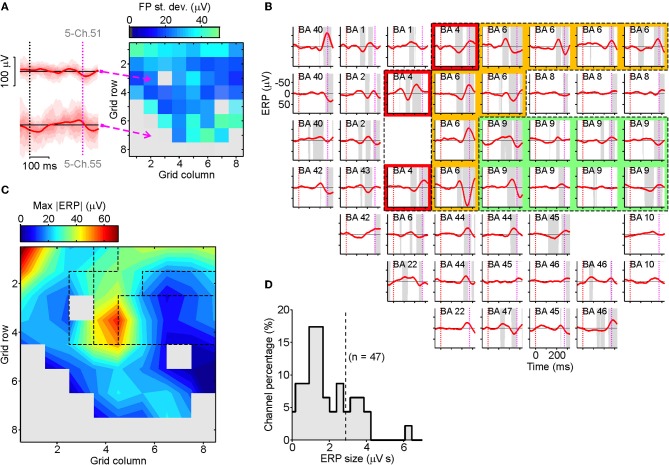
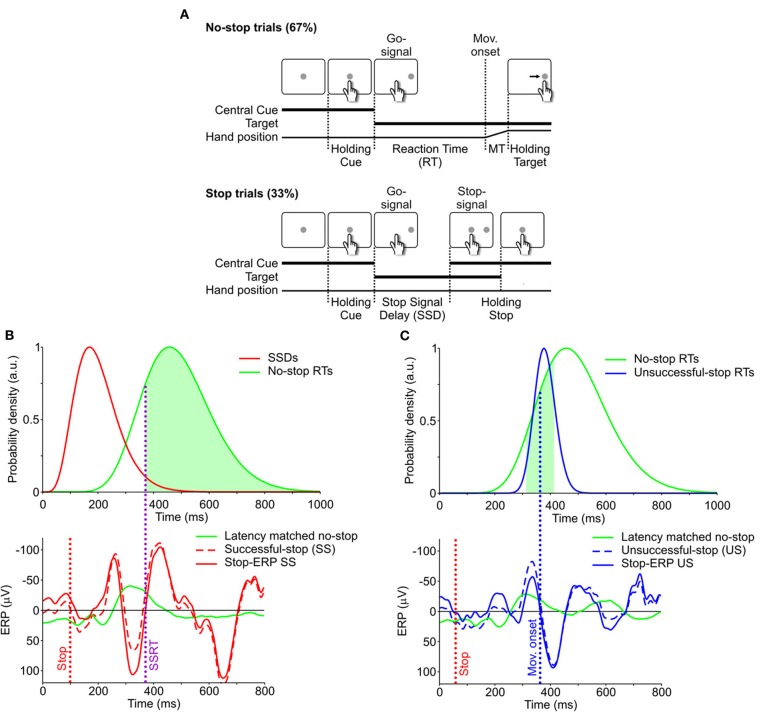
In humans, the ability to withhold manual motor responses seems to rely on a right-lateralized frontal-basal ganglia-thalamic network, including the pre-supplementary motor area and the inferior frontal gyrus (IFG). These areas should drive subthalamic nuclei to implement movement inhibition via the hyperdirect pathway. The output of this network is expected to influence those cortical areas underlying limb movement preparation and initiation, i.e., premotor (PMA) and primary motor (M1) cortices. Electroencephalographic (EEG) studies have shown an enhancement of the N200/P300 complex in the event-related potentials (ERPs) when a planned reaching movement is successfully stopped after the presentation of an infrequent stop-signal. PMA and M1 have been suggested as possible neural sources of this ERP complex but, due to the limited spatial resolution of scalp EEG, it is not yet clear which cortical areas contribute to its generation. To elucidate the role of motor cortices, we recorded epicortical ERPs from the lateral surface of the fronto-temporal lobes of five pharmacoresistant epileptic patients performing a reaching version of the countermanding task while undergoing presurgical monitoring. We consistently found a stereotyped ERP complex on a single-trial level when a movement was successfully cancelled. These ERPs were selectively expressed in M1, PMA, and Brodmann's area (BA) 9 and their onsets preceded the end of the stop process, suggesting a causal involvement in this executive function. Such ERPs also occurred in unsuccessful-stop (US) trials, that is, when subjects moved despite the occurrence of a stop-signal, mostly when they had long reaction times (RTs). These findings support the hypothesis that motor cortices are the final target of the inhibitory command elaborated by the frontal-basal ganglia-thalamic network.
在人类中,抑制手动运动反应的能力似乎依赖于右侧额-基底神经节-丘脑网络,包括前补充运动区和额下回(IFG)。这些区域应通过超直接通路驱动丘脑下核实现运动抑制。该网络的输出预计会影响肢体运动准备和开始的皮层区域,即前运动皮层(PMA)和初级运动皮层(M1)。脑电图(EEG)研究表明,当计划的到达运动在出现罕见的停止信号后成功停止时,事件相关电位(ERPs)中的N200/P300复合物增强。PMA和M1被认为是该ERP复合体可能的神经来源,但由于头皮脑电图的空间分辨率有限,尚不清楚哪些皮质区域有助于其产生。为了阐明运动皮质的作用,我们记录了5名在手术前监测下执行反命令任务的耐药癫痫患者额颞叶外侧表面的外皮层erp。当运动被成功取消时,我们在单次试验水平上一致地发现了刻板的ERP复合体。这些erp在M1、PMA和Brodmann’s area (BA) 9中有选择性地表达,它们的出现先于停止过程的结束,表明它们与这一执行功能有因果关系。这样的erp也发生在不成功停止(美国)试验中,即当受试者在出现停止信号的情况下移动时,主要是在他们有较长的反应时间(RTs)时。这些发现支持了一种假设,即运动皮层是额-基底神经节-丘脑网络详细阐述的抑制命令的最终目标。



 京公网安备 11010802042870号
京ICP备2023020795号-1
京公网安备 11010802042870号
京ICP备2023020795号-1

 分享
分享

 求助内容:
求助内容: 应助结果提醒方式:
 扫码关注我们
