{"title":"Who drives the ciliary highway?","authors":"Jarema Malicki","doi":"10.4161/bioa.21101","DOIUrl":null,"url":null,"abstract":"<p><p>Cilia are protrusions on the surface of cells. They are frequently motile and function to propel cells in an aqueous environment or to generate fluid flow. Equally important is the role of immotile cilia in detecting environmental changes or in sensing extracellular signals. The structure of cilia is supported by microtubules, and their formation requires microtubule-dependent motors, kinesins, which are thought to transport both structural and signaling ciliary proteins from the cell body into the distal portion of the ciliary shaft. In multicellular organisms, multiple kinesins are known to drive ciliary transport, and frequently cilia of a single cell type require more than one kinesin for their formation and function. In addition to kinesin-2 family motors, which function in cilia of all species investigated so far, kinesins from other families contribute to the transport of signaling proteins in a tissue-specific manner. It is becoming increasingly obvious that functional relationships between ciliary kinesins are complex, and a good understanding of these relationships is essential to comprehend the basis of biological processes as diverse as olfaction, vision, and embryonic development. </p>","PeriodicalId":89329,"journal":{"name":"Bioarchitecture","volume":"2 4","pages":"111-7"},"PeriodicalIF":0.0000,"publicationDate":"2012-07-01","publicationTypes":"Journal Article","fieldsOfStudy":null,"isOpenAccess":false,"openAccessPdf":"https://sci-hub-pdf.com/10.4161/bioa.21101","citationCount":"11","resultStr":null,"platform":"Semanticscholar","paperid":null,"PeriodicalName":"Bioarchitecture","FirstCategoryId":"1085","ListUrlMain":"https://doi.org/10.4161/bioa.21101","RegionNum":0,"RegionCategory":null,"ArticlePicture":[],"TitleCN":null,"AbstractTextCN":null,"PMCID":null,"EPubDate":"","PubModel":"","JCR":"","JCRName":"","Score":null,"Total":0}
引用次数: 11
Abstract
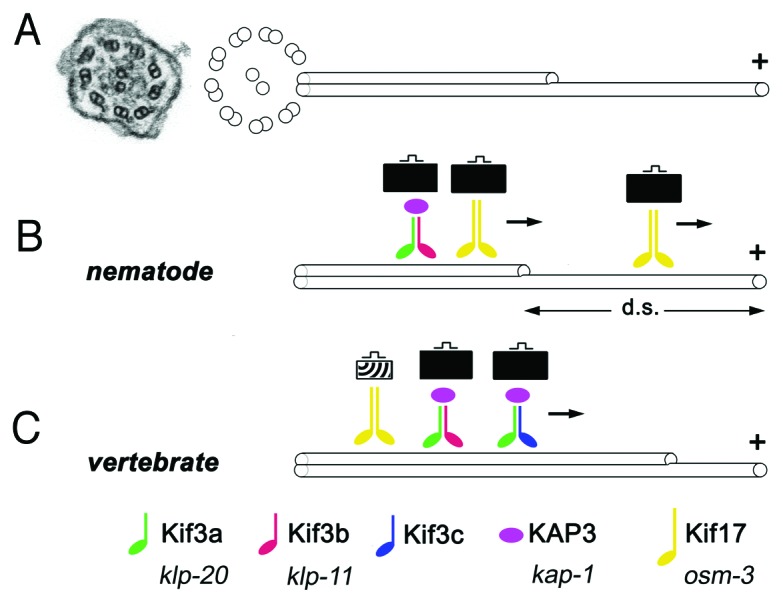
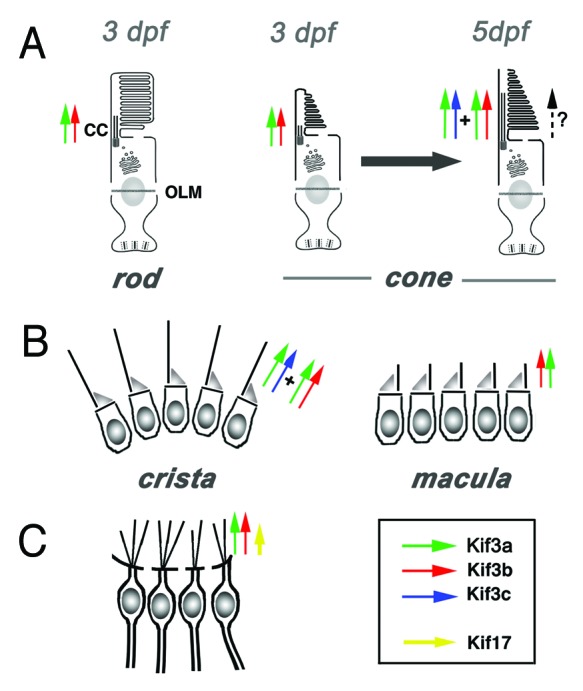
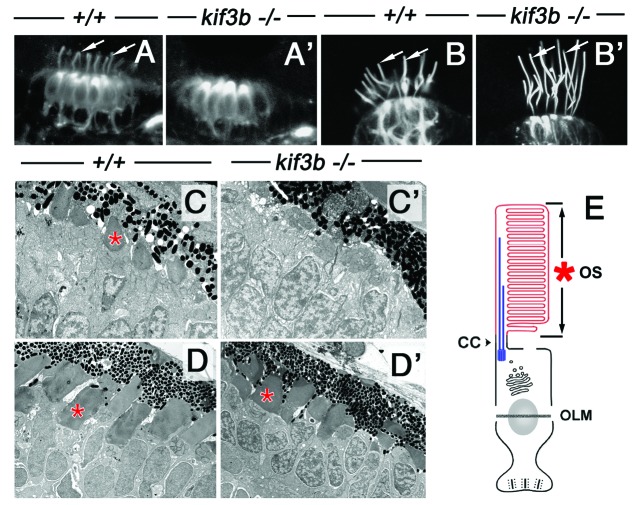
Cilia are protrusions on the surface of cells. They are frequently motile and function to propel cells in an aqueous environment or to generate fluid flow. Equally important is the role of immotile cilia in detecting environmental changes or in sensing extracellular signals. The structure of cilia is supported by microtubules, and their formation requires microtubule-dependent motors, kinesins, which are thought to transport both structural and signaling ciliary proteins from the cell body into the distal portion of the ciliary shaft. In multicellular organisms, multiple kinesins are known to drive ciliary transport, and frequently cilia of a single cell type require more than one kinesin for their formation and function. In addition to kinesin-2 family motors, which function in cilia of all species investigated so far, kinesins from other families contribute to the transport of signaling proteins in a tissue-specific manner. It is becoming increasingly obvious that functional relationships between ciliary kinesins are complex, and a good understanding of these relationships is essential to comprehend the basis of biological processes as diverse as olfaction, vision, and embryonic development.



 京公网安备 11010802042870号
京ICP备2023020795号-1
京公网安备 11010802042870号
京ICP备2023020795号-1

 分享
分享

 求助内容:
求助内容: 应助结果提醒方式:
 扫码关注我们
