Shengqin Liu, Stephen O Opiyo, Karoline Manthey, Jason G Glanzer, Amanda K Ashley, Courtney Amerin, Kyle Troksa, Meena Shrivastav, Jac A Nickoloff, Greg G Oakley
{"title":"Distinct roles for DNA-PK, ATM and ATR in RPA phosphorylation and checkpoint activation in response to replication stress.","authors":"Shengqin Liu, Stephen O Opiyo, Karoline Manthey, Jason G Glanzer, Amanda K Ashley, Courtney Amerin, Kyle Troksa, Meena Shrivastav, Jac A Nickoloff, Greg G Oakley","doi":"10.1093/nar/gks849","DOIUrl":null,"url":null,"abstract":"<p><p>DNA damage encountered by DNA replication forks poses risks of genome destabilization, a precursor to carcinogenesis. Damage checkpoint systems cause cell cycle arrest, promote repair and induce programed cell death when damage is severe. Checkpoints are critical parts of the DNA damage response network that act to suppress cancer. DNA damage and perturbation of replication machinery causes replication stress, characterized by accumulation of single-stranded DNA bound by replication protein A (RPA), which triggers activation of ataxia telangiectasia and Rad3 related (ATR) and phosphorylation of the RPA32, subunit of RPA, leading to Chk1 activation and arrest. DNA-dependent protein kinase catalytic subunit (DNA-PKcs) [a kinase related to ataxia telangiectasia mutated (ATM) and ATR] has well characterized roles in DNA double-strand break repair, but poorly understood roles in replication stress-induced RPA phosphorylation. We show that DNA-PKcs mutant cells fail to arrest replication following stress, and mutations in RPA32 phosphorylation sites targeted by DNA-PKcs increase the proportion of cells in mitosis, impair ATR signaling to Chk1 and confer a G2/M arrest defect. Inhibition of ATR and DNA-PK (but not ATM), mimic the defects observed in cells expressing mutant RPA32. Cells expressing mutant RPA32 or DNA-PKcs show sustained H2AX phosphorylation in response to replication stress that persists in cells entering mitosis, indicating inappropriate mitotic entry with unrepaired damage.</p>","PeriodicalId":19471,"journal":{"name":"Nucleic Acids Research","volume":"40 21","pages":"10780-94"},"PeriodicalIF":13.1000,"publicationDate":"2012-11-01","publicationTypes":"Journal Article","fieldsOfStudy":null,"isOpenAccess":false,"openAccessPdf":"https://sci-hub-pdf.com/10.1093/nar/gks849","citationCount":"209","resultStr":null,"platform":"Semanticscholar","paperid":null,"PeriodicalName":"Nucleic Acids Research","FirstCategoryId":"99","ListUrlMain":"https://doi.org/10.1093/nar/gks849","RegionNum":2,"RegionCategory":"生物学","ArticlePicture":[],"TitleCN":null,"AbstractTextCN":null,"PMCID":null,"EPubDate":"2012/9/12 0:00:00","PubModel":"Epub","JCR":"Q1","JCRName":"BIOCHEMISTRY & MOLECULAR BIOLOGY","Score":null,"Total":0}
引用次数: 209
Abstract
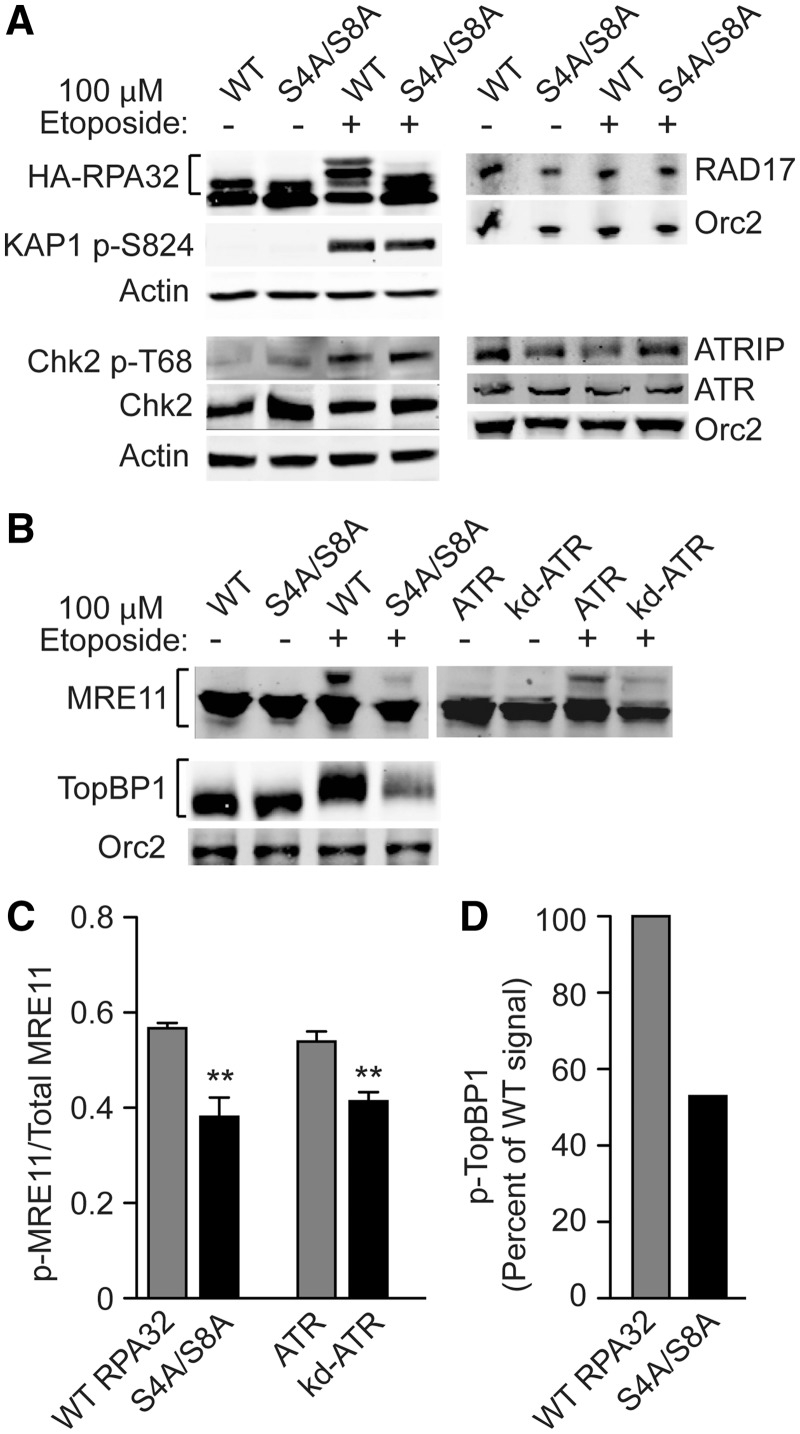
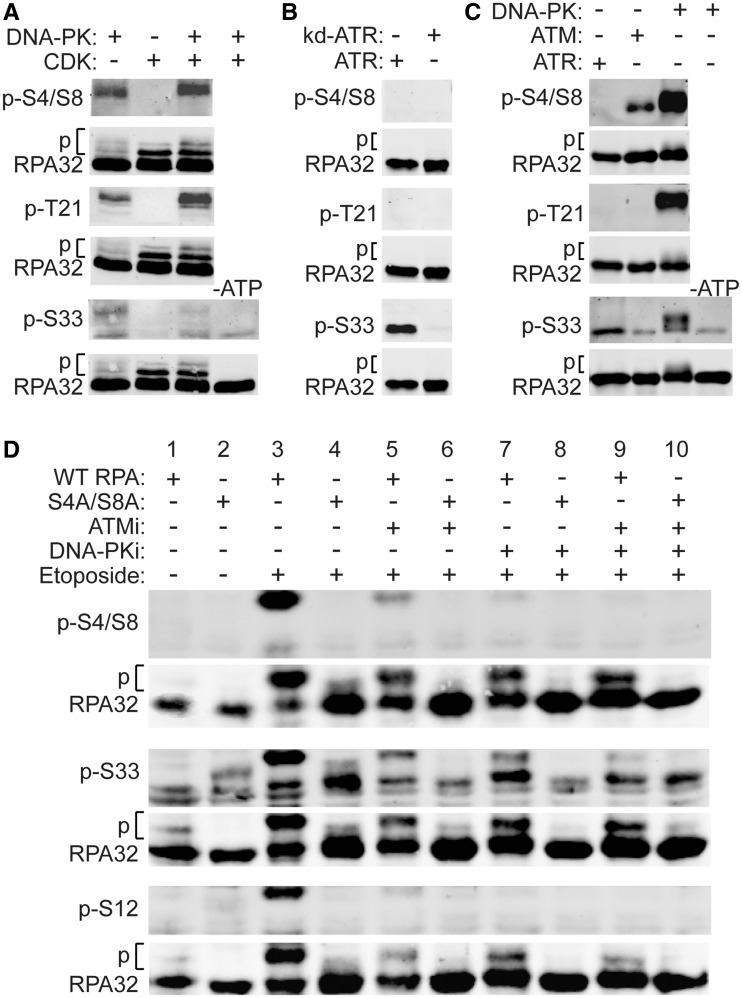
DNA damage encountered by DNA replication forks poses risks of genome destabilization, a precursor to carcinogenesis. Damage checkpoint systems cause cell cycle arrest, promote repair and induce programed cell death when damage is severe. Checkpoints are critical parts of the DNA damage response network that act to suppress cancer. DNA damage and perturbation of replication machinery causes replication stress, characterized by accumulation of single-stranded DNA bound by replication protein A (RPA), which triggers activation of ataxia telangiectasia and Rad3 related (ATR) and phosphorylation of the RPA32, subunit of RPA, leading to Chk1 activation and arrest. DNA-dependent protein kinase catalytic subunit (DNA-PKcs) [a kinase related to ataxia telangiectasia mutated (ATM) and ATR] has well characterized roles in DNA double-strand break repair, but poorly understood roles in replication stress-induced RPA phosphorylation. We show that DNA-PKcs mutant cells fail to arrest replication following stress, and mutations in RPA32 phosphorylation sites targeted by DNA-PKcs increase the proportion of cells in mitosis, impair ATR signaling to Chk1 and confer a G2/M arrest defect. Inhibition of ATR and DNA-PK (but not ATM), mimic the defects observed in cells expressing mutant RPA32. Cells expressing mutant RPA32 or DNA-PKcs show sustained H2AX phosphorylation in response to replication stress that persists in cells entering mitosis, indicating inappropriate mitotic entry with unrepaired damage.
期刊介绍:
Nucleic Acids Research (NAR) is a scientific journal that publishes research on various aspects of nucleic acids and proteins involved in nucleic acid metabolism and interactions. It covers areas such as chemistry and synthetic biology, computational biology, gene regulation, chromatin and epigenetics, genome integrity, repair and replication, genomics, molecular biology, nucleic acid enzymes, RNA, and structural biology. The journal also includes a Survey and Summary section for brief reviews. Additionally, each year, the first issue is dedicated to biological databases, and an issue in July focuses on web-based software resources for the biological community. Nucleic Acids Research is indexed by several services including Abstracts on Hygiene and Communicable Diseases, Animal Breeding Abstracts, Agricultural Engineering Abstracts, Agbiotech News and Information, BIOSIS Previews, CAB Abstracts, and EMBASE.



 京公网安备 11010802042870号
京ICP备2023020795号-1
京公网安备 11010802042870号
京ICP备2023020795号-1

 分享
分享
 求助内容:
求助内容: 应助结果提醒方式:
 扫码关注我们
