Utility of tissue transglutaminase immunohistochemistry in pediatric duodenal biopsies: patterns of expression and role in celiac disease-a clinicopathologic review.
{"title":"Utility of tissue transglutaminase immunohistochemistry in pediatric duodenal biopsies: patterns of expression and role in celiac disease-a clinicopathologic review.","authors":"Saeeda Almarzooqi, Ronald H Houston, Vinay Prasad","doi":"10.1155/2013/602985","DOIUrl":null,"url":null,"abstract":"<p><p>Tissue transglutaminase (tTG) is a ubiquitous multifunctional protein. It has roles in various cellular processes. tTG is a major target of autoantibodies in celiac disease, and its expression by immunohistochemistry in pediatric celiac disease has not been fully examined. We studied tTG expression in 78 pediatric duodenal biopsies by utilizing an antibody to transglutaminase 2. Serum tTG was positive in all celiac cases evaluated. Serum antiserum endomysial antibody (EMA) and tTG were negative in all control subjects and in inflammatory bowel disease and eosinophilic gastroenteritis. There was a statistically significant difference between cases of celiac disease and normal controls in terms of tTG immunohistochemical staining in duodenal biopsies surface epithelium (P value = 0.0012). There was no significant statistical difference in terms of staining of the villous surface or crypt between the cases of celiac disease and cases with IBD (P value = 0.5970 and 0.5227, resp.). There was no detected correlation between serum tTG values and immunohistochemical positivity on duodenal biopsy in cases of celiac disease (P value = 1). There was no relationship between Marsh classification and positivity of villous surface for tTG (P value = 0.4955). We conclude that tTG has limited utility in diagnosis of celiac disease in pediatric duodenal biopsies. </p>","PeriodicalId":89212,"journal":{"name":"Pathology research international","volume":"2013 ","pages":"602985"},"PeriodicalIF":0.0000,"publicationDate":"2013-01-01","publicationTypes":"Journal Article","fieldsOfStudy":null,"isOpenAccess":false,"openAccessPdf":"https://sci-hub-pdf.com/10.1155/2013/602985","citationCount":"4","resultStr":null,"platform":"Semanticscholar","paperid":null,"PeriodicalName":"Pathology research international","FirstCategoryId":"1085","ListUrlMain":"https://doi.org/10.1155/2013/602985","RegionNum":0,"RegionCategory":null,"ArticlePicture":[],"TitleCN":null,"AbstractTextCN":null,"PMCID":null,"EPubDate":"2013/9/8 0:00:00","PubModel":"Epub","JCR":"","JCRName":"","Score":null,"Total":0}
引用次数: 4
Abstract
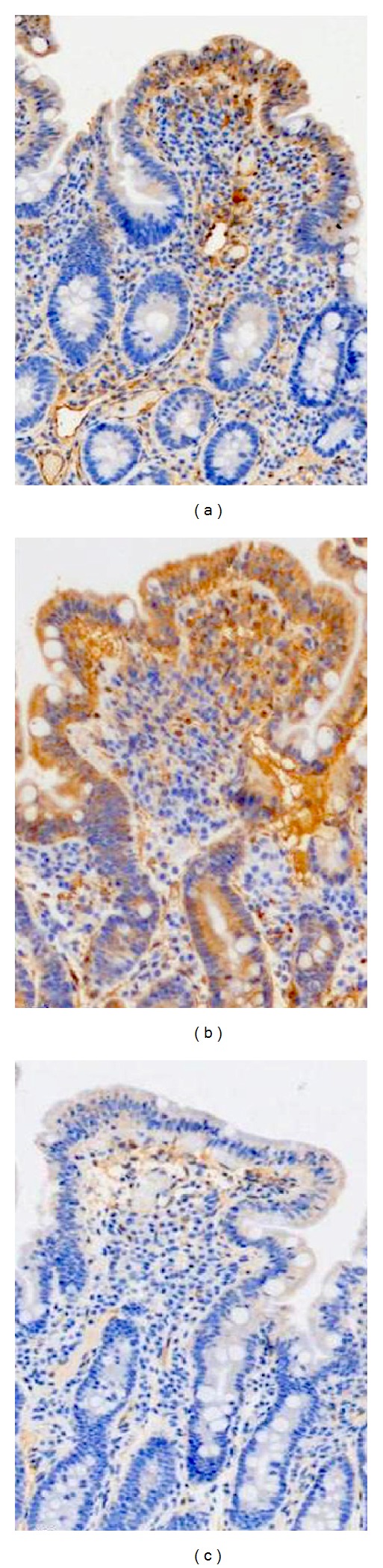
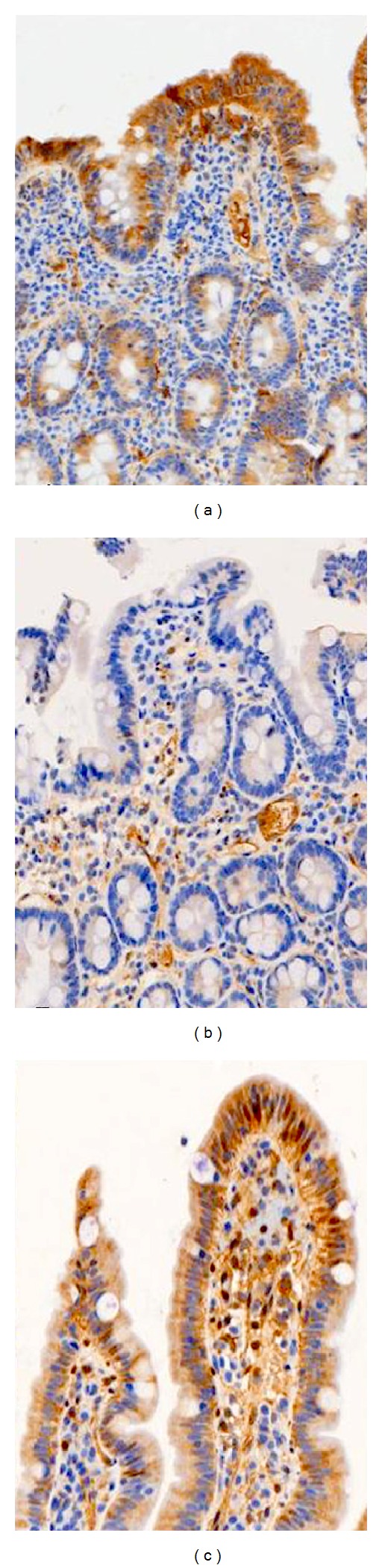
Tissue transglutaminase (tTG) is a ubiquitous multifunctional protein. It has roles in various cellular processes. tTG is a major target of autoantibodies in celiac disease, and its expression by immunohistochemistry in pediatric celiac disease has not been fully examined. We studied tTG expression in 78 pediatric duodenal biopsies by utilizing an antibody to transglutaminase 2. Serum tTG was positive in all celiac cases evaluated. Serum antiserum endomysial antibody (EMA) and tTG were negative in all control subjects and in inflammatory bowel disease and eosinophilic gastroenteritis. There was a statistically significant difference between cases of celiac disease and normal controls in terms of tTG immunohistochemical staining in duodenal biopsies surface epithelium (P value = 0.0012). There was no significant statistical difference in terms of staining of the villous surface or crypt between the cases of celiac disease and cases with IBD (P value = 0.5970 and 0.5227, resp.). There was no detected correlation between serum tTG values and immunohistochemical positivity on duodenal biopsy in cases of celiac disease (P value = 1). There was no relationship between Marsh classification and positivity of villous surface for tTG (P value = 0.4955). We conclude that tTG has limited utility in diagnosis of celiac disease in pediatric duodenal biopsies.



 京公网安备 11010802042870号
京ICP备2023020795号-1
京公网安备 11010802042870号
京ICP备2023020795号-1

 分享
分享

 求助内容:
求助内容: 应助结果提醒方式:
 扫码关注我们
